Medical Device Recall Response: A Hospital Traceability Checklist
Quick answer: A recall notice is not automatically an instruction to discard every device. Confirm the exact model and affected identifiers, read the manufacturer's action, locate each unit, manage immediate clinical risk, and record completion. The required action may be an on-site correction or a removal. Follow the current notice and your local safety procedure rather than a generic checklist.
Verify the notice and appoint an owner
Keep the original manufacturer or regulator notice. Record its date, product name, model, affected serial or lot range, described hazard, required action, deadline and contact channel. Assign one hospital coordinator with clinical, biomedical engineering, supply-chain and quality contacts. Check for later revisions before closing the case.
The FDA explains that a medical device recall can involve correction or removal; it does not always require returning or stopping use of every product. Apply the specific instructions and local requirements.
Match affected units to the inventory
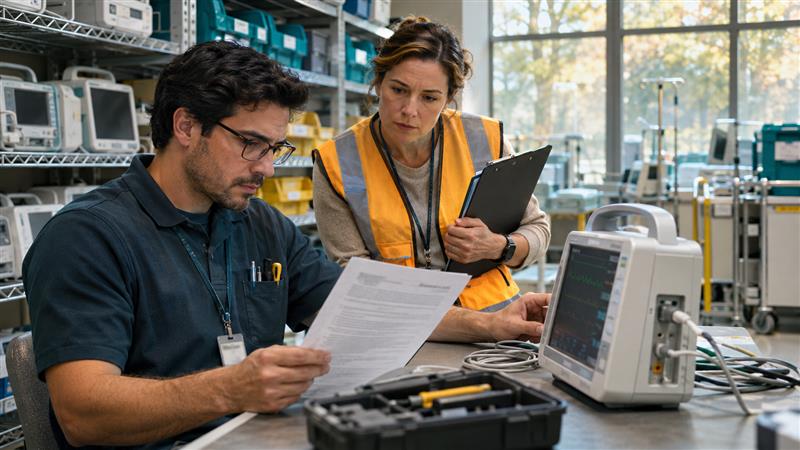
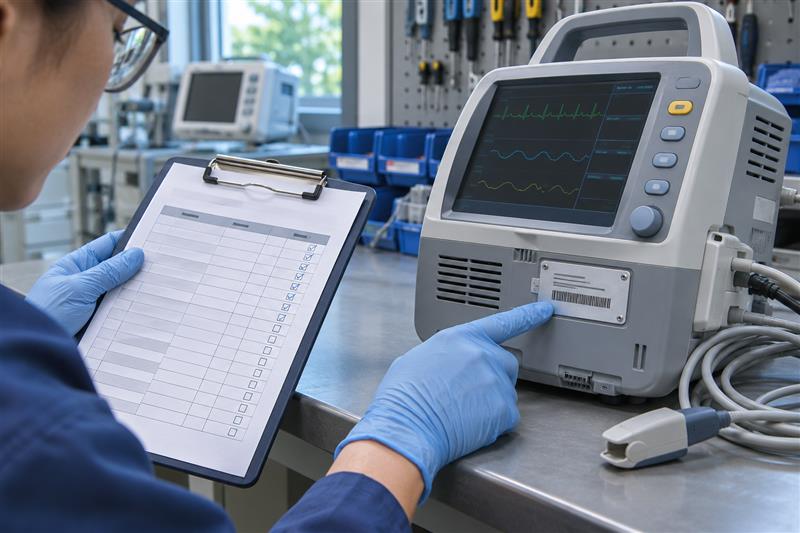
Search equipment records by manufacturer, model, serial number, lot, location and department. Include units in storage, in use, under repair and on temporary loan. Compare each physical label with the notice; do not rely on a product nickname or a photograph alone. Our hospital asset-tagging checklist shows how a unique local ID can support this search.
Create one case list with each unit's identifier, location, custodian, affected status and next action. Record units checked but found outside the affected range too.
Control risk without improvising
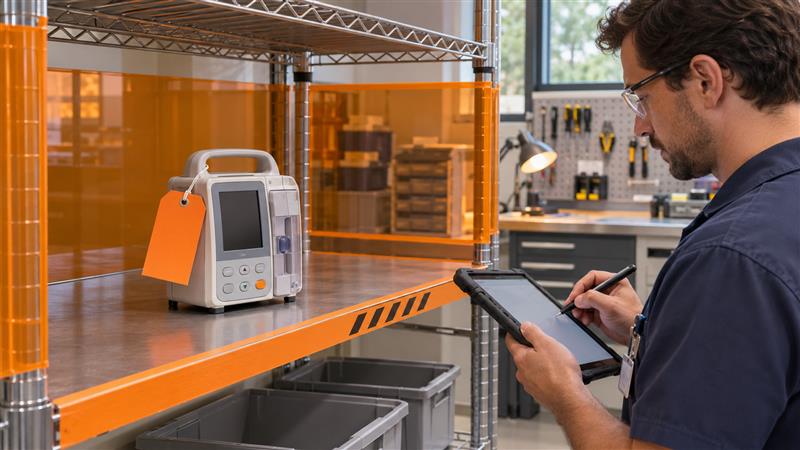
Brief the clinical team on the hazard and the manufacturer's instructions. Where the notice calls for stopping use, identify a suitable replacement and isolate the affected unit with a clear hold label. If the notice allows continued use with precautions or calls for an on-site correction, document the exact conditions. Clinical leadership should assess patient-care continuity; only authorized personnel should change settings, software or hardware.
Complete and verify the specified action
Arrange the manufacturer's repair, update, inspection, relabeling, return or disposal as applicable. Keep work orders, shipment evidence, technician reports and confirmation of any functional checks before release. Record who performed the action, when, and which serial number was addressed. Do not treat an email acknowledgement as proof that every unit has been corrected.
Close the case with traceable evidence
Reconcile the affected-unit list against completed actions and outstanding exceptions. Confirm that clinical teams received the final instruction and that replacement equipment is tracked. Retain the notice, distribution log, risk decision, work records and closure approval under hospital policy. If a device is permanently withdrawn, use a separate retirement workflow so it cannot re-enter service. This checklist is operational guidance, not a substitute for the manufacturer's notice or local regulatory obligations.
Related articles