Hospital Loaner Medical Equipment: Receiving and Return Checklist
Quick answer: A temporary loan does not remove the need to control a medical device. Agree on the loan terms, inspect and register the exact unit, release it only after the required checks, track its location and support contacts, and document cleaning and condition before return. The checklist applies to reusable equipment such as monitors and ultrasound systems; specialized instruments may need additional reprocessing steps.
Set the loan scope before delivery
Record the clinical purpose, expected start and return dates, supplier contact, transport responsibility, included accessories, consumables, maintenance coverage and who pays for damage or lost parts. Confirm the model is suitable for the intended setting, including power, network and space needs. Define how an urgent fault will be escalated and whether a replacement unit is available.
A written agreement helps prevent a loan from becoming an untracked permanent installation. Name both the hospital owner and the supplier owner for receiving, training, service and return.
Inspect the exact unit on arrival
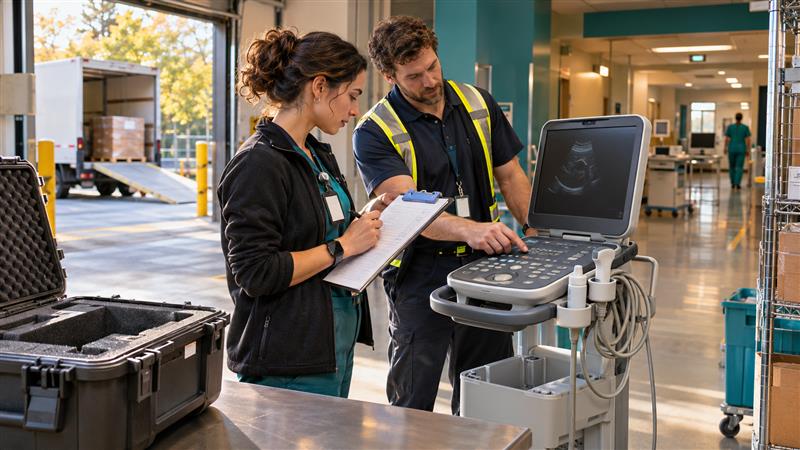
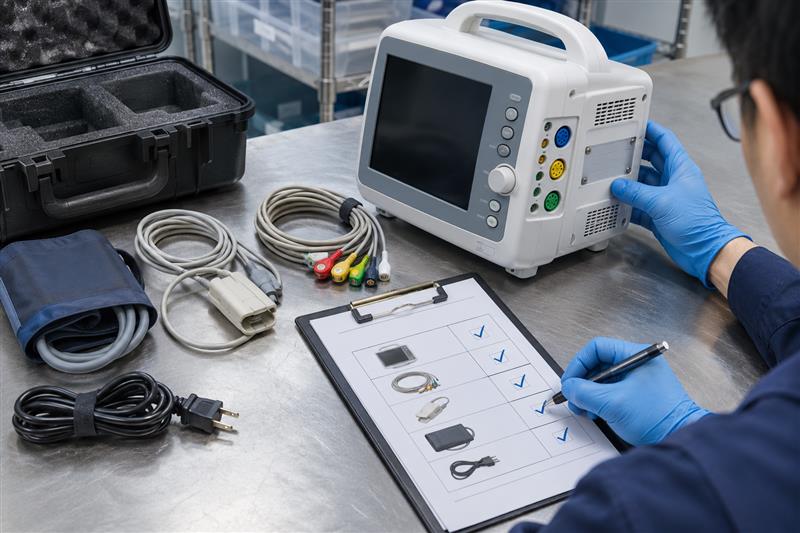
Check the shipping package for damage, then compare the model, serial number and accessory list with the handover document. Photograph any discrepancy before signing acceptance. Biomedical engineering should perform the applicable incoming, performance and safety checks; do not place the device in clinical use while those checks remain open. Review manuals, software version, cleaning instructions and alarm behavior where relevant.
WHO's medical equipment maintenance programme overview includes a sample incoming-inspection policy covering donated and loaned equipment, regardless of ownership. For damage documentation, use our hospital delivery-damage inspection checklist.
Give the loaner a temporary inventory record
Link the supplier's serial number to a unique local tracking ID. Record location, responsible department, loan period, acceptance result, service contact, cleaning status and return due date. Mark ownership as supplier or loaned so the device is not confused with hospital assets. If it moves between rooms, update the same record. Record training and user access before the first clinical handover.
WHO's 2025 inventory guidance treats incoming inspection, inventory, training and maintenance as connected parts of device management. A temporary record makes those steps visible even when the hospital does not own the equipment.
Manage faults and data during the loan
Tell staff where to report malfunctions and which supplier technician is authorized to work on the device. Take unsafe equipment out of use, document the incident and agree on repair or replacement before returning it to service. If the device stores patient images, identifiers or network credentials, define data retention, access and removal procedures before the end of the loan. Follow the hospital's privacy policy and the device manufacturer's instructions.
Close the return with a two-party check
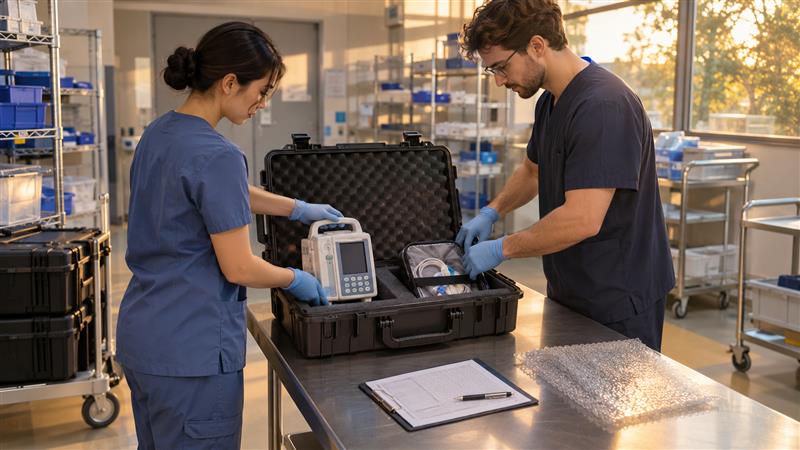
At the end of the loan, account for the device, probes, leads, batteries, case, manuals and other accessories against the intake list. Clean or reprocess reusable components as required by their instructions and the hospital's infection-control procedure. Document condition, outstanding faults and any data-clearing action. Have the supplier acknowledge receipt, then close the temporary inventory record and retain the handover evidence under the hospital's record policy.
Related articles