Medical Equipment Maintenance Backlog: A Hospital Triage Checklist
Quick answer: Do not clear an overdue maintenance queue by calendar date alone. Confirm the inventory, identify equipment whose failure could seriously harm patients, review active faults and clinical use, then assign a documented priority and owner to every work order. Keep manufacturer instructions and applicable local rules in force. A risk-based queue helps allocate scarce capacity; it does not make overdue devices automatically safe to use.
Build one reliable backlog
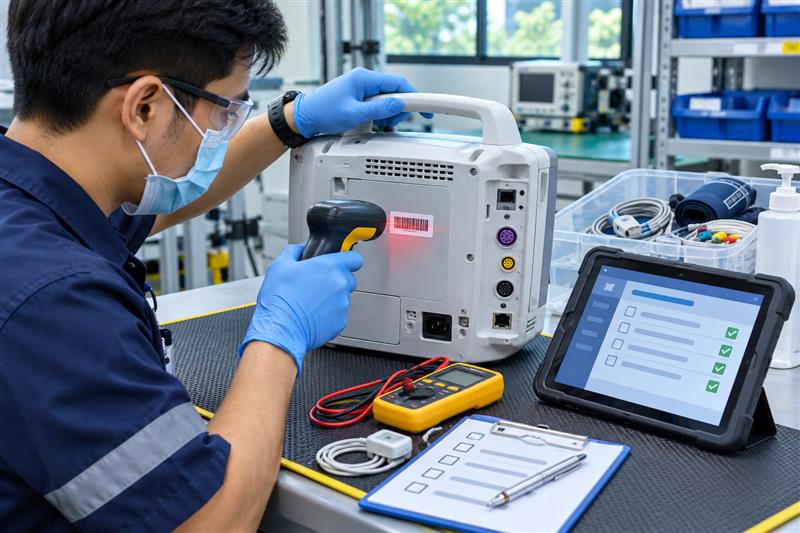
Export open preventive-maintenance, inspection and corrective work orders from the maintenance system. Match each record to a unique asset ID, manufacturer, model, serial number, location, department and last service date. Remove duplicate tickets without deleting their history. Add equipment that moved departments, is on loan or is stored away from its listed location. Our hospital asset-tagging checklist explains why a physical identifier matters.
Sort by clinical consequence, not age alone
Flag life-support and other high-risk devices first, then consider failure mode, patient exposure, active incident reports, manufacturer notices, available substitutes and how often the unit is used. A device with a known fault needs a separate corrective response, not merely a new preventive-maintenance date. Document the reason for each priority and route uncertain cases to clinical engineering and the relevant clinical lead.
The WHO's inventory and maintenance management guidance places inspection, inventory and maintenance within the medical-device management lifecycle. The Joint Commission's equipment-management FAQ describes written inventories, high-risk devices and documented maintenance strategies for organizations under its scope. Follow your own accreditation, legal and manufacturer requirements rather than copying another facility's intervals.
Control use while work is pending
For each high-priority item, record whether it remains in service, needs restricted use or must be held out of service under the applicable procedure. Tell the department who owns that decision and what substitute is available. A visible hold label and a system status should agree. If a manufacturer recall is also involved, use a separate traceable response; see our medical device recall checklist.
Schedule capacity and verify completion
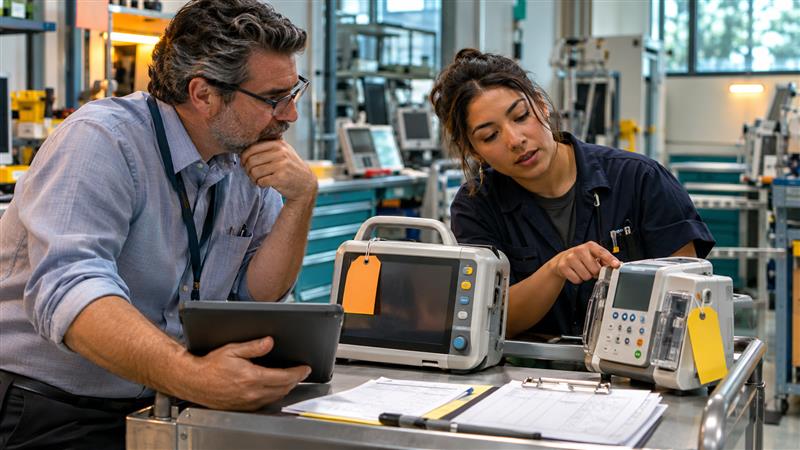
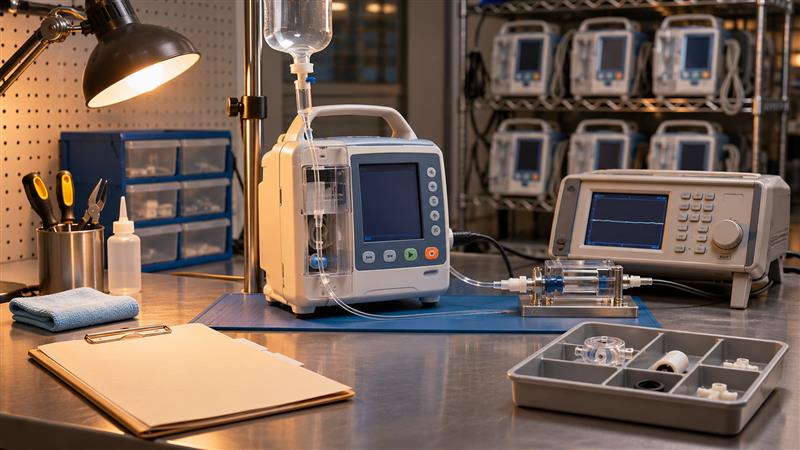
Group compatible visits by department, reserve parts and test tools, and assign qualified technicians or approved service providers. Do not close a ticket when only an appointment was made. Record the work performed, test result, technician, date and device ID. Obtain clinical acceptance when needed before releasing a held device. Escalate missing parts, inaccessible equipment and failed checks as exceptions with named owners.
Review the queue every week
Track the number of open high-risk orders, their age, failed inspections, repeat faults and items awaiting external service. Review exceptions with clinical and operations teams; update priorities when equipment moves or new risk information arrives. Keep decisions and closure evidence in the maintenance record. This checklist supports operational triage, but does not replace manufacturer instructions, clinical judgment or local regulatory obligations.
Related articles