Medical Equipment Decommissioning: A Hospital Retirement Checklist
Quick answer: Retiring a medical device is more than removing it from a room. Confirm the reason, take it out of clinical service, protect stored data, manage hazards and accessories, approve its final destination, and retain a traceable record. Assign an owner to each step before a recycler, buyer or recipient takes possession.
Decide whether retirement is justified
Ask biomedical engineering and the clinical owner to assess safety, reliability, repair history, manufacturer support, parts availability and the cost of continued service. Compare repair or reassignment with replacement, but do not use age alone as a disposal rule. Document who approved the decision and the date the device was withdrawn from use.
The World Health Organization's medical-device decommissioning guide provides a framework for why, when and how to retire devices. Local law and the manufacturer's instructions still govern the actual process.
Control the device before it leaves the ward
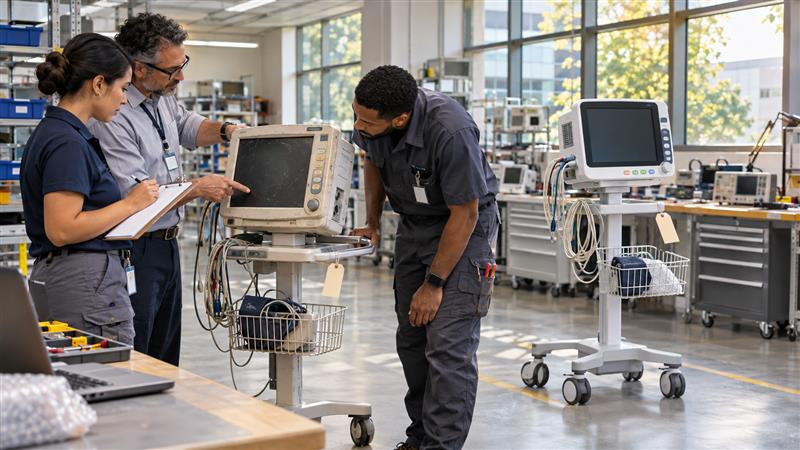
Mark the asset unavailable in the hospital register and physically separate it from ready-for-use equipment. Record its hospital asset ID, manufacturer, model, serial number, location and accessories. Arrange a safe handover: clean or decontaminate it according to the device instructions and the hospital infection-control procedure. Disconnect power, gases and network connections through qualified staff where applicable.
A stable asset tag makes this handover easier to audit. Our hospital asset-tagging checklist explains how to link the physical device to its service and location record.
Protect patient and network data
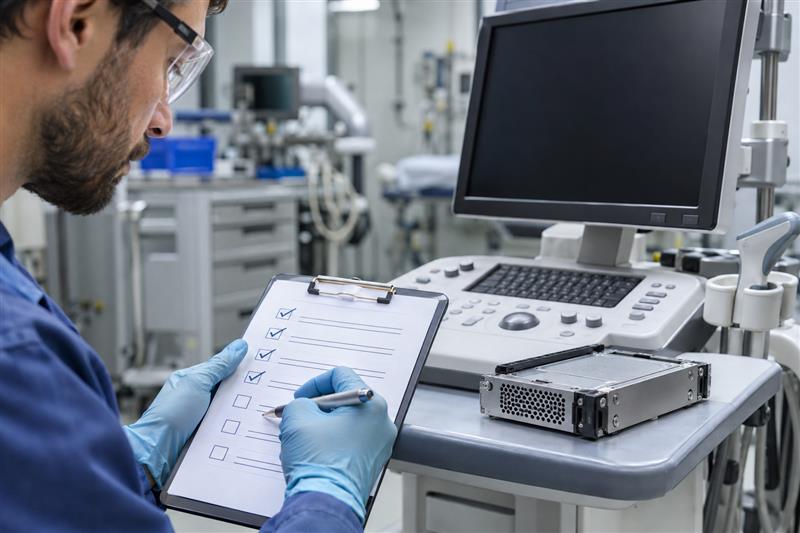
Identify every place the device may store patient images, identifiers, user accounts or network settings, including removable media and cloud connections. Have authorized IT or biomedical personnel preserve records that must be retained, then sanitize the device using a method appropriate to its storage and contract terms. Verify and log completion before transfer. A factory reset alone should not be assumed sufficient without validation.
WHO's 2025 inventory and maintenance guidance specifically addresses data security when devices are decommissioned. Follow the hospital's privacy and retention policies as well as applicable law.
Choose and document a safe disposition route
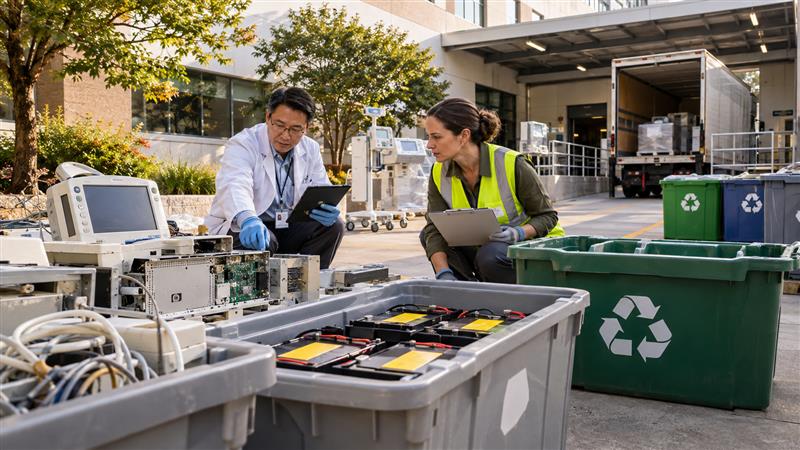
Possible routes include approved reuse, trade-in, donation, recycling or disposal. Evaluate condition and recipient capability before any donation; a device that cannot be safely installed, maintained and supplied with consumables should not simply be passed to another facility. Segregate batteries, electronic boards, fluids and other hazardous components as required locally. Use qualified handlers and retain transfer or disposal evidence.
WHO notes that device retirement can involve hazardous materials and that disposal must comply with relevant environmental rules. The exact waste classification and authorized contractor depend on the jurisdiction and device.
Close the record and plan the replacement
Complete a retirement work order with the reason, approval, date, data-clearing evidence, accessories, final disposition and receiving party. Update inventory status and remove the device from maintenance schedules without erasing historical service records prematurely. Review model-specific spare parts and consumables that may become obsolete. If replacement is needed, carry lessons from failures, user feedback and site requirements into the next procurement specification.
Related articles