Medical Equipment Return to Service After Repair: A Hospital Checklist
Quick answer: A completed repair order is not, by itself, permission to put a medical device back into patient care. Match the unit to its service record, confirm the fault and repair, perform the manufacturer-specified functional and applicable safety checks, resolve exceptions, and record an authorized handover. The exact tests depend on the device, the work performed and local requirements.
Confirm the device and repair history
Check the asset ID, manufacturer, model, serial number and current location against the work order. Record the reported fault, parts changed, software or configuration changes, technician, date and any external service report. If the equipment moved during repair, reconcile its physical label and inventory record before release. Our hospital asset-tagging checklist explains why a unique identifier matters.
Perform the right post-repair checks
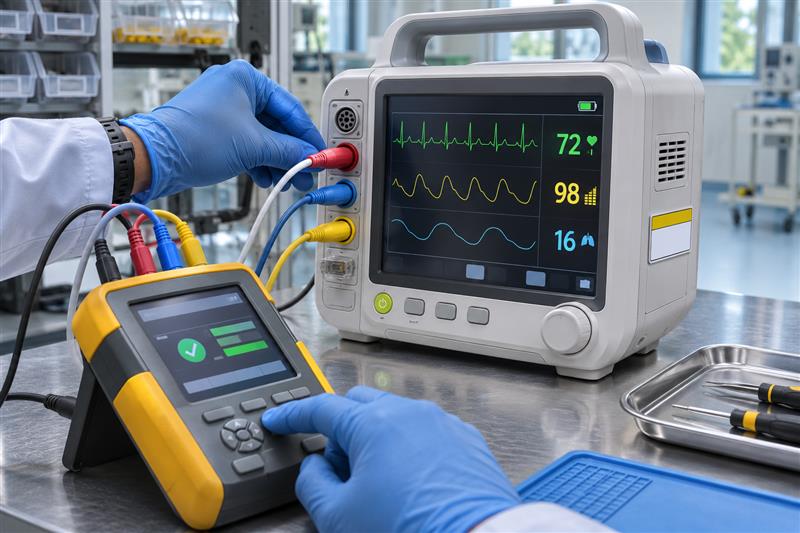
Use the manufacturer’s instructions and a qualified technician to select checks appropriate to the device and intervention. These may include visual inspection, functional testing, calibration or electrical safety testing where applicable. Record the test method, result, instrument and any out-of-tolerance finding. A device that fails a required check remains on hold until the issue is resolved and the check is repeated.
The WHO medical equipment maintenance overview distinguishes performance and safety inspections and describes inspection before a repaired device returns to use. For facilities within its scope, the Joint Commission equipment FAQ describes electrical safety and functional checks following major repair or upgrade. Apply the requirements relevant to your facility rather than assuming one universal test list.
Reconcile holds, notices and open work
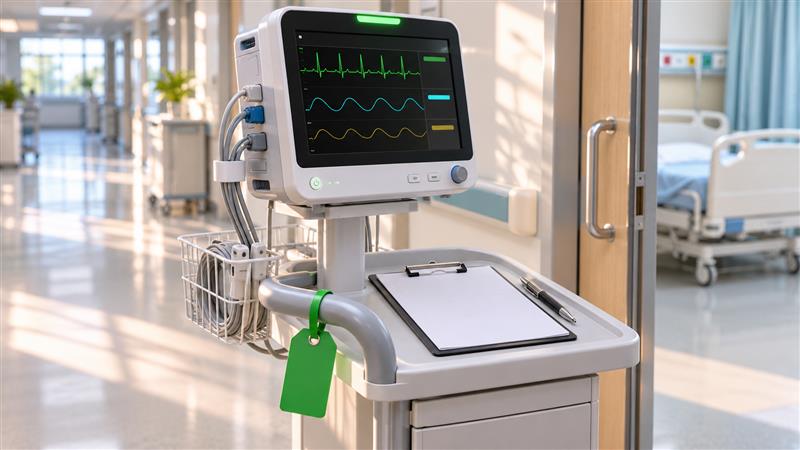
Before changing the unit’s status, check whether a recall, safety notice, unresolved incident or second work order still applies. A repair can close one fault while leaving another restriction active. Compare the physical hold tag with the maintenance system. If a manufacturer notice is involved, follow its specific instructions and our medical device recall response checklist for traceability.
Hand over to the clinical user
Tell the receiving department what was repaired, which checks passed, whether accessories or consumables changed, and whether users need updated instructions. Confirm that the correct unit and accessories reach the intended location. Record who accepted the handover and when. For high-risk equipment, use the hospital’s clinical sign-off process before routine use; a technician’s completed ticket should not silently replace it.
Close the record without losing evidence
Keep the work order, service report, test results, calibration evidence if relevant, exception decisions and handover record linked to the same asset. Update the next maintenance date only under the approved schedule. If repairs remain pending, keep the unit visibly restricted and assign an owner. Our maintenance backlog triage checklist helps track open work. This operational guide does not replace manufacturer instructions, clinical judgment or local law.
Related articles