Fully Automatic HbA1c Analyzer
A fingerstick glucose reading tells you what is happening right now. If you need to know how diabetes has been controlled over the last two or three months, most clinicians look at HbA1c — glycated hemoglobin. A fully automatic HbA1c analyzer is built for that job: once the sample is loaded, separation, measurement and the result are handled by the instrument. Nobody has to stand there stepping through each stage.
You will see these units in hospital labs, outpatient laboratories and community clinics. They do not replace a bedside glucometer. They report the share of hemoglobin that has been glycated, which is a better marker of long-term control than a single fasting glucose.
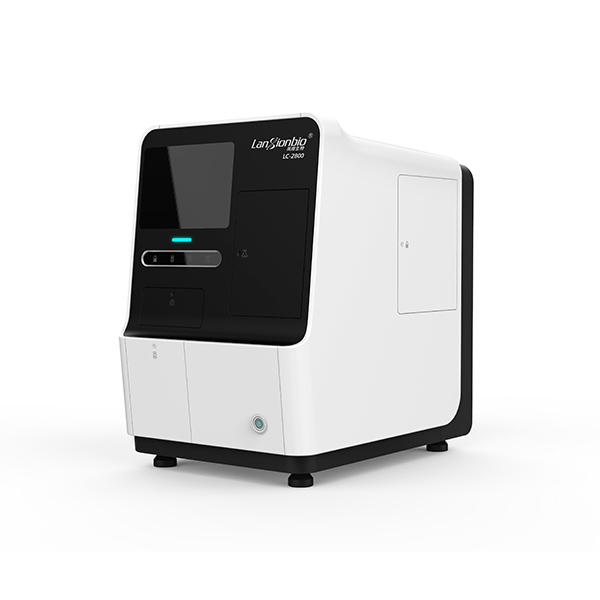
A typical benchtop fully automatic HbA1c analyzer
The methods that actually matter when you buy
Plenty of machines are sold as “fully automatic.” The chemistry behind them is not the same. Before you compare cabinets and throughput, decide whether you need a central-lab report or a small panel that also covers a few inflammatory markers.
| Method | What it does | Usually chosen by |
|---|---|---|
| HPLC | Separates hemoglobin fractions, then quantifies HbA1c | Central labs that need widely accepted results |
| Ion-exchange chromatography | Elutes glycated fractions by charge | Automated routine lines |
| Gel electrophoresis | Separates hemoglobins on a gel, then reads HbA1c | Labs that already run electrophoresis |
| Immunoturbidimetry / latex-enhanced assay | Antigen–antibody reaction for HbA1c | Clinics that also run CRP or microalbumin |
High daily volume and NGSP/IFCC reporting usually point to HPLC or ion exchange. If a clinic needs HbA1c plus CRP and urinary microalbumin, a specific protein analyzer often saves bench space. You do not always need a dedicated glycohemoglobin unit.
Two analyzers labs ask us about
-
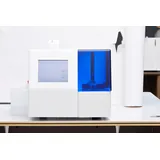
Full Auto Glycated Hemoglobin HbA1c Analyzer
SKU:p2273
A fully automatic laboratory unit for routine HbA1c. Better fit when the daily sample load is steady.
View product -
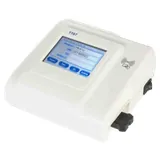
HbA1c Analyzer
SKU:1137
A smaller analyzer for clinics and community centers. It does not need a full laboratory bench.
View product
What the number actually means
HbA1c forms when glucose binds to hemoglobin. Red cells live about 120 days, so the result roughly tracks average glucose over the past 8–12 weeks. A fasting glucose can swing with breakfast, exercise or a rough night; HbA1c does not move that fast.
Clinicians use it to see whether treatment is working, whether the drug plan should change, and how high the complication risk looks. Anemia, hemoglobin variants, recent heavy blood loss or transfusion can pull the result off. One number is not the whole story.
How a run usually goes
Menus differ by brand. The workflow does not. Read the manual for the unit in front of you; do not copy the sequence from another manufacturer.
- Start-up. Let the instrument warm up. Prepare reagents and QC as written. Label tubes before you mix anything.
- Calibrate or run QC. If QC fails, stop. Patient samples can wait.
- Select the HbA1c assay and load the sample. Many fully automatic units finish in 10–15 minutes, depending on the kit.
- Check the reference range. A common adult range sits around 4%–6%; follow the insert and your lab’s interval. Repeat unexpected values before you release them.
- File the result. Send it to the LIS or print the report, and keep the QC log. You will need it when someone asks what happened last Tuesday.
Things that go wrong if you rush
- Untrained staff should not run the analyzer. Read the manual first.
- Check power, fluid lines and the lamp before you start a batch.
- Prepare samples the way the insert says. Wrong dilution or expired reagent will drift the result.
- Do not “approximate” the pipetting volume.
- Keep the reagent area and cuvettes clean. Do not block the vents.
- Wear gloves with corrosive reagents. Do not stare into a strong light source.
- Wash up and archive when you finish. If the unit will sit unused, store it as the manufacturer asks.
What usually sits on the same diabetes workbench
-
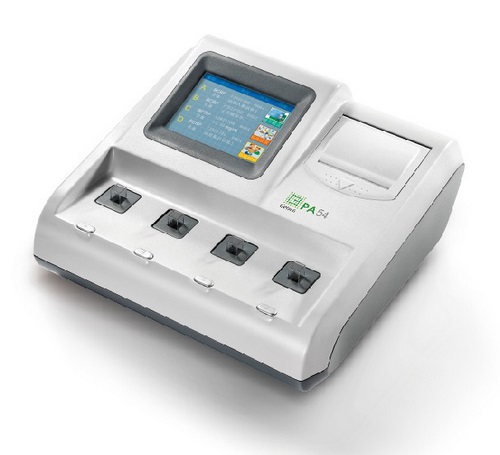
4-channel Specific Protein Analyzer CCL-PA54
SKU:CCL-PA54
Runs HbA1c, hsCRP, mALB and D-Dimer on one instrument. Useful when bench space is tight.
View product -
HbA1c Test Cassettes, 25 Tests/Box
SKU:1138
Matching cassettes for the analyzer. Quote reagent volume with the instrument so supply does not stall later.
View product
Related articles