Radiology Department Setup: Equipment List and Procurement Guide for 2026
Radiology Department Setup: Equipment List and Procurement Guide for 2026
Table of Contents
- Why Radiology Procurement Decisions Are High-Stakes
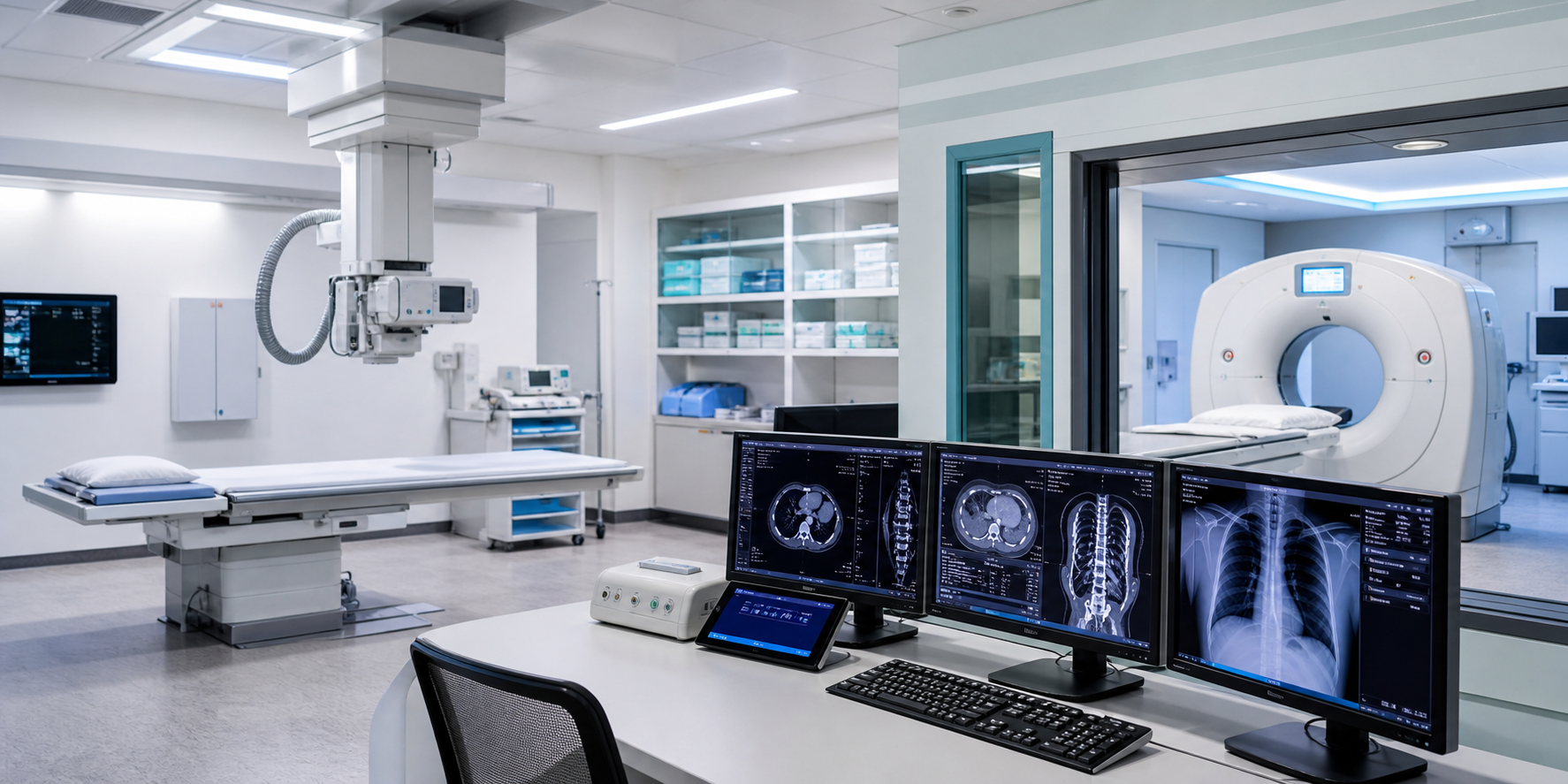
- Core Equipment for a Functional Radiology DepartmentDiagnostic Imaging Systems
- Supporting and Ancillary Equipment
- How to Scope Your Radiology Setup
- Sourcing from China: What to Verify Before You Buy
- Procurement Process: From Specification to Delivery
- FAQs
- Final Thoughts
Why Radiology Procurement Decisions Are High-Stakes
Radiology equipment sits among the largest line items in any hospital capital budget. A single digital radiography system can run $40,000 to $120,000. A mid-range CT scanner pushes well beyond that. Specify the wrong configuration, choose an unverified supplier, or underestimate installation requirements, and you're looking at costly delays, import complications, or equipment that doesn't match your facility's power infrastructure or clinical workflow.
This guide is for procurement officers and hospital administrators actively planning a radiology department setup or upgrade in 2026. The goal is a clear, practical framework for moving from equipment list to delivered installation.
Core Equipment for a Functional Radiology Department
No two facilities need the same configuration. A district hospital in Sub-Saharan Africa has different throughput demands than a private diagnostic center in Southeast Asia. That said, most functional radiology departments share a common equipment baseline.
Diagnostic Imaging Systems
Digital Radiography (DR) System The foundation of any radiology department. DR systems replace film-based X-ray with flat-panel detectors that produce digital images immediately. Key specifications to define upfront: detector size (typically 17x17 inches), image resolution (DQE rating), and whether you need a ceiling-mounted, floor-mounted, or portable configuration.
Fluoroscopy System Used for real-time imaging during procedures such as barium studies and interventional guidance. Relevant for hospitals with gastroenterology or surgical departments that require dynamic imaging capability.
Ultrasound Systems Ultrasound sits at the intersection of radiology and point-of-care diagnostics. For a dedicated radiology department, you typically need at least one high-end cart-based system with multi-frequency probes covering abdominal, obstetric, cardiac, and vascular applications. Mindray and Sonoscape both have well-documented clinical performance across these categories.
Computed Tomography (CT) Scanner A 16-slice or 64-slice CT scanner covers the diagnostic range for most secondary and tertiary hospitals. Slice count affects scan speed and image reconstruction capability. For oncology or trauma centers, 128-slice and above becomes relevant. Neusoft is a notable Chinese manufacturer with a documented installed base across developing markets.
Magnetic Resonance Imaging (MRI) MRI involves the most complex site preparation of any radiology modality: RF shielding, magnet quench pipe installation, chilled water systems, and significant floor load requirements. A 1.5T system is the standard clinical entry point. Budget $300,000 to $600,000 or more depending on configuration and installation scope.
Mammography System Essential for hospitals with women's health programs. Digital mammography (2D) is the current standard; digital breast tomosynthesis (DBT) adds 3D capability for improved lesion detection in dense breast tissue.
Supporting and Ancillary Equipment
Beyond the primary imaging systems, a fully operational radiology department requires:
- PACS (Picture Archiving and Communication System): Stores, retrieves, and distributes digital images across departments. Often bundled with DR or CT systems, but worth specifying separately to ensure compatibility.
- RIS (Radiology Information System): Manages patient scheduling, workflow, and reporting. Integration with your hospital HIS is a key requirement.
- Dry laser printers: Even in largely digital departments, hard-copy output is still expected in many markets.
- Radiation protection accessories: Lead aprons, thyroid shields, and protective barriers are non-negotiable for staff safety and regulatory compliance.
- Mobile X-ray unit: Enables bedside imaging for ICU, emergency, and post-surgical patients who cannot be transported to the radiology suite.
- Contrast media injectors: Required for contrast-enhanced CT and MRI studies.
- Diagnostic viewing workstations: High-resolution monitors (minimum 3MP for radiology reporting) with appropriate calibration software.
How to Scope Your Radiology Setup
Before requesting quotations, define these parameters clearly. Vague briefs produce vague quotes, which leads to scope creep and budget overruns.
1. Patient volume and modality mix How many X-rays, ultrasounds, and CT scans do you expect per day? This determines whether you need one DR room or two, a single CT unit or a backup.
2. Available physical space CT and MRI rooms require specific dimensions and shielding. A standard DR room needs roughly 25–35 square meters. MRI suites typically require 50+ square meters plus a dedicated technical room. Share your floor plan with suppliers early in the process.
3. Power infrastructure CT scanners and MRI systems draw significant power loads. Confirm your facility's available voltage, phase configuration, and whether a dedicated UPS or generator backup is in place before finalizing specifications.
4. Regulatory and import requirements Many countries require CE marking, FDA clearance, or local health authority registration before equipment can be legally operated. Verify this before finalizing your supplier list. Any credible supplier should be able to provide the relevant documentation without being asked twice.
5. After-sales and service coverage Who services the equipment when something fails? This is one of the most consistent pain points in international medical equipment procurement. Confirm whether the supplier has local service agents, offers remote diagnostics, and provides a defined parts warranty period.
Sourcing from China: What to Verify Before You Buy
Chinese manufacturers supply a significant share of the world's diagnostic imaging equipment, including to hospitals across Europe, the Middle East, and Africa. The quality range is wide, which makes supplier verification essential, not optional.
When evaluating a Chinese radiology equipment supplier, confirm:
- Brand authorization: Is the supplier an authorized distributor of the brands they list? Unauthorized resellers cannot guarantee genuine parts or factory warranty support.
- Export track record: Has the supplier completed deliveries to your region? Ask for documented project references, not just a country list.
- Regulatory documentation: Can they provide CE certificates, ISO 13485 certification, and country-specific import documentation?
- Installation capability: Do they provide on-site installation, commissioning, and operator training, or does the equipment arrive and the relationship end there?
- Spare parts availability: Lead times for parts from China can run 4–12 weeks. Understand what's held in stock versus made to order.
China Care Medical works with verified Chinese brands including Mindray, Sonoscape, Neusoft, Agfa, and FUJI, and has completed turnkey installations across 100+ countries. The platform is organized by medical department, so your procurement team can browse radiology-specific equipment without sorting through unrelated product categories.
Procurement Process: From Specification to Delivery
A structured procurement process reduces the risk of specification errors, budget surprises, and delivery delays. Here is a practical sequence for radiology department procurement:
Step 1: Define clinical requirements Work with your radiologists and clinical leads to produce a technical specification for each modality. Include minimum performance parameters, not just brand preferences.
Step 2: Shortlist suppliers Identify 3–5 suppliers who can demonstrate relevant export experience, brand authorization, and installation capability. Generic B2B marketplaces can surface options, but they rarely provide the procurement support needed for high-value imaging equipment.
Step 3: Request formal quotations Send a structured RFQ that includes your technical specs, delivery address, required documentation, installation scope, and warranty terms. Compare quotes on a like-for-like basis.
Step 4: Verify documentation Before issuing a purchase order, confirm CE certificates, manufacturer authorization letters, and any country-specific import registration documents.
Step 5: Agree on installation and training scope Define who installs, who commissions, and who trains your staff. Get this in writing as part of the contract, not as a verbal commitment.
Step 6: Plan for customs and logistics Radiology equipment — particularly CT and MRI systems — ships in large crates and requires careful handling. Confirm Incoterms, port of entry, and whether the supplier manages customs clearance or hands off at origin.
Step 7: Commission and validate After installation, run acceptance testing against your original specifications before signing off on delivery. This is your last point of leverage before the warranty period begins.
FAQs
What is the minimum equipment list for a basic radiology department? A functional basic setup requires at minimum a digital radiography (DR) system, a mobile X-ray unit, an ultrasound system, a PACS for image storage, and radiation protection equipment. CT and MRI are added based on budget and patient volume.
How long does it take to procure and install radiology equipment from China? Typical lead times range from 8 to 20 weeks depending on the modality, customization requirements, and shipping destination. CT and MRI installations take longer due to site preparation. Plan for at least 12–16 weeks for a full radiology department setup.
What certifications should Chinese radiology equipment have? At minimum, look for CE marking (required for European and many international markets), ISO 13485 quality management certification, and any country-specific health authority registration required by your local regulator.
Is it safe to source radiology equipment from China? Yes, provided you source from verified manufacturers or authorized distributors. Major Chinese brands including Mindray, Neusoft, Agfa, and Sonoscape have documented clinical use in hospitals globally. The risk lies in sourcing from unverified resellers who cannot provide genuine parts or warranty support.
What is PACS and do I need it? PACS (Picture Archiving and Communication System) stores and distributes digital images from your DR, CT, and MRI systems. Any department running more than one digital imaging modality benefits from a PACS. Without it, managing images across departments becomes operationally difficult at scale.
How do I compare radiology equipment quotes from different suppliers? Compare on technical specification first, then installation scope, warranty terms, documentation provided, and the supplier's verifiable track record in your region. A lower price that excludes installation and training often costs more in the end.
What is the difference between a 16-slice and 64-slice CT scanner? Slice count refers to how many image slices the scanner captures per rotation. A 64-slice CT produces higher-resolution images faster, which matters for cardiac imaging and trauma cases. A 16-slice is adequate for general diagnostic use in most secondary hospitals and is significantly more cost-effective.
Final Thoughts
Radiology department procurement is not a single purchase decision. It is a multi-modality project that requires clinical input, infrastructure planning, supplier verification, and post-installation support — all running in parallel.
Suppliers who can demonstrate export experience, brand authorization, and installation capability in your region are worth the extra due diligence to identify. A competitively priced CT scanner from an unverified source is not a bargain if it arrives without proper documentation or sits idle because no one can service it.
If your team is currently specifying or budgeting a radiology setup, China Care Medical offers department-organized browsing across radiology and imaging equipment, with verified partnerships covering Mindray, Sonoscape, Neusoft, Agfa, and FUJI. Submit an inquiry and expect a response within 24 hours.
Related articles