How to Write a Hospital Equipment Procurement RFQ in 2026: A Step-by-Step Guide
How to Write a Hospital Equipment Procurement RFQ in 2026: A Step-by-Step Guide
Table of Contents
- Why Your RFQ Determines the Quality of Quotes You Receive
- What to Include in a Hospital Equipment Procurement RFQSection 1: Project Overview
- Section 2: Equipment Specifications
- Section 3: Compliance and Certification Requirements
- Section 4: Delivery, Installation, and Commissioning
- Section 5: After-Sales Support Terms
- Section 6: Commercial Terms and Bid Submission Instructions
- Common RFQ Mistakes That Cost Procurement Teams Time and Money
- How to Evaluate Supplier Responses
- Sourcing from Chinese Manufacturers: What Your RFQ Needs to Address
- FAQs
- Final Thoughts

A poorly written RFQ is one of the most common reasons hospital procurement cycles stall. Suppliers submit incomplete quotes, specifications get misread, and your team spends weeks chasing clarifications instead of moving forward.
This guide walks you through how to write a hospital equipment procurement RFQ that gets you accurate, comparable responses from verified suppliers - whether you are equipping a single ICU or building out a complete facility.
Why Your RFQ Determines the Quality of Quotes You Receive
An RFQ (Request for Quotation) is not a formality. It tells a supplier exactly what you need, under what conditions, and how they should respond. A vague RFQ produces vague quotes. A specific one produces quotes you can actually compare.
For procurement teams sourcing high-value equipment from international manufacturers, a well-structured RFQ also reduces the risk of receiving non-compliant products, unexpected freight costs, or equipment that cannot be serviced in-country.
The stakes in hospital procurement are higher than in most industries. Getting this document right is worth the effort.
What to Include in a Hospital Equipment Procurement RFQ
Section 1: Project Overview
Start with context. Suppliers need to understand the scope before they can quote accurately.
Include:
- Facility name and type (public hospital, private clinic, NGO health center)
- Location (country, city, and urban or rural - this affects logistics planning)
- Project scope (single department, multi-department, or full turnkey setup)
- Timeline (expected delivery date, installation window, go-live target)
- Funding source (government budget, donor-funded, private capital) where relevant to compliance requirements
One clear paragraph is enough here. Do not pad it, but do not skip it either.
Section 2: Equipment Specifications
This is the most critical section of your RFQ. Vague specifications produce quotes that cannot be compared.
For each item, specify:
- Equipment name and category (e.g., portable ultrasound, haemodialysis machine, patient monitor)
- Quantity required
- Technical specifications (power requirements, dimensions, clinical parameters, connectivity)
- Preferred brand or equivalent (if you have an approved list or a preference)
- Intended clinical use (e.g., ICU monitoring, OR imaging, dialysis unit)
Related products
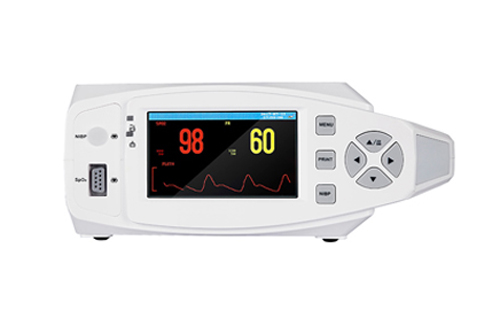
Patient monitor
SKU: CCM81A
Review the monitoring configuration, included accessories and service requirements.
View product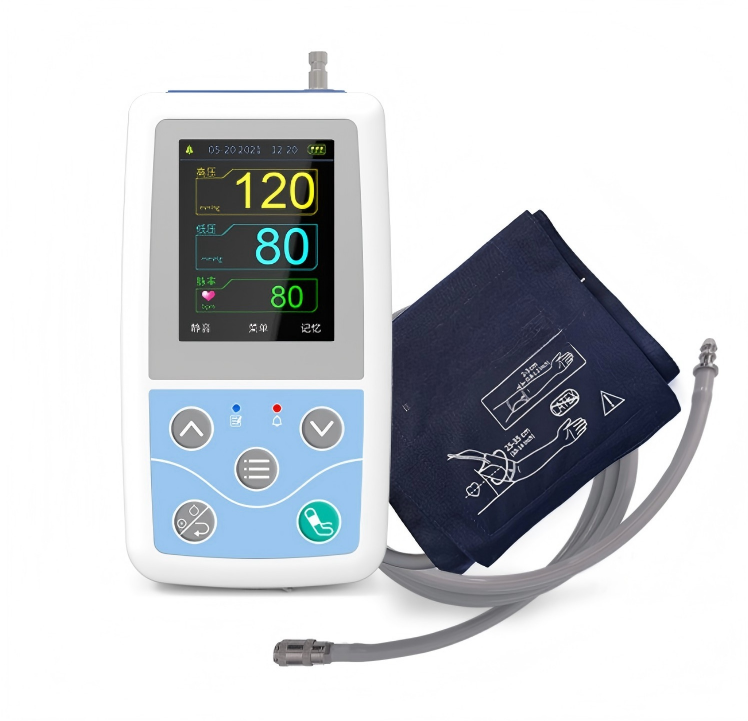
Patient Monitor
SKU: CCE-PM50
Review the monitoring configuration, included accessories and service requirements.
View product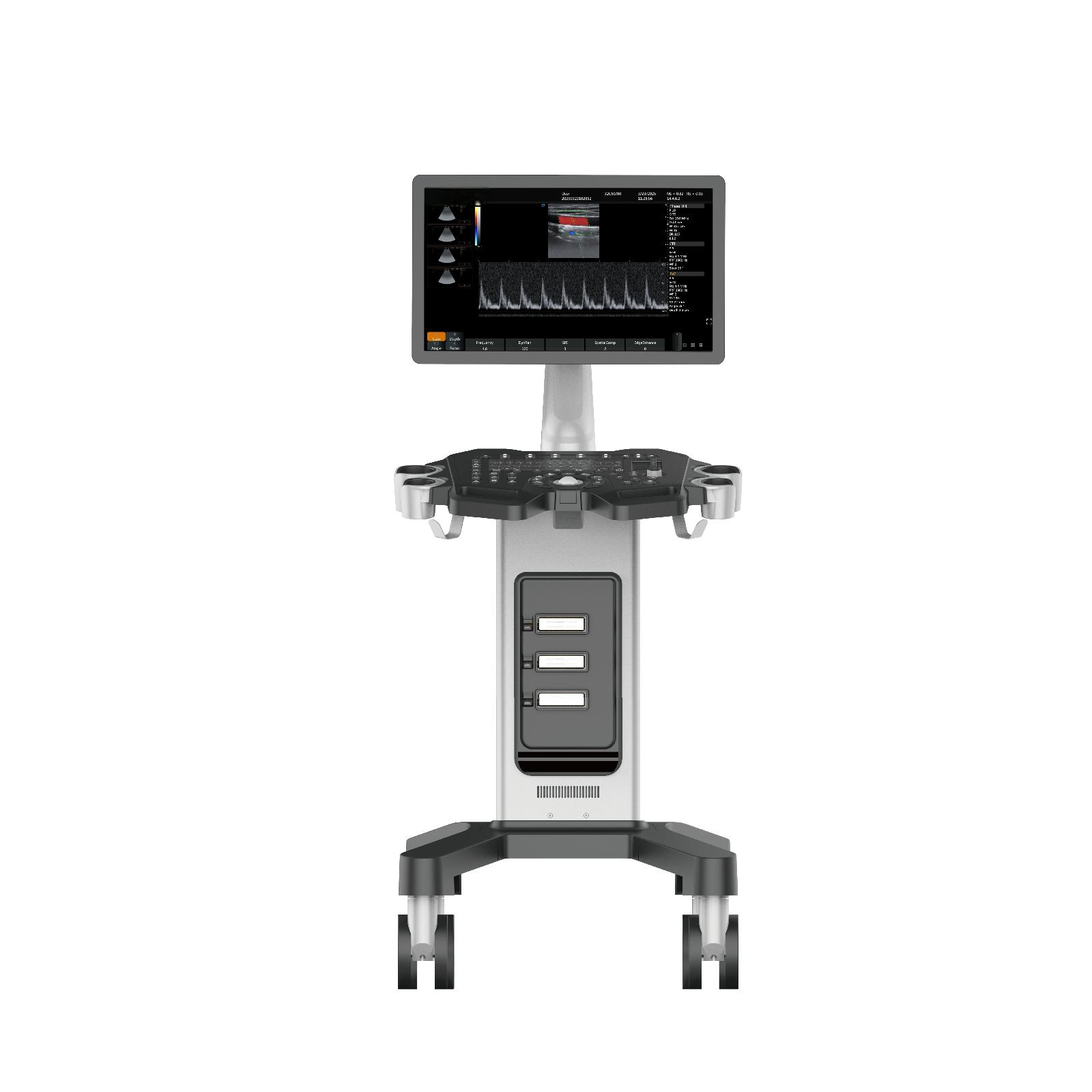
Mid-to-high-end trolley-style color ultrasound system
SKU: CCB-F5
Compare imaging configuration, probe options and service arrangements.
View product
High-end trolley-style color ultrasound system
SKU: CCB-T8
Compare imaging configuration, probe options and service arrangements.
View product
Use a table format - one row per line item. It makes side-by-side comparison straightforward.
# | Equipment | Qty | Key Specs | Brand Preference |
1 | Patient Monitor | 10 | 5-parameter, 15" display, SpO2/NIBP/ECG | Mindray or equivalent |
2 | Haemodialysis Machine | 6 | Bicarbonate dialysis, single needle option | Fresenius or equivalent |
If you are uncertain about exact specifications for certain items, note that you are open to supplier recommendations based on the clinical use case. This keeps the process transparent and avoids ruling out strong options unnecessarily.
Section 3: Compliance and Certification Requirements
Every market has its own regulatory requirements. State yours clearly so suppliers know upfront whether they qualify.
Specify:
- Required certifications (CE, FDA, ISO 13485, local health ministry registration)
- Documentation required (product registration certificates, test reports, user manuals)
- Language requirements for documentation and labeling
For procurement teams in Sub-Saharan Africa, Southeast Asia, or the Middle East, this section often determines which Chinese manufacturers can legally ship to your country. Do not leave it out.
Section 4: Delivery, Installation, and Commissioning
Shipping medical equipment internationally involves more than freight. Your RFQ should define what you expect from the supplier beyond the loading dock.
Include:
- Incoterms (CIF, DDP, EXW, FOB - and what each means for your cost structure)
- Port of entry or delivery address
- Installation requirements (who installs, who supervises, and the expected timeline)
- Commissioning and testing (do you expect the supplier to verify the equipment is operational before handover?)
- Training requirements (on-site clinical or technical training for your staff)
If you are procuring a full department setup - a laminar flow operating room, a dialysis center, or a complete ward - be explicit that you expect turnkey delivery. Suppliers who cannot deliver end-to-end should self-select out at this stage.
Section 5: After-Sales Support Terms
This section separates serious suppliers from those who go quiet after shipment. For hospital procurement teams, after-sales support is not optional.
Specify:
- Warranty period (12 months is standard; 24 months is preferable for capital equipment)
- Spare parts availability (local stock or international shipping lead time)
- Preventive maintenance schedule
- Technical support channel (email, phone, on-site response time)
- Response time commitment for critical equipment failures
Ask suppliers to describe their after-sales model in their response. A supplier who cannot answer this question clearly is a risk worth noting.
Section 6: Commercial Terms and Bid Submission Instructions
Close the RFQ with clear instructions so you receive structured, comparable responses.
Include:
- Quotation format (itemized pricing, unit cost, total cost, freight, taxes)
- Currency (USD is standard for international medical equipment procurement)
- Payment terms (T/T, LC, installment schedule)
- Bid validity period (typically 30-90 days)
- Submission deadline and contact details
- Clarification process (how suppliers can ask questions before submitting)
Common RFQ Mistakes That Cost Procurement Teams Time and Money
Even experienced procurement officers make these errors. Check for them before sending your RFQ out.
Listing equipment without quantities. Suppliers cannot quote accurately, and you end up with range pricing that is useless for budget approval.
Omitting power supply specifications. Equipment built for 110V will not function in a 220V market without a transformer. State your voltage and frequency.
Skipping delivery terms. "Please quote FOB Shanghai" is not the same as "Please quote CIF Mombasa." The cost difference can reach 15-30% of the equipment value.
Not specifying certification requirements. You may receive a quote for equipment that cannot be legally imported into your country.
Setting an unrealistic timeline. Custom or high-specification equipment from China typically requires 4-8 weeks for production, plus shipping time. Build this into your project plan from the start.
Sending the RFQ to too many unvetted suppliers. More responses is not better if the suppliers are unverified. Five qualified vendors will serve you better than twenty unknown ones.
How to Evaluate Supplier Responses
Once quotes come in, use a consistent scoring framework. Price alone is not a sound basis for decision-making at this level.
Evaluate each supplier on:
Criteria | Weight |
Technical compliance with specifications | 30% |
Price and payment terms | 25% |
Delivery timeline and logistics capability | 15% |
Certifications and regulatory compliance | 15% |
After-sales support model | 15% |
Request references or project documentation from shortlisted suppliers. A supplier with completed installations in your region carries significantly less risk than one without a regional track record.
Sourcing from Chinese Manufacturers: What Your RFQ Needs to Address
Chinese medical equipment manufacturers supply a large share of the global market, particularly for hospitals in developing markets. The pricing is often competitive and the product range is extensive. But procurement risks are real when working with unverified suppliers.
When your RFQ is going to Chinese manufacturers, add these specific requirements:
- Factory audit or third-party inspection clause (right to inspect before shipment)
- Packing list and pre-shipment documentation requirements
- Country-specific import documentation (certificate of origin, FORM A for preferential tariffs where applicable)
- Local representative or agent contact for post-delivery support
Working with a sourcing platform that has already verified its manufacturer partners reduces this burden considerably. China Care Medical maintains direct partnerships with established brands including Mindray, Sonoscape, Edan, Neusoft, Agfa, FUJI, and Urit, and has completed turnkey installations across 100+ countries. For procurement teams who would rather not cold-contact factories directly, chinacaremedical.com provides a structured starting point with verified suppliers already in place.
FAQs
What is an RFQ in hospital procurement? An RFQ (Request for Quotation) is a formal document sent to suppliers asking them to submit pricing and terms for specific medical equipment. It defines what you need - technical specifications, delivery requirements, and commercial terms - so that supplier responses are structured and directly comparable.
How is an RFQ different from an RFP? An RFQ focuses on pricing for defined equipment. An RFP (Request for Proposal) is broader and asks suppliers to propose a solution, typically when exact specifications are not yet fixed. For standard hospital equipment procurement, an RFQ is usually the right document.
How many suppliers should I send an RFQ to? Three to five verified suppliers is a practical range for most procurement cycles. Fewer than three limits your ability to compare. More than five creates unnecessary administrative work and rarely produces better outcomes if the additional suppliers are unvetted.
What certifications should I require from Chinese medical equipment suppliers in 2026? At minimum, require CE marking or FDA clearance depending on your market, ISO 13485 quality management certification, and any local health ministry registration required in your country. Always verify that certificates are current and have not expired.
How long does hospital equipment procurement from China typically take? From RFQ to delivery, expect 8-16 weeks for standard equipment. Turnkey projects involving custom installation - operating rooms, dialysis centers - typically require 3-6 months from contract signing to commissioning.
Can I use an RFQ for a full turnkey hospital setup? Yes, but your RFQ needs to clearly define the scope as turnkey and include installation, commissioning, training, and after-sales support as explicit line items. Suppliers who cannot deliver end-to-end should clarify what they can and cannot provide before you shortlist them.
What payment terms are standard for international medical equipment procurement? T/T (telegraphic transfer) with a 30% deposit and 70% balance before shipment is common for smaller orders. For larger contracts, a Letter of Credit (LC) provides additional protection. Installment structures tied to delivery milestones are also used for turnkey projects.
Final Thoughts
A strong RFQ protects your budget, your timeline, and your facility. It filters out suppliers who cannot meet your requirements before you invest time evaluating them.
Define your specifications clearly. State your compliance requirements. Be explicit about delivery and after-sales expectations. The suppliers who respond with complete, structured answers are the ones worth shortlisting.
If you are sourcing from Chinese manufacturers and want to start with verified partners rather than unknown factories, visit chinacaremedical.com to browse equipment across 25+ medical departments and submit an inquiry directly.
Related articles