
Medical equipment after-sales: local visit and remote support
After a hospital buys a machine, the real question is usually not delivery. It is who will repair it, how long that takes, and where spare parts come from. China Care Medical runs after-sales as three parts together: local engineers visit the site, Chinese engineers provide official documents, videos and online guidance, and agents or sales staff keep the case moving. The customer, China-based engineers, local engineers and the agent all follow the same ERP service ticket until the machine is back in use.
A request starts on WhatsApp, or by calling the local agent or local engineer. We first record the model, serial number and fault description, then open a ticket. Equipment purchased from us is repaired free of charge during warranty. After warranty, we quote an engineer fee once. There is no extra charge added later in the job.
Who actually works on the equipment
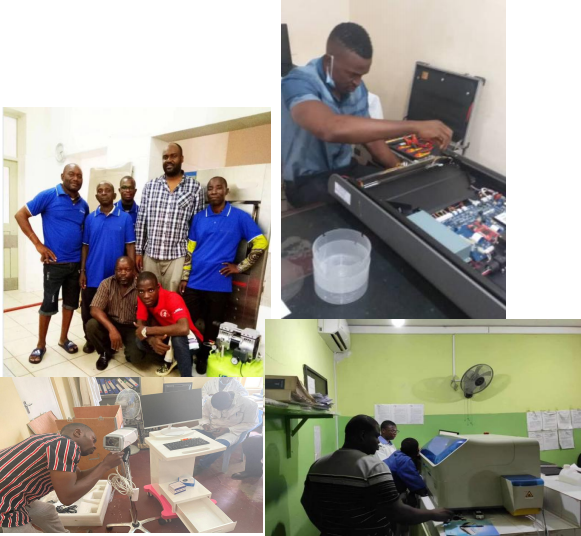
After-sales is not “send the problem back to China and wait.” In African markets, the engineering team includes local engineers in the Democratic Republic of the Congo, engineers from other African countries, and engineers in China. Local engineers can visit during the day. If the cause is not clear on site, engineers in other countries and in China join the diagnosis so one person is not stuck alone.
Chinese engineers do not replace the site visit. They keep the local repair path correct: official manuals, videos, and remote review of photos or clips, so the team knows whether to change a board or check power first. Local agents and sales staff collect hospital-side information and write it into the same ticket.
What happens after you report a fault
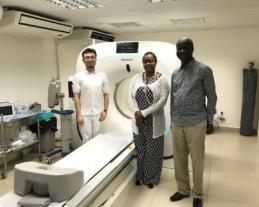
The ERP after-sales system breaks a repair into nodes you can follow. Not every job finishes on the first visit, so the ticket stays open until the work is done. It is not a verbal “we are following up.”
- Open a service ticket. The customer requests help on WhatsApp or by local phone. The agent, engineer or sales colleague collects the model, SN and fault, then creates the ticket.
- Engineering review. Local and Chinese engineers look at likely causes, agree a plan, and book an on-site time. The hospital can also send the machine to the local office.
- First visit. The aim of this visit is to confirm the cause, not to promise that the machine will be fixed the same day. After that, the case usually follows one of three paths.
- Work through to recovery. Wait for parts from China, buy parts locally, or wait for the hospital to handle power, purchasing decisions or other site conditions, then return.
- Keep the installed base in view. For equipment we sold, the ERP equipment record later reminds the customer to inspect the unit, so the hospital knows the current condition and is less likely to run a machine that is already failing.
Three paths after the first visit
The first visit is for a clear cause. Once the cause is clear, we can say where the part comes from and when the next visit will be.
| On-site conclusion | What we do | Typical timing |
|---|---|---|
| Original parts are required and cannot be bought locally | Ship parts from China. After arrival, the engineer returns to replace them until the machine works | Shipping usually 5–7 days, then a second visit |
| Parts can be purchased locally | Give the customer the part price first. After approval, buy and replace the same day or the next day | Same day or next day |
| The hospital still needs to complete other items | Unstable power, a purchasing decision, or department scheduling. We return when those conditions are ready | Depends on the hospital |
All three paths are written into the ticket. The customer, the agent, China-based engineers and local engineers see the same progress. That avoids one side being told by phone while the other side does not know.
How this looks in the DRC: three cases
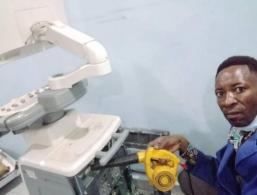
These three records from local engineering show how a visit, remote support and the local office work together. The method depends on the device: some units go back to the office for a board change, some are set up step by step with a remote call, and some are cleaned and repaired inside the hospital.
Case 1: Color Doppler ultrasound — screen stays dark
10 December 2023, Kolwezi, Democratic Republic of the Congo. The machine was a color Doppler ultrasound. The screen would not open, but the keyboard lights still came on. The unit was taken to the Kolwezi office. Engineers replaced the motherboard and hard disk, then returned the machine to the customer.
Case 2: Ultrasound reset to factory settings, no image on the probe
15 January 2024, Mbujimayi. During use the ultrasound returned to factory parameters. The probe was connected but showed no image. The unit went to the local engineer workshop. A Chinese engineer guided the steps on a live call. The local engineer completed the settings on the machine, and the system returned to normal.
Case 3: Hematology analyzer unused for a long time, would not run
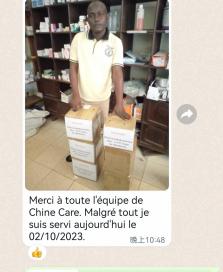
2 October 2023, Isiro. A hematology analyzer had not been powered on for a long period and would not run. A local engineer went to the hospital and worked with a Chinese engineer to start the unit: cleaning first, then replacement of internal parts. The analyzer went back into use. The hospital confirmed the same day that it was working.
How warranty is applied
For equipment purchased from us, after-sales during warranty is free: the ticket, on-site diagnosis, and in-warranty repair. There is no separate “service start” fee. After warranty, we quote the engineer fee first, in one figure, and do not stack extra charges during the job.
Warranty status follows the sales record and the warranty terms. Bring the model and SN when you report a fault so the ticket can match that exact machine.
The room itself can raise the failure rate
Medical devices are electronic equipment. Voltage, temperature and daily handling all matter. Unstable local power, sudden outages, a humid room, or frequent knocks all raise the failure rate. Those faults often return after a repair. Prevention at the hospital is more effective than waiting for the next breakdown.
Suggestions: use a stabilizer or UPS; keep moisture and liquids out of the cabinet; secure probes and screens when moving ultrasound or monitoring units; follow the daily care required for the device. For equipment we sold, ERP later sends inspection reminders. Please check the machine status when those reminders arrive.
What to prepare when you request service
The more complete the information, the more accurate the first diagnosis, and the fewer wasted visits.
- Device name and model
- Serial number on the unit
- Symptoms: when it started, whether it powers on, and which part is abnormal — screen, printout, aspiration or probe
- Recent power cuts, moving the unit, a factory reset, or a consumable change
- A department time window and a contact person for the visit
Send this to the local agent, the local engineer, or the usual WhatsApp contact so a ticket can be opened. Analysis, appointments, parts and the return visit stay on that same ticket until the equipment is working again. If you already have a website account, submit the after-sales form with the equipment details and the fault description. If you do not yet have a local contact, use the Contact Us page. We will assign an engineer or agent to reply.