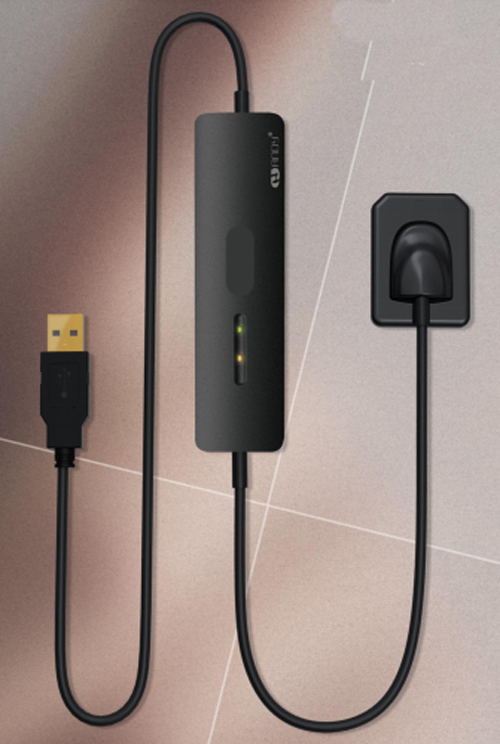
Product info
- Product name:Digital Intraoral X-ray Imagine System
- Product code:CCD500R
Packaging Specifications
- Outer Packaging Size:0.25 × 0.2 × 0.1 m
- Gross Weight:1 kg
- Net Weight:0 kg
- Volume:0.01
Description
CCD500R/CCD600R Dental CMOS Sensor
Core Overview
CCD500R and CCD600R are high-performance dental CMOS sensors launched for dental imaging scenarios, adopting advanced APS CMOS and CsI:Ti scintillator technology, featuring high sensitivity, high resolution and low X-ray dose advantages. The two models differ in active area and pixel resolution to meet diverse clinical imaging needs, and are equipped with TWAIN universal driver and self-developed Handydentist software, supporting multi-user sharing, PACS system docking and rich image processing functions. With plug-and-play design and wide system compatibility, they are ideal dental digital imaging devices for stomatological clinics and hospitals, improving imaging efficiency and diagnostic accuracy while reducing radiation exposure for patients.
Core Technical Specifications
| Category | CCD500R | CCD600R |
|---|---|---|
| Core Chip | CMOS APS (shared) | CMOS APS (shared) |
| Fiber Optical Plate | Equipped (shared) | Equipped (shared) |
| Scintillator | GoS/ CsI:Ti (shared) | GoS/ CsI:Ti (shared) |
| Overall Dimension | 27.5×38.5mm | 32.3×44.3mm |
| Active Area | 22.5×30mm(675mm²) | 27×36mm(972mm²) |
| Pixel Size | 18.5μm (shared) | 18.5μm (shared) |
| Image Pixel | 1.9M (1600×1200) | 2.7M (1920×1440) |
| Resolution | Theoretical:27 lp/mmMeasured:12-14lp/mm (GoS)、18-20lp/mm (CsI) (shared) | Same as CCD500R |
| Compatible OS | Windows2000/XP/Win7/Win8 (32bit&64bit) (shared) | Same as CCD500R |
| Driver | TWAIN Driver (shared) | Same as CCD500R |
| Core Technology | 5T pixel type (shared), CsI:Ti advanced FPS technology (shared) | Same as CCD500R |
Core Product Advantages
1. Advanced Imaging Technology, Low Dose & High Quality
- Adopt APS CMOS + 5T pixel type core technology, 18.5μm fine pixel size with theoretical resolution up to 27lp/mm, ensuring clear imaging of dental fine structures.
- Equip CsI:Ti advanced FPS scintillator (optional GoS), realizing higher sensitivity and resolution, and obtaining the best image quality with the lowest X-ray dose, reducing radiation harm to patients.
- Fiber optical plate matching design further optimizes light transmission and imaging effect, improving the definition of dental imaging.
2. Two Models Optional, Adapt to Diverse Clinical Needs
- CCD500R (1.9M pixels, 675mm² active area): Compact size, suitable for routine dental local imaging needs.
- CCD600R (2.7M pixels, 972mm² active area): Larger active area and higher pixel resolution, suitable for larger field of view dental imaging, with more abundant image information.
3. Strong Compatibility, Easy to Connect and Use
- Configure universal TWAIN driver, compatible with mainstream dental software such as KODAK, SIRONA, SCHICK, no need to replace existing software systems, reducing use and transformation costs.
- Support Windows multi-version operating systems (2000/XP/Win7/Win8, 32/64bit), with strong system adaptability and stable operation.
- Plug-and-play connector design, the sensor can be freely moved between different X-ray rooms, convenient for multi-room sharing and use, improving equipment utilization rate.
4. Professional Software, Rich Functions & Efficient Workflow
- Equip self-developed New Handydentist software, with simple and easy-to-operate interface, reducing the learning cost of medical staff.
- Has powerful image preprocessing and processing algorithms, optimizing image effect and making it easier to read dental imaging information, improving diagnostic efficiency.
- Provide network version multi-user solution, supporting multi-staff simultaneous sharing of database information, facilitating collaborative diagnosis and case management.
- Comply with DICOM 3.0 protocol, can be easily connected to hospital PACS system, realizing digital storage, transmission and archiving of dental images, building a complete digital imaging workflow.
Core Clinical Application
Specialized for dental digital X-ray imaging in stomatological clinical practice, applicable to routine dental examination, dental disease diagnosis (caries, periodontal disease, dental pulp disease, etc.) and pre-operative/post-operative imaging evaluation of dental treatment, meeting the daily digital imaging needs of stomatological clinics and hospitals. The two models are flexible to choose according to the actual clinical imaging field of view and resolution requirements, and the low-dose design is more suitable for long-term follow-up and repeated imaging patients.
no comments