Product info
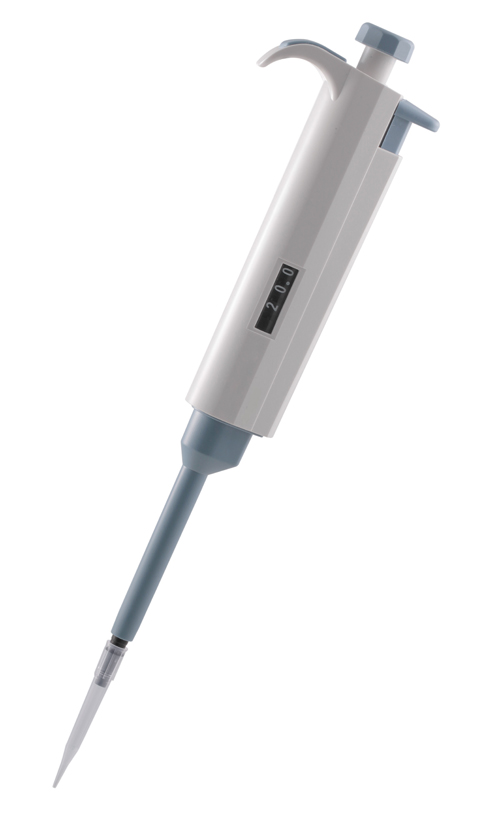
- Product name:Adjustable/Mechanical Pipettes
- Product code:CCL-P1
Out of stock.
Request a Quote
Packaging Specifications
Core Parameters
Description
Mechanical Laboratory Pipette (Adjustable & Fixed‑Volume)
Product Overview
Manually‑operated mechanical pipette for aspirating and transferring defined liquid volumes. Two variants available: adjustable‑volume and fixed‑volume. Widely used in medical laboratories, diagnostic centers and research institutes for sample preparation and reagent transfer.
- Adjustable‑volume: Flexible, multiple selectable volumes within its range, suitable for diverse liquid‑handling tasks.
- Fixed‑volume: Pre‑set single nominal volume, for repetitive identical‑volume pipetting work.
Available Volume Ranges
| Type | Volume Range |
|---|---|
| Adjustable | 0.1‑2.5 µL 5‑50 µL 10‑100 µL 20‑200 µL 50‑200 µL 100‑1000 µL 200‑1000 µL 1000‑5000 µL 2‑10 mL(large‑volume model) |
| Fixed‑Volume | 10 µL, 20 µL, 100 µL, 200 µL, 1000 µL |
Key Characteristics
- Fully manual mechanical operation, no electronic control system.
- Adjustable‑volume models allow volume setting within designated scope; fixed‑volume for repeated constant‑volume operation.
- Compatible matched pipette tips required for use.
- Accuracy, repeatability, chemical resistance and autoclavable capability shall refer to individual model technical datasheet.
Application & Operation Notes
- Applicable for medical diagnostic labs, teaching labs and research facilities for sample and reagent transfer.
- Before use: inspect pipette condition, fit compatible tip; set target volume for adjustable‑volume types.
- Replace tips as required to avoid cross‑contamination.
- Require regular inspection and calibration; follow manufacturer instructions for cleaning, storage and maintenance. Autoclavable feasibility must be verified per specific model.
Difference between core types
- Adjustable‑volume mechanical pipette: multiple selectable volumes within a defined working range, high flexibility for variable‑volume workflows.
- Fixed‑volume mechanical pipette: one fixed nominal volume only, ideal for high‑frequency repetitive pipetting.
- Mechanical vs Electronic pipette: mechanical relies on manual operation; electronic adopts motor‑driven control.
no comments