Bilirubin Phototherapy: Plan the Service Before Buying
A phototherapy purchase should start with a service map: who identifies a newborn needing assessment, where treatment takes place, and who reviews the next bilirubin result. A lamp alone does not provide that pathway.
Separate clinical decisions from procurement decisions. The neonatal team sets treatment and escalation rules using its approved guidance; purchasing translates that pathway into equipment, support and handover requirements.
Turn the care pathway into an equipment brief
List the intended ward locations and the spaces where a parent can remain with the infant. Then check access around the cot, available electrical outlets, positioning limits and where staff will record treatment interruptions. These observations distinguish an adjustable overhead installation from a pad-based configuration more usefully than a photograph.

Specify evidence at delivery
Ask for the exact configuration, instructions, compatible irradiance meter and measurement method. Record measurement distance and coverage during acceptance. An unspecified output value cannot demonstrate performance in your ward. Require a named owner for routine checks and a process for removing a unit from service when it fails inspection.
Equipment configurations to review
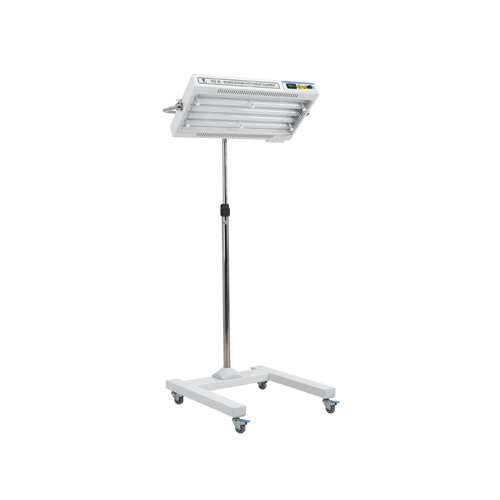
Neonatal Jaundice Treatment Lamp
CCI-XHZ90
Catalogue offers mobile and fixed arrangements. Confirm the exact light-source variant, mounting compatibility and measurement conditions.
View product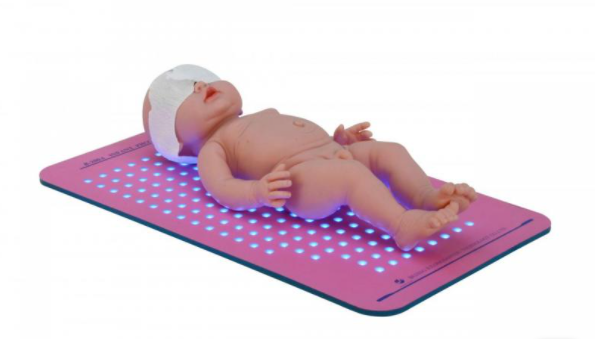
Infant LED Phototherapy Unit with Pad
CCI-200A
Catalogue describes an LED unit with a soft phototherapy pad. Request the complete accessory list, approved cleaning method and model-specific optical report.
View product
Budget for the complete pathway
Include staff training, cleaning materials, replacement accessories, maintenance and a fallback arrangement during repair. Estimate capacity from local workload and actual turnaround time, including cleaning and reassignment. Do not base the number of devices on an assumed fixed treatment duration.
Procurement comparison
| Decision | Evidence to request | Responsible team |
|---|---|---|
| Clinical pathway | Approved treatment and escalation protocol | Neonatal service |
| Installation | Space, positioning and power check | Clinical engineering |
| Operation | Training record and cleaning procedure | Ward management |
| Continuity | Repair response and substitute-unit plan | Procurement |
Decision before ordering
Before signing, walk one hypothetical admission through the proposed service. If a result arrives late, a unit fails or a parent needs help, the team should be able to name the next action and its owner.
Related articles