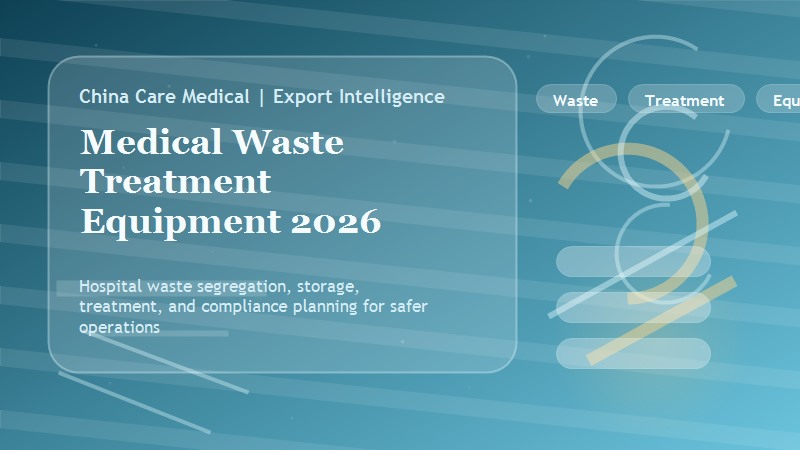
Medical Waste Treatment Equipment for Hospitals 2026: Procurement and Compliance Guide
Quick Answer

Medical waste planning works best when hospitals connect segregation, internal transport, temporary storage, treatment method, operator safety, and compliance records into one system. In 2026, procurement teams should not buy bins, carts, sterilizers, shredders, or storage units separately without first defining waste volume, infection risk, regulatory route, and whether treatment happens on-site or through an external partner. The right equipment package reduces exposure risk, collection errors, and downstream compliance problems.
Begin with Waste Streams, Not with Equipment Catalogs
Hospitals generate different waste categories, and each one has a different handling rule. Infectious waste, sharps, laboratory waste, pharmaceutical waste, anatomical waste, and general waste should not be mixed into one planning assumption. Teams should first map which departments generate which stream, in what daily volume, and at what collection frequency. This same scope-first logic supports the procurement budget guide.
Decide Whether Treatment Is On-Site or Off-Site
Some hospitals only need compliant segregation, transport, and storage before licensed external pickup. Others require on-site treatment using sterilization, shredding, compaction, or other approved methods. That decision changes the full equipment strategy, utility needs, staffing model, and compliance documentation. Large campuses and isolated facilities often evaluate this question alongside broader turnkey hospital setup planning.
Build the Equipment Package Around Real Workflow

A proper waste management package may include color-coded bins, sharps containers, foot-operated collection points, transport trolleys, temporary holding racks, cold storage, weighing devices, treatment units, and disinfection support. The correct mix depends on whether the project emphasizes collection only, short-term containment, or full on-site treatment. Equipment should be selected to fit staff workflow, cleaning method, and transfer frequency.
Plan Department Collection Points Carefully
Collection points should be placed where waste is generated, not where leftover floor space exists. Emergency rooms, operating rooms, wards, laboratories, and procedure rooms create different waste patterns and container turnover. Hospitals can reduce handling mistakes when waste planning is coordinated with the emergency department setup guide, the operating room checklist, and the laboratory equipment guide.
Confirm Infection Control and Staff Safety Requirements
Waste handling is an occupational safety issue as much as a logistics issue. Procurement teams should confirm hand hygiene points, PPE access, sharps protection, spill response, surface cleaning, and closed transport expectations with infection control staff. If safety measures are not written into the scope, the hospital often ends up buying incomplete accessories later.
Match Treatment Capacity to Daily Peaks
If the project includes on-site treatment, the treatment unit should be sized for realistic peak loads, not only average daily output. The team should estimate high-volume days, delayed pickup scenarios, emergency surges, and temporary downtime. Overly small treatment equipment can create storage congestion and noncompliant backlog very quickly.
Include Utilities, Emissions, and Space Access Early
Treatment equipment may require drainage, water, steam, power, ventilation, exhaust handling, and washdown access. Temporary storage rooms may need cooling, odor management, cleaning points, and secure circulation. Hospitals should confirm these building conditions before procurement closes so that treatment equipment does not arrive before the site is ready.
Ask for Documentation, Training, and Service Commitments
Waste treatment equipment is only reliable when staff know how to use it and when service support is defined. Hospitals should ask about preventive maintenance, spare parts, calibration, operating SOP templates, training records, and response times. Those terms become easier to manage when aligned with the maintenance contracts guide.
Tie Compliance Strategy to Procurement Decisions
The right equipment package should make compliance easier, not harder. That means labeling, logs, weight records, treatment evidence, cleaning schedules, and transfer control should all be considered at purchase stage. Procurement teams that plan compliance late often discover that cheap equipment creates expensive operational workarounds.
FAQ
What is the biggest medical waste planning mistake?
The biggest mistake is treating all hospital waste as one stream and then trying to fix segregation behavior after equipment arrives.
When should hospitals choose on-site treatment?
On-site treatment is worth evaluating when waste volume is high, collection logistics are difficult, or the site needs tighter control over infection-sensitive waste handling.
Is temporary storage planning important even with outsourced disposal?
Yes. Even with outsourced disposal, the hospital still needs safe segregation, internal transport, secure storage, and traceable handover.
Conclusion
Medical waste treatment planning succeeds when hospitals connect waste streams, collection logic, storage, treatment method, safety, and documentation before procurement begins. The strongest 2026 projects purchase a complete workflow solution instead of isolated containers or machines. For broader sourcing coordination, start with China Care Medical and review the complete procurement checklist.
Related articles