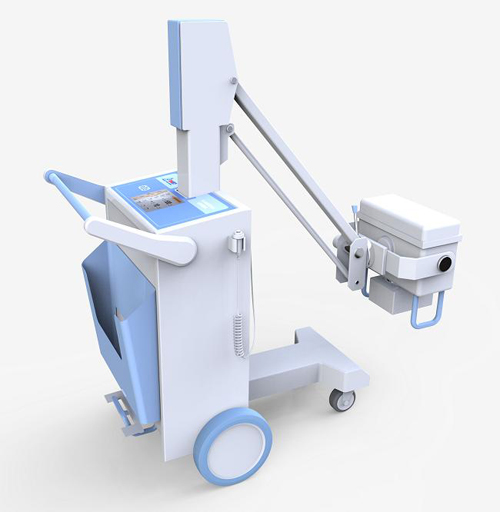
Product info
- Product name:High Frequency Mobile Radiography Analog Machine
- Product code:CCX01C
Packaging Specifications
- Outer Packaging Size:1.5 × 0.75 × 1.48 m
- Gross Weight:250 kg
- Net Weight:230 kg
- Volume:1.67
Description
CCX01C High Frequency Analog Mobile X-ray Machine
Core Overview
CCX01C is a high frequency analog mobile X-ray radiography system with the advantages of flexible movement, simple operation and high examination efficiency, suitable for radiology department, orthopedics, ward, emergency room, operating room, ICU and COVID-19 isolation wards. It supports radiographic examinations of all human body parts and is equipped with wired and wireless dual exposure control, self-balance technology and humanized LCD touch screen operation; the whole machine features compact structure, stable performance and low radiation dose, and can be upgraded to direct digital examination in the future, meeting the diverse mobile imaging needs of medical institutions.
Ⅰ. Core Product Specifications
- Generator output: 5.0 kW
- kV range: 40 kV - 120 kV (1kv step)
- mA range: 25~103 mA
- Exposure performance: 4 films per min, ≤20 ms per film
- X-ray tube: Stationary anode tube, focal spot 1.5*1.5 mm
- Collimator: Bright field light beam collimator (120 W halogen lamp), with auto shut-off facility
- Power supply: Single phase 220 V +/- 10%, 50 Hz
- Mobile stand: Light-weight, low height, easily maneuverable
- Movement range: Max distance from ground ≥2000mm, min distance ≤500mm; horizontal axis rotation 180°, collimator rotation 180°
- Accessory: Durable power cord with adequate strain reliefs, power plugs matching max voltage/current
Ⅱ. Core Product Advantages
- Integrated High-Frequency HV Module: High frequency and high voltage monoblock design, compact structure with stable performance; 50kHz high inverter frequency (world top-level technology) for high-quality X-ray and low radiation dose; 650KJ thermal capacity supporting long-time continuous exposure; with digital closed loop control and fault alarm function.
- Dual Exposure Control Modes: Wired hand controller for direct operation; 20-meter microwave wireless remote control (no barrier/directional restriction, different from infrared remote), ensuring operational safety and convenience.
- Self-Balance Support Arm: The support arm can stop at any position via self balance technology, greatly simplifying clinical operation and positioning.
- Humanized LCD Touch Screen: Configured with human body graphic interface for setting parameters, body shape (adult/children) and positioning; simple and intuitive operation with clear functional buttons (kV, mAs, Test, Debug, etc.).
- Optional Matching Accessories: Multiple optional items to meet various positioning requirements, with simple upgrade workflow:
- Future Digital Upgrade Capability: Can be upgraded to direct digital examinations with simple transformation:
- High-Quality Imaging & Anti-Scattering: Equipped with grids to reduce fog and scattered rays, improve image contrast, and ensure high-quality clinical diagnostic images.
Ⅲ. Core Clinical Application
Suitable for radiology department, orthopedics, ward, emergency room, operating room, ICU and COVID-19 isolation wards; capable of completing radiographic examinations of all human body parts including head, limbs, chest, spine, lumbar vertebrae and abdomen, adapting to mobile imaging needs of various clinical scenarios such as ward rounds, emergency treatment, intraoperative testing and isolated ward diagnosis
no comments