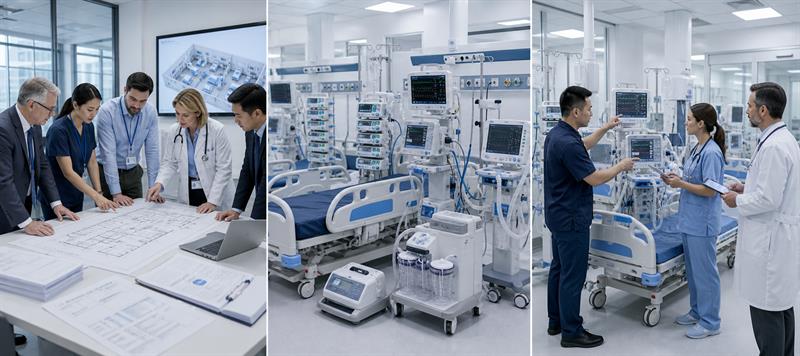
ICU Equipment 2026: Intensive Care Setup Guide
Table of Contents

- Essential ICU Equipment Categories
- Ventilation and Respiratory Support
- Patient Monitoring Systems
- Infusion and Medication Delivery
- Diagnostic and Laboratory Equipment
- ICU Setup Requirements for 2026
- Bed Capacity Planning
- Infrastructure and Support Systems
- Staff Training and Technical Support
- Sourcing Strategy for ICU Equipment
- Verified Manufacturer Partnerships
- Budget Planning and Cost Optimization
- Quality Assurance and Compliance
- Complete ICU Package Implementation
- Project Timeline and Milestones
- Installation and Commissioning
- Ongoing Maintenance and Support
Setting up a modern intensive care unit requires careful planning, substantial investment, and access to reliable medical equipment suppliers. Your ICU equipment package for 2026 must balance clinical effectiveness with budget constraints while ensuring compliance with international healthcare standards.
This comprehensive guide covers everything procurement teams need to know about sourcing complete ICU equipment packages, from essential critical care devices to turnkey installation services. You'll discover how to build a fully functional intensive care unit that meets your patient care objectives and regulatory requirements.
Essential ICU Equipment Categories
Ventilation and Respiratory Support
Mechanical ventilators form the backbone of any ICU equipment package. Your intensive care unit needs ventilators capable of supporting patients with varying respiratory conditions, from basic CPAP support to complex multi-mode ventilation.
Modern ICU ventilators should include:
- Invasive and non-invasive ventilation modes
- Advanced monitoring capabilities with real-time waveform displays
- Integrated oxygen therapy and PEEP management
- Pediatric and adult patient compatibility
- Battery backup for patient transport
High-flow nasal cannula systems complement traditional ventilators by providing respiratory support for patients who don't require full mechanical ventilation. These devices reduce the need for intubation and improve patient comfort during recovery.
Airway management equipment includes laryngoscopes, endotracheal tubes, suction systems, and emergency airway devices. Your procurement should account for both routine procedures and emergency situations where rapid airway access becomes critical.
Patient Monitoring Systems
Central monitoring stations and bedside patient monitors provide continuous surveillance of vital signs and physiological parameters. Your ICU setup requires monitoring systems that can track multiple patients simultaneously while alerting clinical staff to critical changes.
Essential monitoring parameters include:
- ECG with arrhythmia detection and ST-segment analysis
- Blood pressure monitoring (invasive and non-invasive)
- Pulse oximetry with perfusion index
- Capnography for intubated patients
- Temperature monitoring (core and peripheral)
- Intracranial pressure monitoring capabilities
Advanced monitoring modules extend basic functionality with cardiac output measurement, brain function monitoring, and specialized neurological assessments. These additions support complex cases requiring intensive neurological or cardiac care.
Telemetry systems allow patient monitoring during transport within the hospital, ensuring continuous surveillance when moving patients between departments or during diagnostic procedures.
Infusion and Medication Delivery
Infusion pump systems deliver medications, fluids, and nutrition with precise control over flow rates and dosing schedules. Your ICU equipment package needs multiple pump types to handle different clinical scenarios and medication requirements.
Critical infusion equipment includes:
- Multi-channel volumetric pumps for simultaneous medication delivery
- Syringe pumps for high-precision drug administration
- Enteral feeding pumps for nutritional support
- Patient-controlled analgesia (PCA) pumps
- Chemotherapy-compatible pumps for oncology patients
Smart pump technology with drug libraries and dose error reduction systems helps prevent medication errors and improves patient safety. These systems integrate with hospital information systems to maintain accurate medication records.
Fluid warming systems ensure that blood products, IV fluids, and irrigation solutions reach appropriate temperatures before patient administration, preventing hypothermia during critical procedures.
Diagnostic and Laboratory Equipment
Point-of-care testing equipment enables rapid diagnostic results without sending samples to central laboratories. This capability reduces decision-making time and improves patient outcomes in critical situations.
Essential diagnostic equipment includes:
- Blood gas analyzers for acid-base balance assessment
- Portable ultrasound systems for bedside imaging
- Portable X-ray machines for chest and abdominal imaging
- Defibrillators with external pacing capabilities
- Electroencephalography (EEG) machines for neurological monitoring
Laboratory equipment should handle routine blood chemistry, hematology, and coagulation studies that ICU patients require frequently. Rapid turnaround times for these tests directly impact clinical decision-making and patient care quality.
ICU Setup Requirements for 2026
Bed Capacity Planning
Your ICU bed configuration depends on hospital size, patient population, and regional healthcare demands. Most facilities plan for 5-10% of total hospital beds as ICU capacity, with flexibility to expand during emergencies or seasonal demand increases.
Each ICU bed requires dedicated space for equipment placement, staff workflow, and family access. Modern ICU design allocates 200-250 square feet per bed, including storage areas and circulation space around medical equipment.
Bed selection should prioritize patient positioning capabilities, weight capacity, and integration with other ICU systems. Electric beds with trendelenburg positioning, cardiac chair capabilities, and built-in scales improve patient care efficiency.
Infrastructure and Support Systems
Medical gas systems supply oxygen, compressed air, and vacuum services to each bed location. Your infrastructure must provide redundant gas supplies with automatic switching capabilities to maintain continuous service during maintenance or emergencies.
Electrical systems require uninterruptible power supplies (UPS) and emergency generators to maintain equipment operation during power outages. Each bed location needs sufficient electrical outlets for multiple devices, with isolated power systems to prevent electrical hazards.
HVAC systems maintain appropriate temperature, humidity, and air quality while providing positive pressure relative to adjacent areas. Proper ventilation reduces infection transmission and maintains comfortable conditions for patients and staff.
Data networking infrastructure supports electronic health records, equipment connectivity, and communication systems. Robust network design enables real-time data sharing between bedside equipment and central monitoring stations.
Staff Training and Technical Support
Clinical staff training ensures proper equipment operation and patient safety. Your ICU equipment package should include comprehensive training programs covering normal operation, troubleshooting, and emergency procedures for all critical devices.
Technical support services maintain equipment reliability through preventive maintenance, calibration, and repair services. Establishing relationships with qualified biomedical technicians reduces equipment downtime and extends device lifespan.
Training programs should address:
- Equipment operation and safety procedures
- Alarm management and response protocols
- Routine maintenance and cleaning procedures
- Emergency backup procedures
- Documentation and record-keeping requirements
Sourcing Strategy for ICU Equipment

Verified Manufacturer Partnerships
Working with established medical equipment manufacturers ensures product reliability, regulatory compliance, and ongoing support services. Verified partnerships with companies like Mindray, Edan, and Sonoscape provide access to proven ICU equipment with comprehensive warranty coverage.
Manufacturer selection criteria should include:
- ISO 13485 quality management certification
- FDA approval or CE marking for international markets
- Established service network in your region
- Training and technical support capabilities
- Spare parts availability and delivery times
Single-source procurement from integrated manufacturers can simplify equipment compatibility, training requirements, and service coordination. However, multi-vendor approaches may provide cost advantages and reduce supply chain risks.
Budget Planning and Cost Optimization
ICU equipment packages typically range from $200,000 to $500,000 per bed, depending on equipment specifications and local market conditions. Your budget should account for initial equipment costs, installation expenses, training programs, and ongoing maintenance contracts.
Cost optimization strategies include:
- Bundled equipment packages from single suppliers
- Leasing arrangements for high-value equipment
- Refurbished equipment for non-critical applications
- Group purchasing with other healthcare facilities
- Phased implementation to spread costs over time
Total cost of ownership calculations should include equipment purchase prices, installation costs, training expenses, maintenance contracts, and expected replacement timelines. These comprehensive assessments help justify initial investments and plan future budget requirements.
Quality Assurance and Compliance
Equipment validation ensures that your ICU devices meet clinical requirements and regulatory standards. Acceptance testing procedures verify proper installation, calibration, and integration with existing hospital systems.
Compliance requirements vary by country and region but typically include:
- Medical device registration with local regulatory authorities
- Electrical safety testing and certification
- Biocompatibility testing for patient-contact devices
- Software validation for computerized systems
- Risk management documentation
Quality assurance programs establish ongoing monitoring procedures to maintain equipment performance and patient safety throughout the device lifecycle.
Complete ICU Package Implementation
Project Timeline and Milestones
ICU equipment procurement and installation typically requires 12-18 months from initial planning to full operation. Your project timeline should account for equipment selection, regulatory approvals, facility preparation, and staff training.
Key project milestones include:
- Needs assessment and equipment specification (2-3 months)
- Vendor selection and contract negotiation (2-3 months)
- Equipment manufacturing and regulatory approvals (4-6 months)
- Facility preparation and infrastructure installation (2-4 months)
- Equipment delivery, installation, and commissioning (2-3 months)
- Staff training and operational validation (1-2 months)
Risk mitigation strategies address potential delays in equipment delivery, regulatory approvals, or facility construction. Contingency planning ensures that critical care capabilities remain available during transition periods.
Installation and Commissioning
Professional installation services ensure proper equipment setup, calibration, and integration with hospital systems. Qualified technicians handle complex installations while coordinating with facility management, IT departments, and clinical staff.
Commissioning procedures verify that installed equipment meets performance specifications and safety requirements. These tests include:
- Functional testing of all equipment features
- Calibration verification and adjustment
- Safety system testing and alarm verification
- Integration testing with monitoring systems
- Documentation of installation and test results
Turnkey installation services from experienced providers like China Care Medical streamline the commissioning process by coordinating multiple vendors and ensuring system compatibility.
Ongoing Maintenance and Support
Preventive maintenance programs extend equipment lifespan and reduce unexpected failures. Your maintenance strategy should include manufacturer-recommended service intervals, calibration schedules, and replacement part inventory management.
Service contract options include:
- Comprehensive coverage including parts, labor, and emergency response
- Preventive maintenance only with separate repair services
- Time and materials contracts for occasional service needs
- Training programs for in-house biomedical technicians
Remote monitoring capabilities enable proactive maintenance by identifying potential problems before equipment failures occur. These systems reduce service costs and improve equipment availability.
For comprehensive ICU equipment sourcing and turnkey installation services, procurement teams can explore the complete range of intensive care solutions at chinacaremedical.com. The platform provides access to verified manufacturers and project management services across 100+ countries.
Frequently Asked Questions
What is the typical cost range for a complete ICU equipment package in 2026?
Complete ICU equipment packages typically range from $200,000 to $500,000 per bed, depending on equipment specifications, manufacturer selection, and local market conditions. This includes essential monitoring, ventilation, and infusion equipment but excludes facility infrastructure and installation costs.
How long does it take to implement a complete ICU setup from planning to operation?
ICU implementation projects typically require 12-18 months from initial planning to full operation. This timeline includes equipment specification, vendor selection, manufacturing, regulatory approvals, installation, and staff training phases.
Which manufacturers provide the most reliable ICU equipment for international markets?
Established manufacturers like Mindray, Edan, Sonoscape, and Neusoft provide reliable ICU equipment with international certifications and global support networks. These companies offer comprehensive product lines covering all essential ICU equipment categories.
What are the most important factors to consider when selecting ICU equipment suppliers?
Key supplier selection factors include regulatory compliance (FDA/CE marking), established service networks, comprehensive training programs, spare parts availability, and proven track records in similar healthcare environments. Verified partnerships reduce procurement risks and ensure ongoing support.
How can hospitals optimize costs when procuring ICU equipment packages?
Cost optimization strategies include bundled equipment packages, leasing arrangements for high-value items, group purchasing agreements, and phased implementation approaches. Total cost of ownership calculations help identify the most cost-effective procurement strategies.
What ongoing maintenance and support services are essential for ICU equipment?
Essential support services include preventive maintenance programs, 24/7 emergency repair services, calibration and safety testing, spare parts inventory management, and ongoing staff training. Comprehensive service contracts ensure equipment reliability and regulatory compliance.
How do procurement teams ensure ICU equipment meets local regulatory requirements?
Regulatory compliance requires working with suppliers who maintain appropriate certifications (ISO 13485, FDA approval, CE marking) and can provide documentation for local medical device registration. Equipment validation and acceptance testing verify compliance before clinical use.
Conclusion
Successful ICU equipment procurement requires comprehensive planning, reliable supplier partnerships, and careful attention to clinical requirements and budget constraints. Your 2026 ICU equipment package should balance advanced clinical capabilities with cost-effective sourcing strategies.
Focus on verified manufacturer partnerships, comprehensive training programs, and ongoing support services to ensure long-term success. Consider turnkey implementation services that coordinate multiple vendors and streamline the installation process.
Start your ICU equipment procurement process by exploring China Care Medical and related insights such as radiology procurement planning.