Medical centrifuge: a complete guide to choosing the right equipment
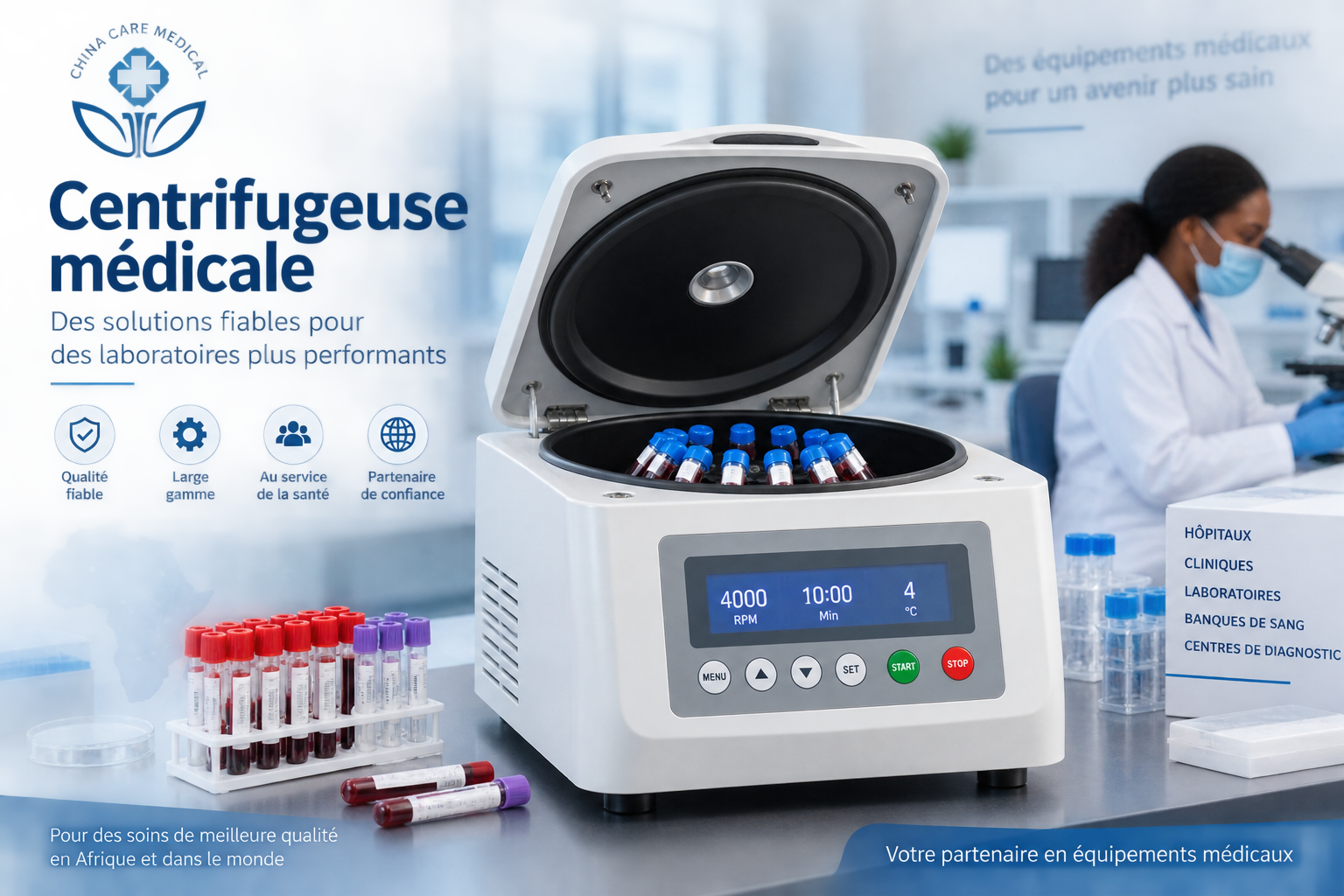
The medical centrifuge is essential equipment in many laboratories, hospitals, clinics, diagnostic centers, and blood banks. Thanks to the principle of centrifugation, it allows the different components of a biological sample to be separated to facilitate its preparation for various laboratory analyses.
There are currently several types of medical centrifuges: low- or high-speed models, refrigerated centrifuges, hematocrit centrifuges, devices for blood banks, or even compact bench-top models. The choice depends in particular on the type of sample, the required capacity, the centrifugation speed, the rotor, and the daily needs of the laboratory.
For hospitals, laboratories, distributors, and importers of medical equipment in the DRC, Congo, and more broadly in Francophone Africa, selecting a suitable centrifuge is particularly important to have equipment that meets the intended applications and the actual conditions of use. This guide presents the operation of a medical centrifuge, its main types, its applications, and the essential criteria to consider before choosing a model.
What is a medical centrifuge?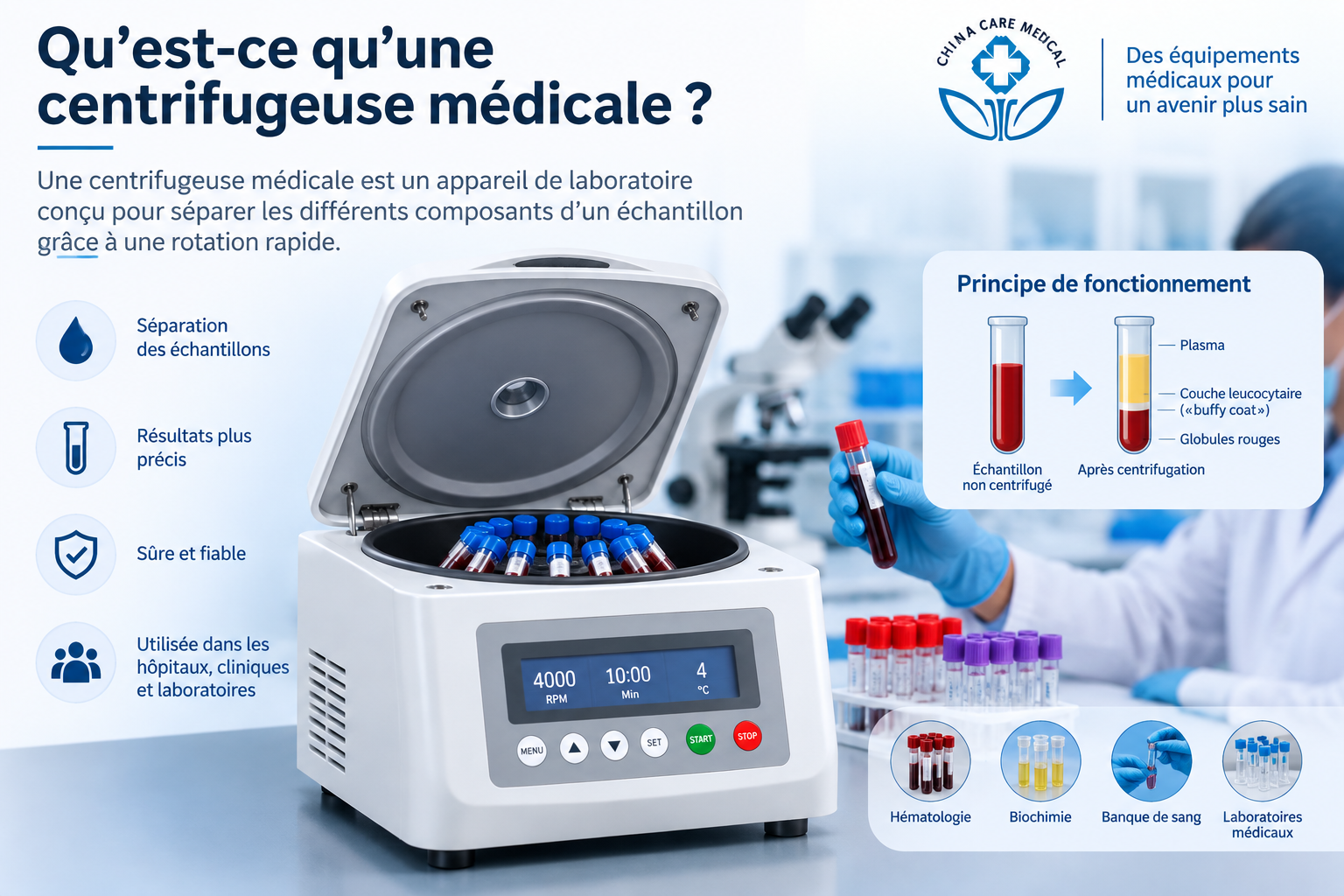
A medical centrifuge is a laboratory device designed to separate the different components of a sample through rapid rotation. When the tubes containing the samples are placed in the rotor and it spins, the force generated by centrifugation allows the components with different physical characteristics to separate.
In medical laboratories, hospitals, clinics, and diagnostic centers, the medical centrifuge is mainly used to prepare biological samples before certain analyses. It plays an important role in blood processing, for example when a separation of serum or plasma is required according to the laboratory procedure used.
A medical centrifuge generally consists of a rotor, a motor, a speed control system, and a secure compartment for the tubes. Depending on the model, it may also offer adjustment of the centrifugation time, different tube capacities, or a temperature control system.
There are several categories of centrifuges suitable for the needs of healthcare facilities, including low-speed centrifuges, high-speed centrifuges, refrigerated centrifuges, hematocrit centrifuges, blood bank centrifuges, and benchtop centrifuges. The choice mainly depends on the type of sample, the volume to be processed, and the requirements of the analysis being performed.
How does a medical centrifuge work?
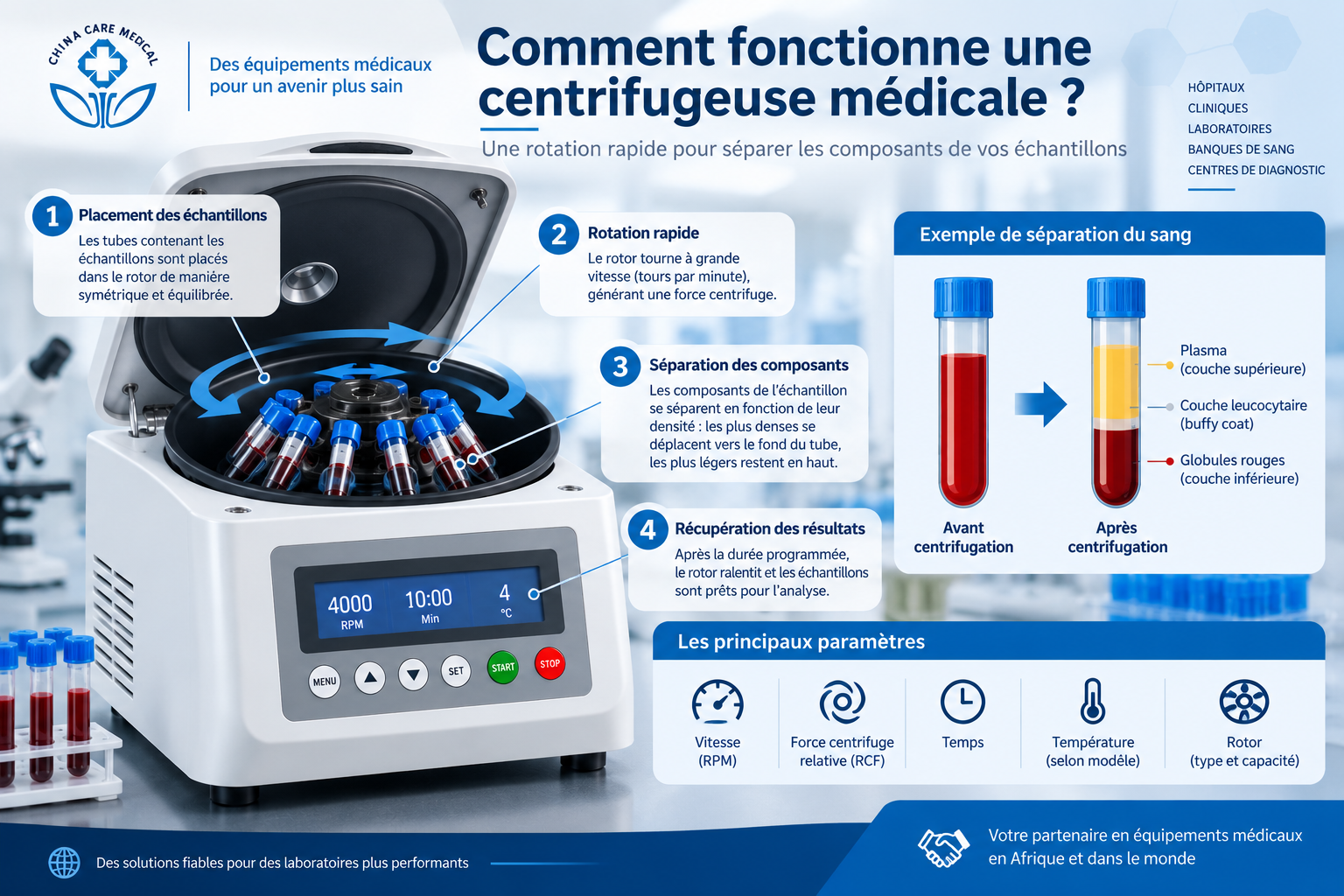
A medical centrifuge works by rapidly spinning tubes containing biological samples around a central axis. This rotation generates a centrifugal force that promotes the separation of the different components of the sample according to their physical properties, particularly their density.
In the case of a blood sample, for example, centrifugation can allow different layers to be obtained depending on the type of tube and the procedure used. After centrifuging an appropriate sample, the densest components usually end up at the bottom of the tube, while the less dense components remain in the upper layers.
The operation of a centrifuge mainly depends on several parameters:
- The centrifugation speed: it indicates the rotation speed of the rotor, usually expressed in revolutions per minute (rpm).
- The relative centrifugal force: it represents the force applied to the sample and depends in particular on the speed and the radius of the rotor.
- The centrifugation time: it is set according to the type of sample and the analysis protocol.
- The rotor: it holds the tubes during rotation and must be compatible with their number, format, and volume.
- The temperature: some refrigerated medical centrifuges allow the temperature to be controlled when the samples or protocols require it.
Before starting the device, the tubes must be correctly placed and balanced in the rotor. Once the appropriate parameters are selected, the rotor accelerates to the programmed speed, maintains the defined conditions for the necessary duration, then slows down to allow the recovery of the separated samples.
However, the centrifugation parameters are not universal: they must be defined based on the sample, the analysis to be performed, the rotor used, and the manufacturer's recommendations or the laboratory protocol.
What are the different types of medical centrifuges?
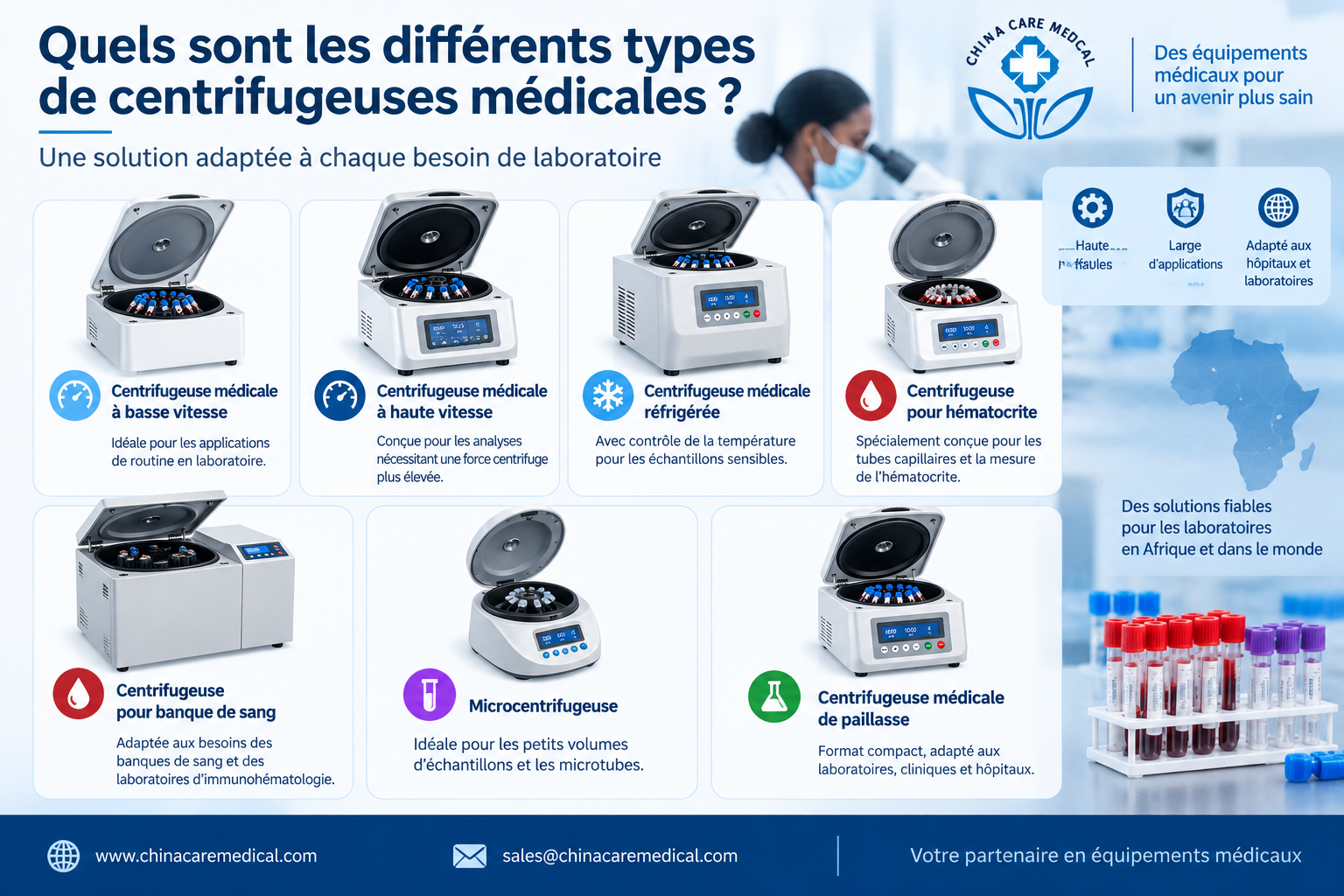
There are several types of medical centrifuges, each designed to meet specific needs in sample preparation and processing. The choice mainly depends on the application, the type and volume of samples, the required capacity, the centrifugation speed, and in some cases, temperature control.
Low-speed medical centrifuge
The low-speed medical centrifuge is commonly used for centrifugation operations that do not require high speeds. It is suitable for many routine applications in medical laboratories, clinics, and hospitals.
These devices are available with different tube capacities and rotor configurations. They can be a practical solution for laboratories performing daily routine sample preparation operations.
High-speed medical centrifuge
The high-speed medical centrifuge allows for higher speeds and centrifugal forces. It is intended for applications whose protocols require more in-depth separation or a relatively higher centrifugal force.
When choosing a high-speed model, it is important to check not only the maximum speed but also the relative centrifugal force, the type of rotor, and the compatible tubes.
Refrigerated medical centrifuge
The refrigerated medical centrifuge combines centrifugation with a temperature control system. It is particularly suitable when the characteristics of the samples or the analysis protocol require maintaining a specific temperature during centrifugation.
It can be used in medical or research laboratories for applications requiring controlled thermal conditions.
Hematocrit centrifuge
The hematocrit centrifuge is specially designed for procedures using capillary tubes to determine the proportion of red blood cells in a blood sample.
Its rotor is generally adapted to multiple capillary tubes, making it specialized equipment for laboratories regularly performing hematocrit analyses.
Blood bank centrifuge
A blood bank centrifuge is intended for specific procedures carried out in blood banks and some immunohematology laboratories.
Depending on the model and application, it can be used in different stages of blood sample preparation or processing. The capacity, rotor, and centrifugation parameters must be selected according to the planned procedures.
Microcentrifuge
The microcentrifuge is a compact device designed for small sample volumes and microtubes. It generally takes up little space on the laboratory bench and can be used for various operations requiring the centrifugation of small volumes.
It is particularly interesting for laboratories that regularly work with microsamples.
Bench-top medical centrifuge
The bench-top medical centrifuge is mainly distinguished by its compact format, designed to be installed directly on a laboratory bench.
It can be offered in different configurations: low speed, high speed, or refrigerated. For laboratories, clinics, and hospitals in the DRC and French-speaking Africa, this format can be particularly practical when the available space is limited.
In practice, there is therefore not a single type of medical centrifuge suitable for all establishments. A laboratory must choose its equipment based on the analyses performed, the number of samples processed daily, the tube formats used, and the performance required by its protocols.
What are the main uses of a medical centrifuge?

A medical centrifuge is used in many applications within laboratories, hospitals, clinics, diagnostic centers, and blood banks. Its main role is to facilitate the separation of different components of a biological sample to allow its preparation for the planned laboratory analyses or procedures.
Separation of blood components
One of the most common uses of a medical centrifuge is for the treatment of blood samples. Centrifugation allows certain blood components to be separated based on the type of sample, the tube used, and the applied protocol.
It can be used in particular to obtain serum or plasma for different laboratory analyses. The centrifugation parameters must be adapted to the type of tube, the sample, and the analysis method.
Sample preparation in the laboratory
Centrifugation is an important step in the preparation of many biological samples. It allows a liquid phase to be separated from denser elements, to concentrate certain components, or to prepare the sample before further analysis.
This use is common in medical laboratories and diagnostic centers, where many samples must be prepared daily in a reproducible manner.
Applications in hematology and biochemistry
In hematology, some specialized centrifuges are used for procedures such as the determination of hematocrit. Centrifuges suitable for capillary tubes allow the separation of the constituents necessary for this measurement.
In clinical biochemistry, centrifugation is involved in particular in the preparation of serum or plasma before certain analyses. The type of centrifuge, the speed, the relative centrifugal force, and the duration must be selected according to the analytical procedure used.
Use in blood banks
Blood banks also use centrifuges suitable for their specific procedures. Depending on the equipment and the application, centrifugation can be involved in different stages of preparation and treatment of blood samples or components.
These facilities may require centrifuges offering particular configurations in terms of capacity, rotor, speed, programming, and temperature control.
Use in hospital laboratories and diagnostic centers
In a hospital laboratory or a diagnostic center, a medical centrifuge can be used daily to process different types of samples. The capacity of the device must therefore correspond to the volume of activity of the laboratory.
A small laboratory or a clinic may prefer a compact benchtop centrifuge, while a facility processing a large number of samples may need a centrifuge offering a higher capacity and several rotor configurations.
The diversity of these applications explains why the choice of a medical centrifuge must always be based on the analyses performed, the samples processed, and the technical requirements of the laboratory.
How to choose a medical centrifuge?

The choice of a medical centrifuge should be based on the actual needs of the laboratory rather than just the maximum speed of the device. Hospitals, clinics, laboratories, and diagnostic centers should especially take into account the types of samples processed, the daily workload, the capacity, the centrifugal force, the rotor, and the operating conditions.
Determine the type of samples to be processed
The first step is to identify the samples that will be centrifuged. A laboratory may work with whole blood, serum, plasma, capillary tubes, microtubes, or other biological samples.
The type of sample and the analyses performed help to determine the necessary characteristics of the centrifuge. For example, the needs of a routine analysis laboratory may be different from those of a blood bank or a specialized laboratory.
Choose the capacity suitable for the laboratory
The capacity of the centrifuge indicates, among other things, the number and volume of tubes that can be processed during a cycle. It should be chosen according to the number of samples analyzed daily.
A compact centrifuge may be suitable for a clinic or a laboratory with a limited throughput. On the other hand, a hospital laboratory processing many samples may need a larger capacity to optimize its workflow.
It is also important to check the dimensions of the tubes compatible with the rotor.
Check the speed and the centrifugal force
The speed is usually expressed in revolutions per minute (rpm), while the relative centrifugal force represents the force exerted on the sample, taking into account in particular the radius of rotation.
A high maximum speed is not automatically synonymous with the best choice. The centrifuge must above all be able to reach the parameters required by the procedures and analyses carried out in the laboratory.
Choose the type of rotor
The centrifuge rotor is an essential element, as it determines, among other things, the number, format, and arrangement of the tubes that can be used.
Depending on the application, different types of rotors may be available, including fixed - angle rotors and swinging - bucket rotors. Before purchasing, it is advisable to check the rotor supplied with the device as well as the availability of the necessary adapters or additional rotors.
Evaluate the need for refrigeration
Not all applications require a refrigerated centrifuge. However, when the samples or protocols require a controlled temperature during centrifugation, a refrigerated medical centrifuge may be necessary.
In this case, it is necessary to examine the available temperature range as well as the performance of the device under the intended operating conditions.
Examine the safety features
Safety should also be part of the selection criteria. Depending on the model, a medical centrifuge may incorporate different features such as lid locking, imbalance detection, overspeed protection, or automatic shutdown in case of an anomaly.
These devices do not replace good laboratory practices, especially the correct balancing of tubes and compliance with the rotor limits, but they can contribute to safer use of the equipment.
Consider maintenance and daily use
For equipment intended to be used regularly, it is also important to evaluate the ease of cleaning, access to the rotor, the availability of accessories, and the maintenance requirements.
For hospitals, laboratories, clinics, and distributors in the DRC and French - speaking Africa, the local installation conditions must also be taken into account, especially the available electrical supply and the need for technical assistance.
In conclusion, a medical centrifuge should be selected based on the intended application, the necessary capacity, and the parameters required by the laboratory procedures. A precise definition of these needs before purchasing allows you to choose equipment that is truly suitable for the establishment's activity.
How to choose a medical centrifuge?

The choice of a medical centrifuge should meet the real needs of the laboratory and the analyses carried out there. It is not enough to select the device offering the highest speed: the type of sample, the capacity, the centrifugal force, the rotor, the temperature, and the safety devices are also important criteria.
Determine the types of samples to be processed
Before choosing a medical centrifuge, you need to identify the samples that will be regularly processed: whole blood, serum, plasma, capillary tubes, microtubes, or other biological samples.
The characteristics of the device must be compatible with the laboratory procedures as well as with the dimensions and volumes of the tubes used.
Choose a capacity suitable for the volume of activity
The capacity should be determined based on the number of samples to be processed per cycle and the daily workload.
A clinic or a small laboratory may prefer a compact centrifuge with a moderate capacity. On the other hand, a hospital laboratory performing a large number of analyses may need a model that can process more tubes simultaneously.
A suitable capacity allows for more efficient work organization without unnecessarily choosing an oversized device.
Check the speed and the centrifugal force
The rotation speed is usually expressed in revolutions per minute (rpm). However, it is also important to consider the relative centrifugal force (g), as this more directly represents the acceleration applied to the sample.
The required performance depends on the procedures carried out. Therefore, it is necessary to check that the centrifuge can reach the parameters required by the methods used in the laboratory.
Select the appropriate rotor
The rotor determines, among other things, the arrangement, number, and format of the tubes that can be installed in the centrifuge.
Fixed-angle rotors keep the tubes in a specific inclined position, while swing-bucket rotors allow the buckets or tubes to move to a more horizontal position during rotation.
The choice should be made according to the intended application and the tubes used. It is also useful to check the availability of compatible adaptors and rotors.
Determine if refrigeration is necessary
A refrigerated medical centrifuge is particularly useful when the protocol requires maintaining the samples within a controlled temperature range during centrifugation.
If thermal control is not necessary for the intended applications, a non-refrigerated centrifuge can be a simpler solution. The choice should therefore be based on the requirements of the samples and the analytical methods.
Check the safety devices
Safety is an essential criterion when choosing a medical centrifuge. Depending on the model, different functions may be available, including lid locking, imbalance detection, overspeed protection, and automatic shutdown in case of an anomaly.
These devices should be accompanied by good usage practices, including proper tube balancing and compliance with the limits indicated for the rotor.
Take into account maintenance and usage conditions
A centrifuge intended for daily use should be easy to clean and maintain. The availability of rotors, adaptors, and other necessary accessories should also be checked before purchase.
For hospitals, clinics, laboratories, and diagnostic centers in the DRC and French-speaking Africa, it is also relevant to consider the installation conditions, the available power supply, and the need for technical assistance.
The best medical centrifuge is not necessarily the most powerful model. It is primarily the device whose capacity, rotor, performance, and features precisely match the applications and the volume of activity of the laboratory.
How to safely use a medical centrifuge?
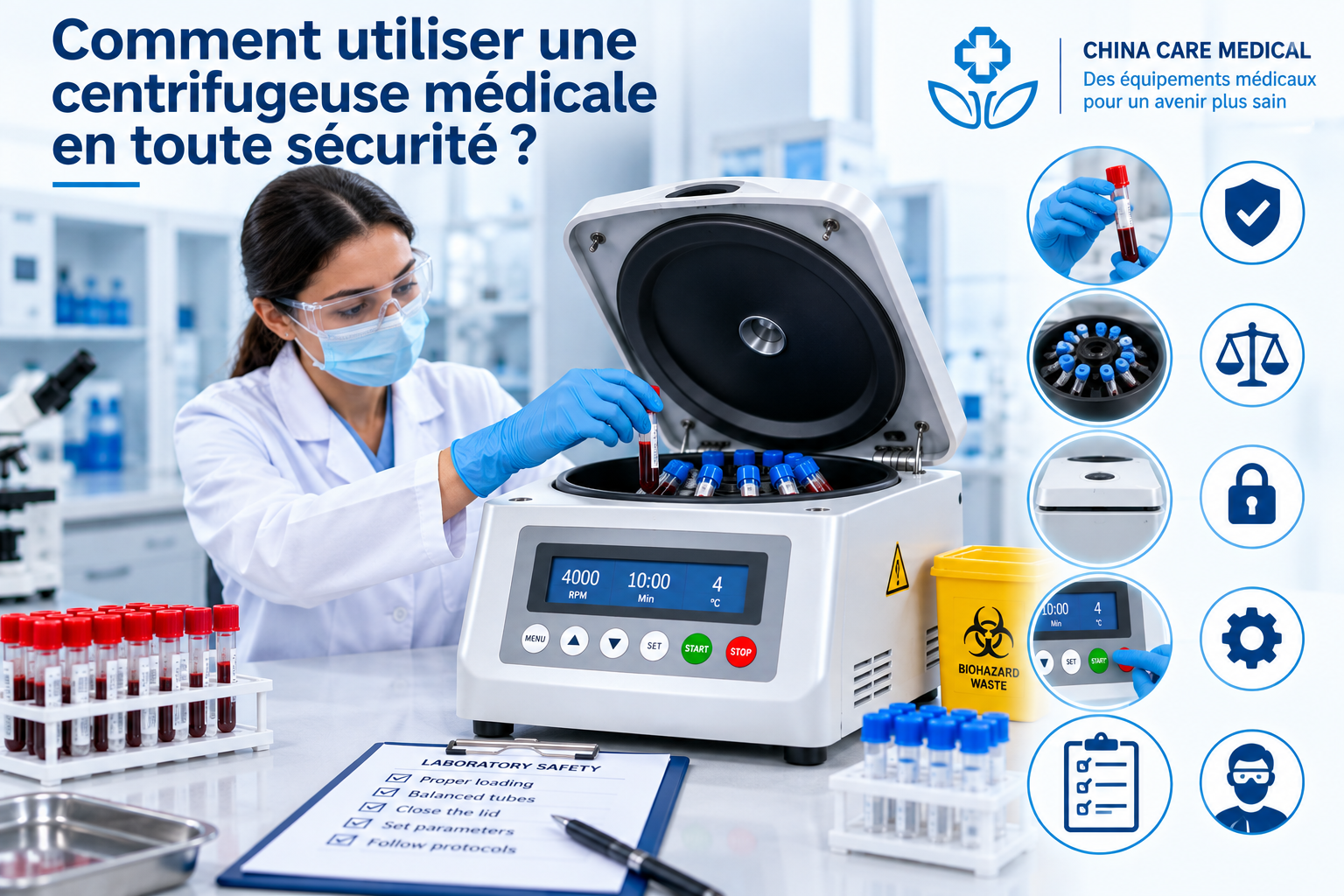
The use of a medical centrifuge requires strict adherence to specific safety rules to protect the staff, samples, and equipment. Improper tube distribution, using an unsuitable rotor, or exceeding the recommended limits can cause vibrations, damage the device, and pose risks to the user.
Check the device before use
Before each use, it is important to check the general condition of the centrifuge, rotor, buckets, and accessories. Components showing signs of deterioration, corrosion, or damage should not be used without following the manufacturer's recommendations.
The tubes must also be compatible with the rotor and suitable for the intended speed and centrifugal force.
Properly balance the centrifuge tubes
Balancing the tubes is one of the most important precautions. The tubes should be placed symmetrically in the rotor with properly balanced masses according to the device's instructions.
An unbalanced load can cause significant vibrations during rotation and affect the proper functioning of the centrifuge.
Properly close the lid
Before starting the medical centrifuge, it is necessary to check that the rotor is properly installed and the lid is completely closed.
When the device has a safety locking system, it generally prevents the lid from being opened during rotation. Never try to open or force the lid until the rotor has completely stopped.
Properly adjust the centrifugation parameters
The speed, relative centrifugal force, duration, and, when necessary, the temperature must be adjusted according to the protocol used.
The maximum limits of the rotor, tubes, and accessories must always be respected. A speed higher than the recommended one should not be used to accelerate a procedure.
Use appropriate protective equipment
The staff should wear personal protective equipment suitable for the samples being handled and the laboratory procedures, including a lab coat, gloves, and, when risk assessment requires it, eye or face protection.
Additional precautions may be necessary when handling samples with a biological risk.
Do not move the device during operation
A centrifuge should be installed on a stable and suitable surface. It should not be moved, tilted, or manipulated while the rotor is spinning.
If unusual vibrations, abnormal noise, or an error message appears, the device should be stopped according to the laboratory procedures and the manufacturer's instructions.
Regularly clean and maintain the centrifuge
After use, the rotor and the centrifuge chamber should be inspected and cleaned according to the manufacturer's recommendations. In case of a biological sample spill, the appropriate laboratory decontamination procedures should be applied.
Regular maintenance of the medical centrifuge also helps to detect component wear and keep the equipment in good working condition.
Finally, users should be properly trained and consult the manufacturer's manual before using a new model. The laboratory's internal procedures and applicable safety requirements must always be respected.
How to maintain a medical centrifuge?
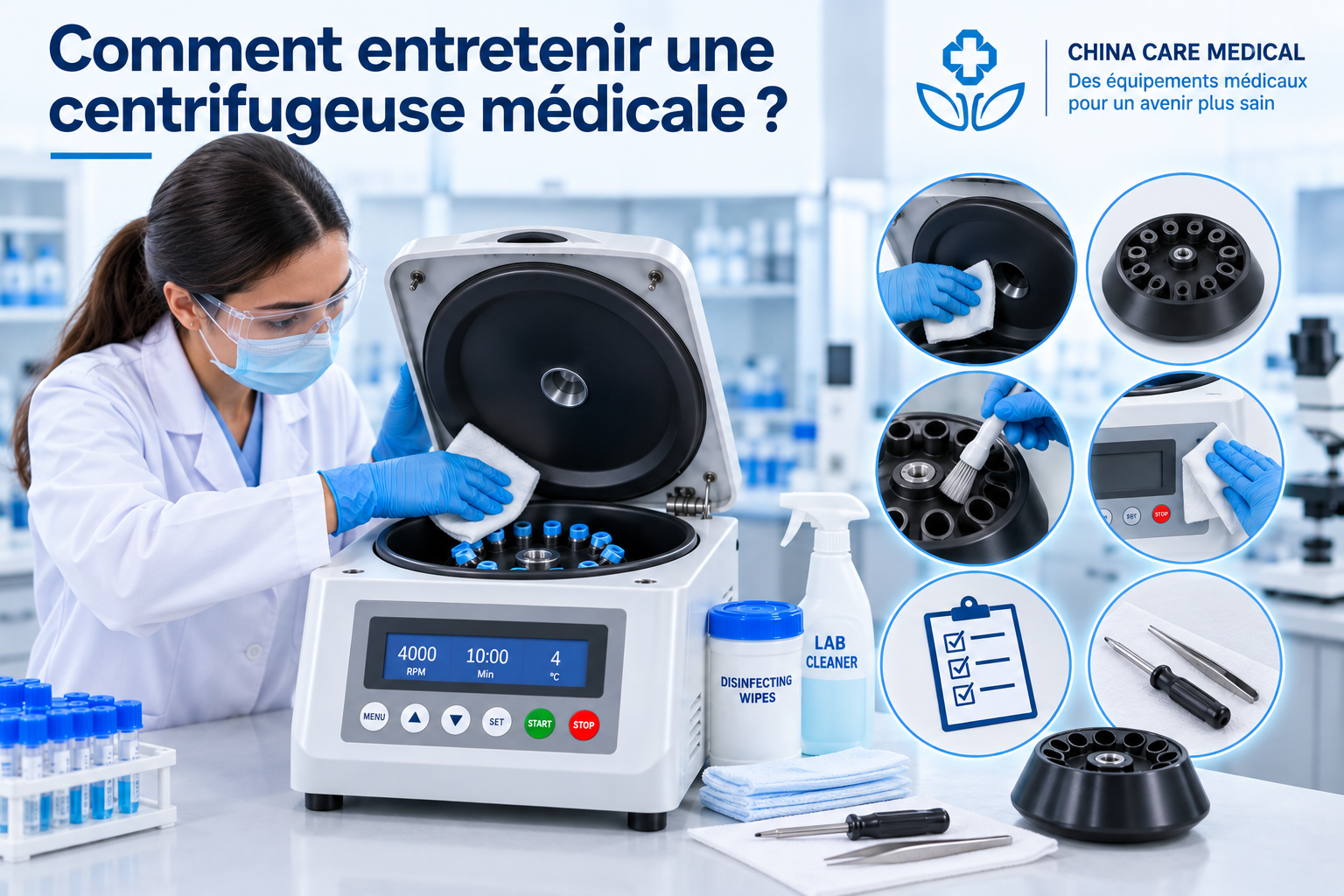
Regular maintenance of a medical centrifuge helps maintain its proper functioning, limits premature wear of its components, and ensures safe operating conditions. The frequency and methods of maintenance should always follow the manufacturer's recommendations, as they may vary depending on the model, rotor, and intensity of use.
Regularly clean the centrifuge chamber
The centrifuge chamber should be kept clean and dry. After use, it is advisable to check for the absence of liquid, residues, or contamination inside the device.
Cleaning should be carried out using products and methods compatible with the centrifuge materials. Abrasive or corrosive products that may damage the surfaces should be avoided, unless specifically indicated by the manufacturer.
Inspect and clean the rotor
The centrifuge rotor is subjected to significant mechanical stress during rotation. It should therefore be inspected regularly to detect any signs of corrosion, cracks, deformation, or other damage.
The tube holders, buckets, and adapters should also remain clean. A damaged rotor should not be used without following the manufacturer's instructions regarding its inspection or replacement.
Immediately clean up spills
If a tube leaks or a sample spills inside the centrifuge, the spill should be handled in accordance with the laboratory's safety and decontamination procedures.
If a sample poses a biological risk, appropriate personal protective equipment and disinfectants should be used. It is also important to check the manufacturer's recommendations regarding products compatible with the rotor and the chamber.
Check the tubes, buckets, and adapters
The accessories should be examined regularly. Tubes, buckets, and adapters with cracks, deformation, or significant wear can compromise the safety and quality of centrifugation.
It is also necessary to ensure that the accessories used are compatible with the rotor, the intended capacity, and the applied centrifugation parameters.
Keep the exterior of the device clean
The exterior surface and the control panel can be cleaned regularly to remove dust and any potential contamination. Before any maintenance operation requiring intervention on the device, the manufacturer's instructions regarding shutting down and disconnecting the power supply should be followed.
The ventilation openings should also remain clear to avoid interfering with the normal operation of the equipment.
Follow the preventive maintenance program
In addition to daily cleaning, preventive maintenance may be necessary depending on the model and its frequency of use. It may include inspecting certain components, checking the safety systems, and performing the maintenance operations specified by the manufacturer.
It is useful to keep a maintenance log indicating the cleanings, inspections, technical interventions, and replacements carried out. This practice facilitates equipment monitoring, especially in laboratories using multiple devices daily.
Follow the manufacturer's recommendations
There is no identical maintenance program for all medical centrifuges. The inspection intervals, cleaning methods, approved products, and rotor replacement conditions may vary depending on the device.
The manufacturer's user and maintenance manual should therefore remain the main reference. Properly planned maintenance helps preserve the performance of the medical centrifuge and promotes reliable and safe use in the laboratory.
Which medical centrifuge should you choose for a laboratory in the DRC and Francophone Africa?
The choice of a medical centrifuge for a laboratory in the Democratic Republic of the Congo (DRC) or in another Francophone African country must take into account both the technical needs of the laboratory and the actual conditions of use. The requirements of a small clinic are not the same as those of a hospital laboratory, a diagnostic center, or a blood bank.
Adapt the centrifuge to the type of laboratory
For a medical laboratory performing routine analyses, a benchtop centrifuge with low or medium speed can meet many sample preparation needs, provided that its capacity and centrifugal force are compatible with the procedures used.
A hospital laboratory processing a large volume of samples daily may need a centrifuge with a larger capacity, multiple rotor options, and programmable parameters.
For a blood bank, a hematology laboratory, or a specialized application, it may be necessary to choose a centrifuge specifically designed for the relevant procedures.
Evaluate the number of samples processed daily
The volume of activity is an essential criterion. A laboratory that processes few samples may prefer a compact device, while an institution with a higher throughput should look for a capacity that allows for centrifuging more tubes per cycle.
Therefore, you must evaluate the number of tubes, their volume, and the number of cycles performed each day before selecting the equipment.
Consider the electrical supply conditions
In some areas of the DRC and other African markets, the stability of the electrical supply can be an important factor when installing laboratory equipment.
Before purchasing, it is advisable to check the electrical requirements of the centrifuge, especially the voltage and frequency compatible with the installation site. When the institution uses a backup power supply or electrical protection system, its compatibility with the equipment must also be verified by qualified personnel.
Choose a model suitable for the conditions of use
The laboratory conditions must also be taken into account. The available space, the ambient temperature allowed by the manufacturer, the ventilation, and the frequency of use can influence the choice.
A benchtop medical centrifuge can be particularly interesting when space is limited. On the other hand, a laboratory with a high throughput may prefer a configuration with a higher capacity.
Check the availability of necessary accessories and parts
Before ordering a centrifuge, buyers should check the rotors, buckets, adapters, and other accessories necessary for the tubes used in their laboratory.
For hospitals, laboratories, and distributors in Francophone Africa, it is also relevant to consider the availability of spare parts, technical documentation, and after-sales support to facilitate the long-term operation of the equipment.
Compare the total cost rather than just the purchase price
The initial price is only one aspect of the choice. You must also consider the necessary accessories, maintenance needs, electricity consumption, any replacement parts, and the expected service life.
For a hospital or laboratory in the DRC, a properly sized centrifuge can be more appropriate than a more powerful but unnecessarily complex device for the analyses performed.
Prepare precise specifications before requesting a quote
To facilitate the choice of a medical centrifuge, laboratory managers, purchasing departments, distributors, and importers can prepare a list including the type of application, the formats and volumes of the tubes, the number of samples per cycle, the required centrifugal force, the type of rotor, and the possible need for refrigeration.
This information allows the supplier to propose a configuration that more precisely meets the needs of the institution. For laboratory, hospital, and diagnostic center projects in the DRC, Congo, and other Francophone African countries, this approach also facilitates the comparison of different solutions before purchase.
Where to buy a medical centrifuge for a hospital or a laboratory?
The purchase of a medical centrifuge for a hospital, a clinic, a laboratory or a diagnostic center should be made from a supplier capable of offering equipment suitable for the intended applications. Beyond the price, it is important to evaluate the technical characteristics, the available accessories, the documentation, the delivery conditions and the after - sales service.
Choose a supplier specialized in medical equipment
A supplier specialized in medical equipment and laboratory materials can help the buyer select a centrifuge that meets the needs of their facility.
Before requesting a quote, it is recommended to specify the type of application, the samples to be processed, the tube formats, the desired capacity, the required speed or centrifugal force and the possible need for refrigeration.
Compare the characteristics before purchasing
Two medical centrifuges can have significant differences even if their appearance is similar. In particular, it is advisable to compare the capacity, the maximum speed, the relative centrifugal force, the type of rotor, the dimensions of the compatible tubes, the safety functions and the temperature control when necessary.
The choice should be based on the laboratory's procedures rather than just the maximum speed or the price of the device.
Check the accessories and the documentation
Before finalizing an order, the facility should precisely check what is included with the medical centrifuge. The rotor, the buckets, the adapters and other necessary accessories are not necessarily the same from one model to another.
The availability of the user manual, technical information and the parts necessary for maintenance should also be taken into account.
Buy a medical centrifuge for the DRC and Francophone Africa
For hospitals, laboratories, clinics, diagnostic centers, distributors and importers in the DRC and Francophone Africa, it is particularly important to check the delivery conditions, the electrical requirements of the device and the availability of technical assistance.
China Care Medical offers different solutions of medical centrifuges and laboratory equipment for the needs of healthcare facilities and medical equipment professionals.
To obtain a suitable configuration, buyers can submit their technical requirements, including the number and volume of tubes, the capacity per cycle, the required centrifugal force, the type of rotor and the need for refrigeration. This approach makes it easier to identify a centrifuge suitable for the laboratory and to request a quote that meets the project's needs.
Conclusion
The medical centrifuge plays an essential role in the preparation and processing of many samples in laboratories, hospitals, clinics, diagnostic centers, and blood banks. Available in different configurations, it should be selected based on the intended applications, the type and volume of samples, the required capacity, the centrifugal force, the rotor, and, when necessary, temperature control.
Therefore, a suitable choice does not solely depend on the speed or price of the device. Safety, ease of maintenance, accessory compatibility, installation conditions, and the availability of technical support must also be taken into account to have equipment that meets the daily needs of the laboratory.
For healthcare facilities, distributors, and importers in the DRC, the Republic of the Congo, and other French - speaking African countries, China Care Medical offers different centrifugation solutions for medical and laboratory applications.
To select a medical centrifuge suitable for your project, you can communicate your technical requirements to China Care Medical, including the types of tubes, the desired capacity, the required centrifugal force, and the possible need for refrigeration, in order to obtain a model recommendation and a quote tailored to your facility.
Frequently Asked Questions about the Medical Centrifuge
What criteria should be considered when choosing a centrifuge?
The choice mainly depends on the type of samples, the required capacity, the centrifugal force, the speed, the type of rotor, the compatible tube formats, and the possible need for refrigeration. Safety devices, maintenance conditions, and the daily volume of analyses should also be taken into account.
What are the different types of centrifuges?
The main types include low-speed centrifuges, high-speed centrifuges, refrigerated centrifuges, hematocrit centrifuges, blood bank centrifuges, microcentrifuges, and benchtop centrifuges. The appropriate model depends on the application and the samples to be processed.
What are the advantages and disadvantages of a centrifuge?
A centrifuge allows for a rapid and reproducible separation of the components of a sample when the appropriate parameters are used. However, it requires correct use, precise balancing of the tubes, regular maintenance, and a model suitable for the intended applications.
What do g and rpm represent in a centrifuge?
The rpm (revolutions per minute) indicate the rotation speed of the rotor. The value in g, usually expressed as relative centrifugal force, represents the acceleration applied to the sample and depends in particular on the rotation speed and the radius of the rotor.