Aperçu du marché chinois des équipements médicaux : tendances, croissance et opportunités en 2026
China's medical equipment market has evolved into a global powerhouse, fundamentally reshaping how healthcare facilities worldwide approach procurement and technology adoption. The sector's transformation from manufacturing hub to innovation leader presents significant opportunities for international buyers, distributors, and healthcare investors evaluating market entry or expansion strategies.
Market Size and Growth Trajectory

The Chinese medical device industry reached $65.2 billion in 2025, with projections indicating continued expansion to $78.4 billion by 2027. This growth trajectory positions China as the world's second-largest medical equipment market, accounting for approximately 20% of global medical device consumption.
Several factors drive this sustained expansion. China's aging population creates increasing demand for diagnostic imaging, rehabilitation equipment, and chronic disease management devices. The government's healthcare infrastructure investments, particularly in rural and tier-2 cities, fuel procurement cycles for basic medical equipment across cardiology, radiology, and emergency departments.
Domestic consumption patterns show strong growth in high-value equipment categories. MRI systems, CT scanners, and ultrasound devices represent the fastest-growing segments, with annual growth rates exceeding 15% in 2025. This domestic demand creates economies of scale that benefit international buyers through improved manufacturing efficiency and competitive pricing.
Leading Product Categories and Manufacturers
Diagnostic Imaging Equipment
China dominates global production of ultrasound systems, X-ray equipment, and entry-to-mid-range MRI machines. Mindray Medical leads ultrasound manufacturing with over 35% domestic market share, while their international presence spans 190+ countries. Neusoft Medical Systems specializes in CT and MRI technology, offering cost-effective alternatives to European and American systems.
The imaging equipment sector benefits from significant R&D investment, with Chinese manufacturers achieving FDA and CE certifications for advanced products. This regulatory approval enables global distribution while maintaining the cost advantages that make Chinese equipment attractive to developing market hospitals.
Patient Monitoring and Life Support
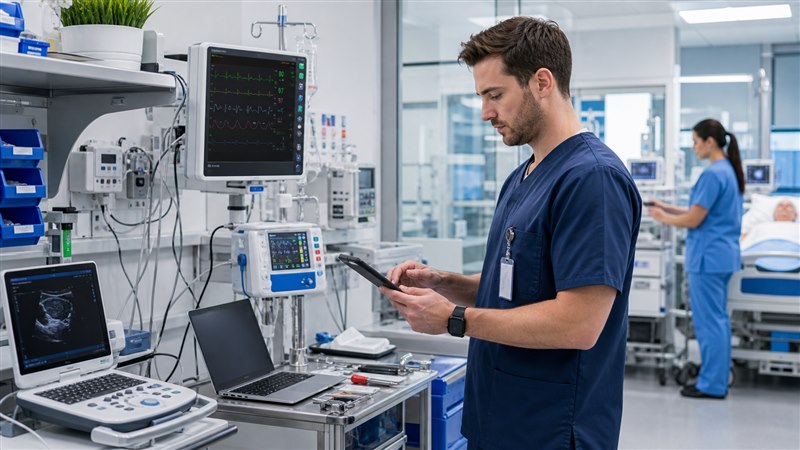
Chinese manufacturers excel in patient monitors, ventilators, and ICU equipment. Edan Instruments produces monitoring systems used in over 170 countries, while their anesthesia machines and ventilators meet international safety standards. Sonoscape focuses on ultrasound and patient monitoring integration, creating comprehensive solutions for emergency departments and intensive care units.
The COVID-19 pandemic accelerated Chinese manufacturers' capabilities in respiratory care equipment. Ventilator production capacity expanded dramatically, establishing China as a reliable supplier for emergency medical equipment during healthcare crises.
Laboratory and Point-of-Care Testing
Urit Medical Electronic leads China's in-vitro diagnostics market, producing chemistry analyzers, hematology systems, and immunoassay equipment. Their laboratory automation solutions serve hospitals requiring high-throughput testing capabilities while maintaining cost-effectiveness compared to Western alternatives.
Point-of-care testing devices represent a growing export category, particularly for developing markets where centralized laboratory infrastructure remains limited. Chinese manufacturers offer portable analyzers for blood chemistry, cardiac markers, and infectious disease testing.
Technology Innovation and R&D Investment
Chinese medical equipment companies invested $8.7 billion in R&D during 2025, representing 13.3% of total industry revenue. This investment focus on artificial intelligence integration, digital health platforms, and advanced materials development positions Chinese manufacturers as technology innovators rather than cost-focused producers.
AI-powered diagnostic imaging represents a key innovation area. Companies like Neusoft Medical develop machine learning algorithms for radiology workflow optimization and automated diagnosis assistance. These software capabilities differentiate Chinese products in competitive international markets.
Digital health integration creates comprehensive hospital solutions. Manufacturers increasingly offer connected devices with cloud-based data management, enabling remote monitoring and telemedicine applications. This technological advancement appeals to healthcare systems modernizing their digital infrastructure.
Regulatory Environment and Quality Standards

China's National Medical Products Administration (NMPA) implemented stricter quality control requirements in 2024, aligning domestic standards with international regulatory frameworks. This regulatory evolution improves product quality while ensuring Chinese manufacturers meet export market requirements.
The Medical Device Registration System requires comprehensive clinical data for Class II and Class III devices, similar to FDA and European Medicines Agency standards. This regulatory rigor benefits international buyers by providing quality assurance comparable to established medical device markets.
Manufacturing quality certifications have expanded significantly. Leading Chinese manufacturers maintain ISO 13485 certification, FDA registration, and CE marking for European markets. These certifications enable global distribution while providing procurement officers with recognized quality benchmarks.
Export Markets and Global Expansion
Chinese medical equipment exports reached $28.4 billion in 2025, with developing markets representing 65% of total export value. Sub-Saharan Africa, Southeast Asia, and Latin America constitute primary growth markets due to healthcare infrastructure expansion and cost-sensitive procurement requirements.
Export product categories vary by regional market needs. Basic diagnostic equipment and patient monitors dominate African markets, while Southeast Asian countries increasingly purchase advanced imaging systems and laboratory automation. Middle Eastern markets show strong demand for turnkey hospital solutions including complete OR and dialysis center installations.
The Belt and Road Initiative facilitates medical equipment exports through infrastructure financing and trade agreements. Chinese manufacturers participate in hospital construction projects across participating countries, creating integrated equipment supply and installation contracts.
Supply Chain Advantages and Manufacturing Capabilities
China's medical device manufacturing ecosystem provides significant advantages for international procurement. Integrated supply chains reduce component costs while maintaining quality standards. Shenzhen, Shanghai, and Beijing medical device clusters offer comprehensive manufacturing capabilities from basic consumables to complex imaging systems.
Manufacturing scalability enables rapid production increases for large procurement orders. Chinese factories can typically accommodate order volumes that would strain European or American manufacturers, making them attractive partners for multi-facility hospital networks or government health ministries.
Quality control improvements address historical concerns about Chinese medical equipment. Leading manufacturers implement comprehensive testing protocols and maintain international quality certifications. Third-party verification services provide additional quality assurance for international buyers requiring documented compliance.
Market Challenges and Risk Factors
Intellectual property concerns affect some international buyers' willingness to source Chinese medical equipment. However, established manufacturers like Mindray, Edan, and Sonoscape maintain strong IP portfolios and respect international patent rights. Due diligence on manufacturer credentials remains essential for procurement officers.
Regulatory changes in target markets can impact Chinese equipment imports. Some countries implement preferential procurement policies favoring domestic or allied nation manufacturers. Understanding local regulatory requirements becomes crucial for successful Chinese equipment deployment.
Service and support capabilities vary significantly among Chinese manufacturers. While leading brands offer comprehensive after-sales support and technical training, smaller manufacturers may lack international service networks. Evaluating post-installation support becomes critical for equipment requiring ongoing maintenance.
Opportunities for International Buyers
Cost-effectiveness remains the primary advantage of Chinese medical equipment procurement. Comparable functionality at 30-50% lower prices than Western alternatives enables healthcare facilities to expand equipment capabilities within constrained budgets. This cost advantage proves particularly valuable for developing market hospitals and NGO-funded health facilities.
Turnkey project capabilities differentiate Chinese suppliers from traditional equipment vendors. Manufacturers increasingly offer complete hospital department installations, including design, equipment supply, installation, and staff training. These comprehensive solutions simplify procurement while ensuring equipment integration and functionality.
Customization capabilities accommodate specific market requirements. Chinese manufacturers often modify products for local electrical standards, language requirements, or clinical protocols. This flexibility enables deployment in diverse international markets without extensive adaptation costs.
Strategic Considerations for Procurement Officers
Vendor selection requires careful evaluation of manufacturer credentials, quality certifications, and international service capabilities. Established brands with proven international track records offer lower risk profiles compared to newer manufacturers seeking market entry.
Total cost of ownership calculations should include training, maintenance, and spare parts availability over the equipment lifecycle. While initial purchase prices may be attractive, ongoing support costs can vary significantly among suppliers.
Regulatory compliance verification ensures equipment meets local approval requirements. Procurement officers should confirm appropriate certifications and registration status in their target markets before finalizing equipment selections.
The Chinese medical equipment market's continued evolution creates expanding opportunities for international healthcare procurement. Understanding market dynamics, manufacturer capabilities, and quality standards enables informed decision-making for equipment sourcing strategies.
For healthcare facilities evaluating Chinese medical equipment options, partnering with experienced sourcing specialists provides access to verified manufacturers and comprehensive project support. Learn more at chinacaremedical.com to explore how established supplier relationships can streamline your procurement process while ensuring quality and reliability standards.
Related articles