Product info
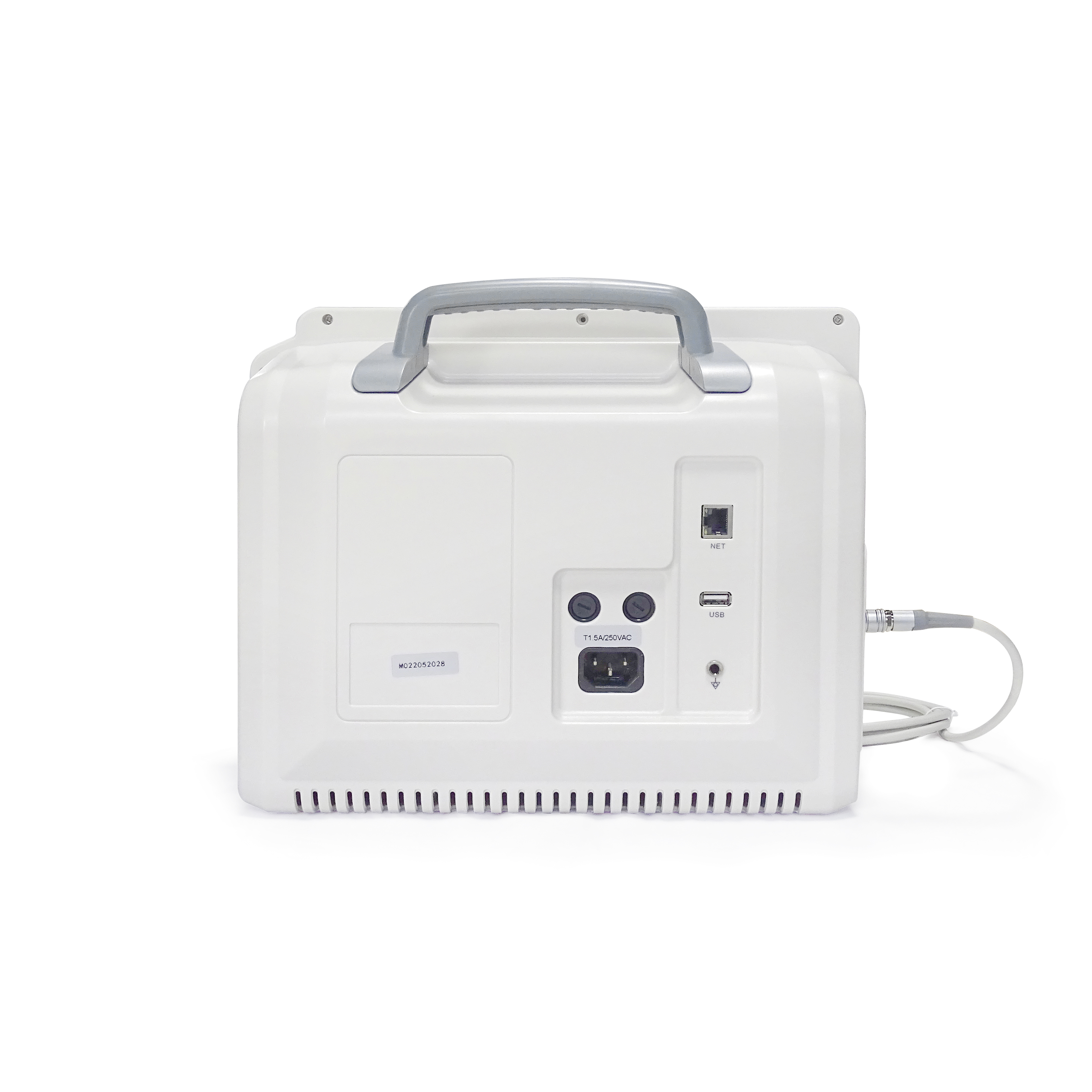
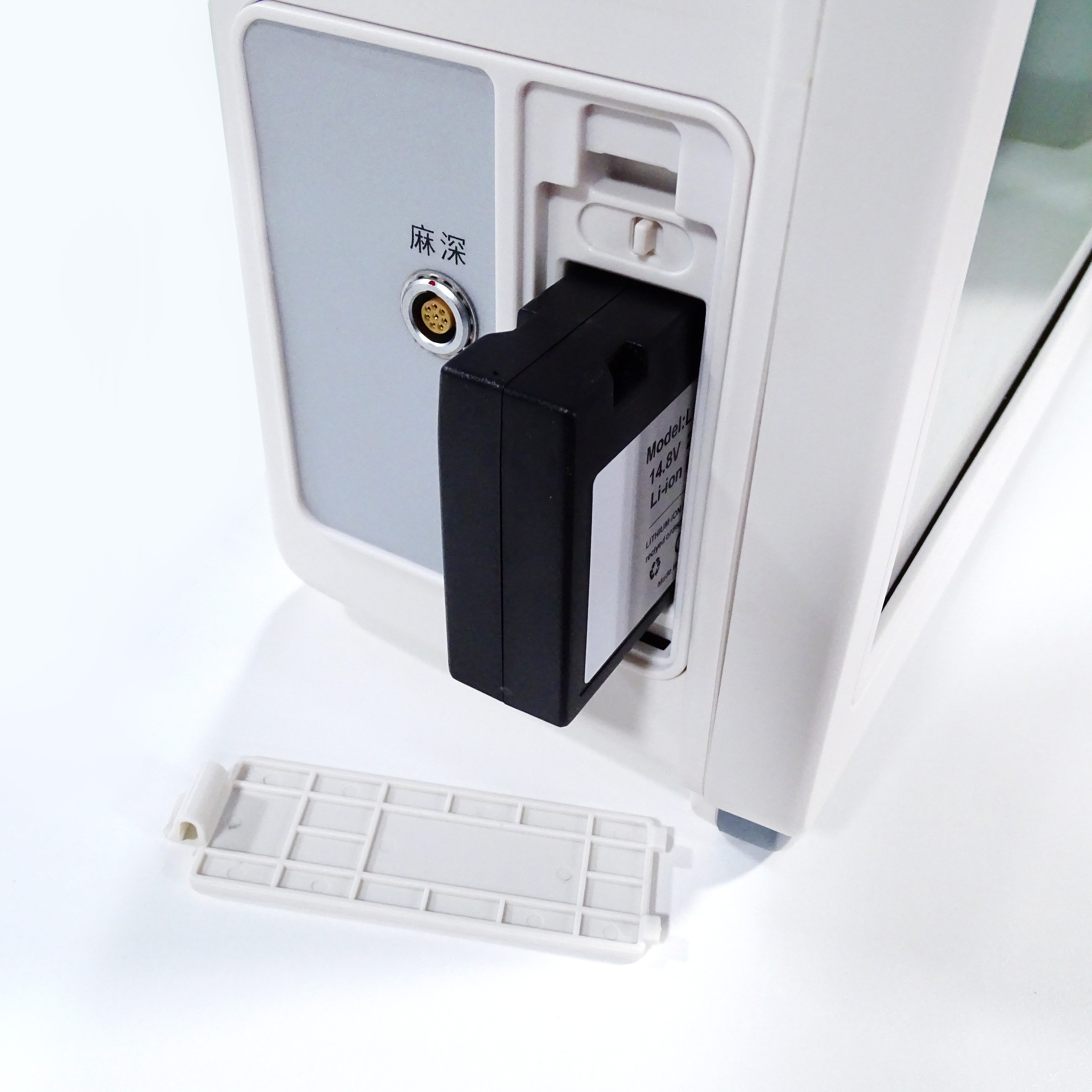
- Product name:Anesthesia Depth Monitor
- Product code:C260107003
Packaging Specifications
- Outer Packaging Size:0.38 × 0.23 × 0.34 m
- Gross Weight:3.3 kg
- Net Weight:4.5 kg
- Volume:0.03
Description
Summary of Anesthesia Depth Monitor
Manufacturer: China Care Medical Equipment Co., Ltd.
Partner: SHENZHEN OSEN TECHNOLOGY CO.,LTD.
Certificates: FSC, CFDA
Address: Room B101, Zhongbang Business Building, No. 87 Puxing Road, Tianhe, Guangzhou, China
Website: www.chinacaremedical.com
Working Principle
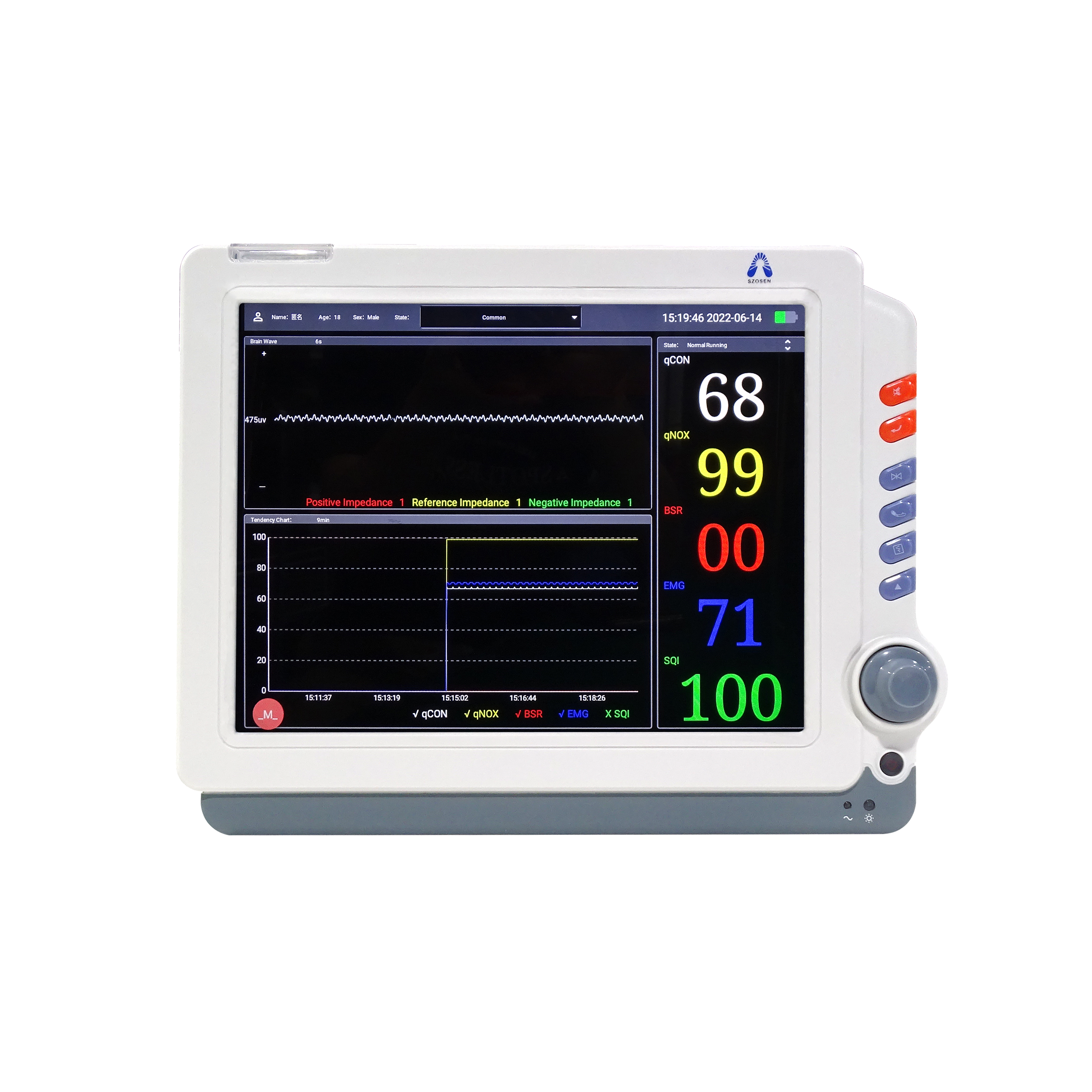
The monitor takes EEG (Electroencephalogram) and EMG (Electromyogram) as dual‑input data sources for an adaptive neuro‑fuzzy inference system. It avoids complex mathematical functions to map the correlation between EEG signals and the patient’s clinical anesthesia status.
Core Monitoring Parameters
1. Anesthesia Depth Index (qCON)
表格
| Index Range | Clinical Status |
|---|---|
| 90‑100 | Awake |
| 80‑90 | Feel sleepy |
| 60‑80 | Light anesthesia |
| 40‑60 | Suitable surgical anesthesia depth |
| 10‑40 | Deep anesthesia with burst suppression |
| 0‑10 | Extremely deep anesthesia |
2. Analgesic Index (qNOX)
Applied during general anesthesia and sedation. The index correlates with the probability of patient response to noxious stimuli. Higher values mean higher probability of response to noxious stimuli.
| Index Range | Clinical Status |
|---|---|
| 80‑100 | Patient readily reacts to noxious stimuli |
| 65‑80 | Light anesthesia |
| 35‑65 | Low probability of response to noxious stimuli, suitable for surgery |
| 20‑35 | Very low probability of response to noxious stimuli |
| 0‑20 | Analgesic overdose |
3. Burst Suppression Ratio (BSR)
Activated when EEG shows equipotential or flat waveforms. It reflects the proportion of burst and suppression segments of EEG and assists in evaluating intracranial pressure changes.
Burst suppression ratio = Suppression part / (Burst part + Suppression part)
4. EMG
It measures facial EMG energy within the 35‑45 Hz bandwidth on a 0‑100 logarithmic scale, indirectly reflecting the patient’s muscle relaxation level.
5. Signal Quality Index (SQI)
Scaled from 0‑100. Higher values represent better signal communication quality.
Main Device Functions
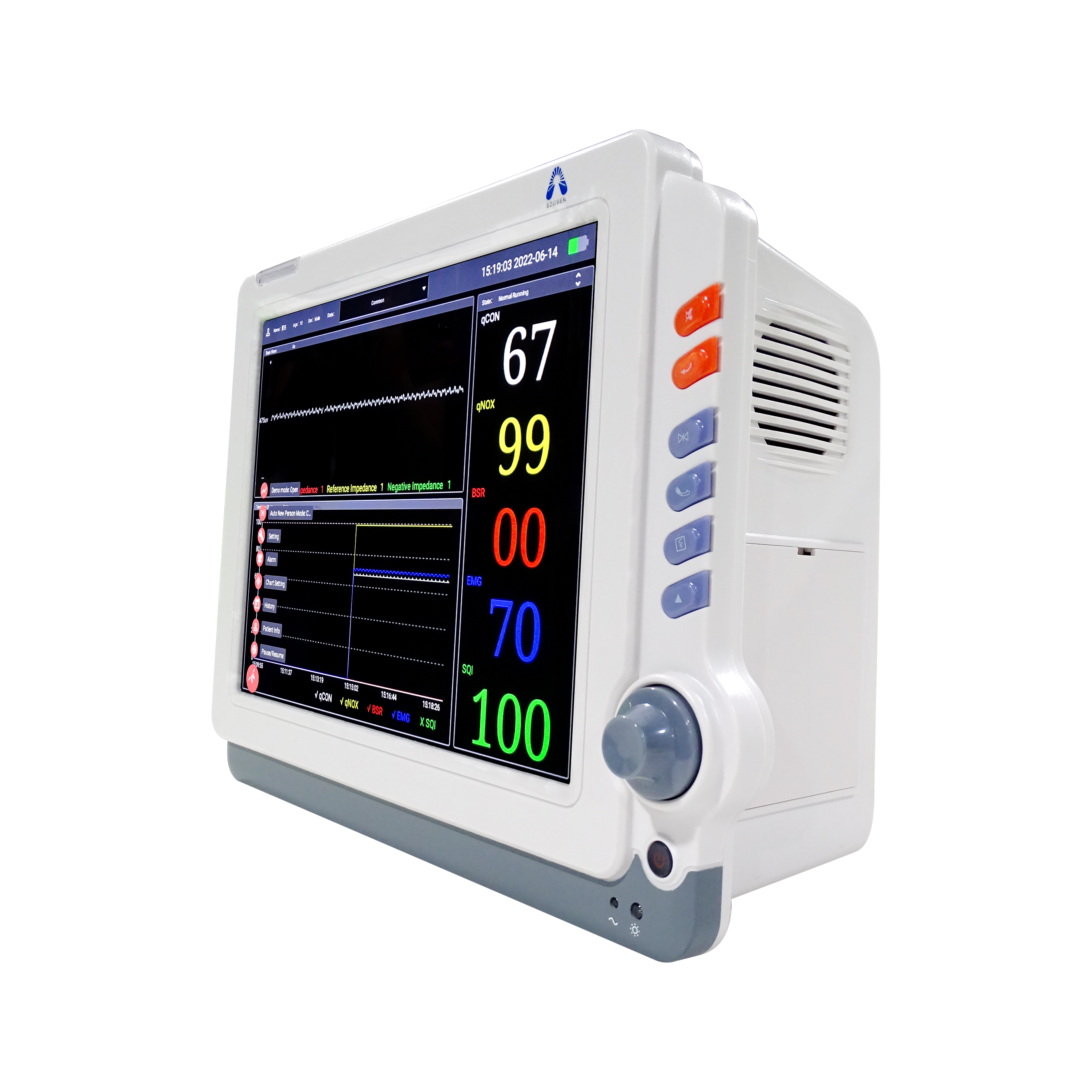
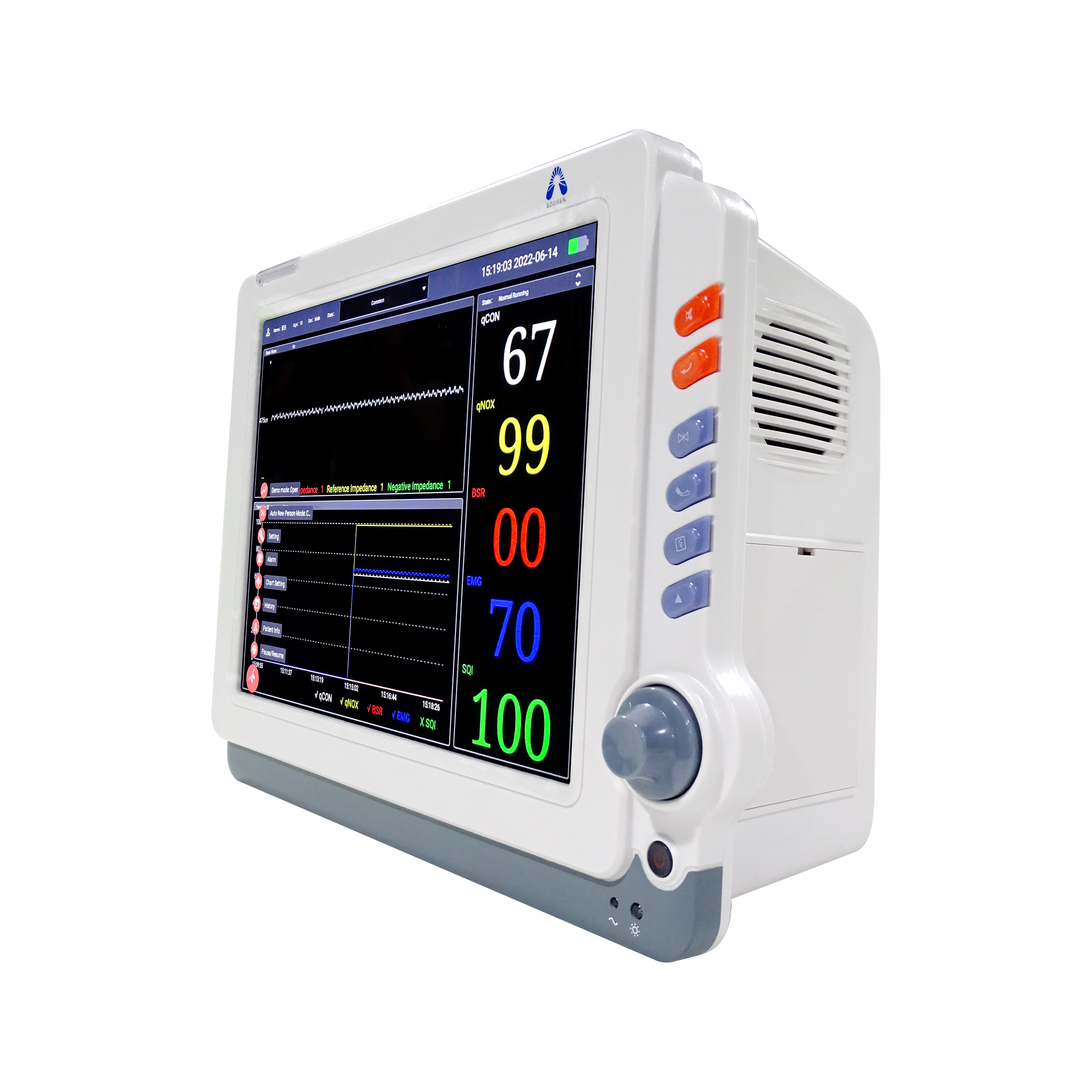
- Patient information input: Supports entry of name, gender, age, patient ID and other data.
- History records: Stores and retrieves historical patient monitoring data.
- Parameter trend graph: Displays waveforms and trend charts for all monitoring parameters.
- Alarm setting: Configurable alarm thresholds; positive / negative electrode impedance alarms with red‑yellow visual indication.
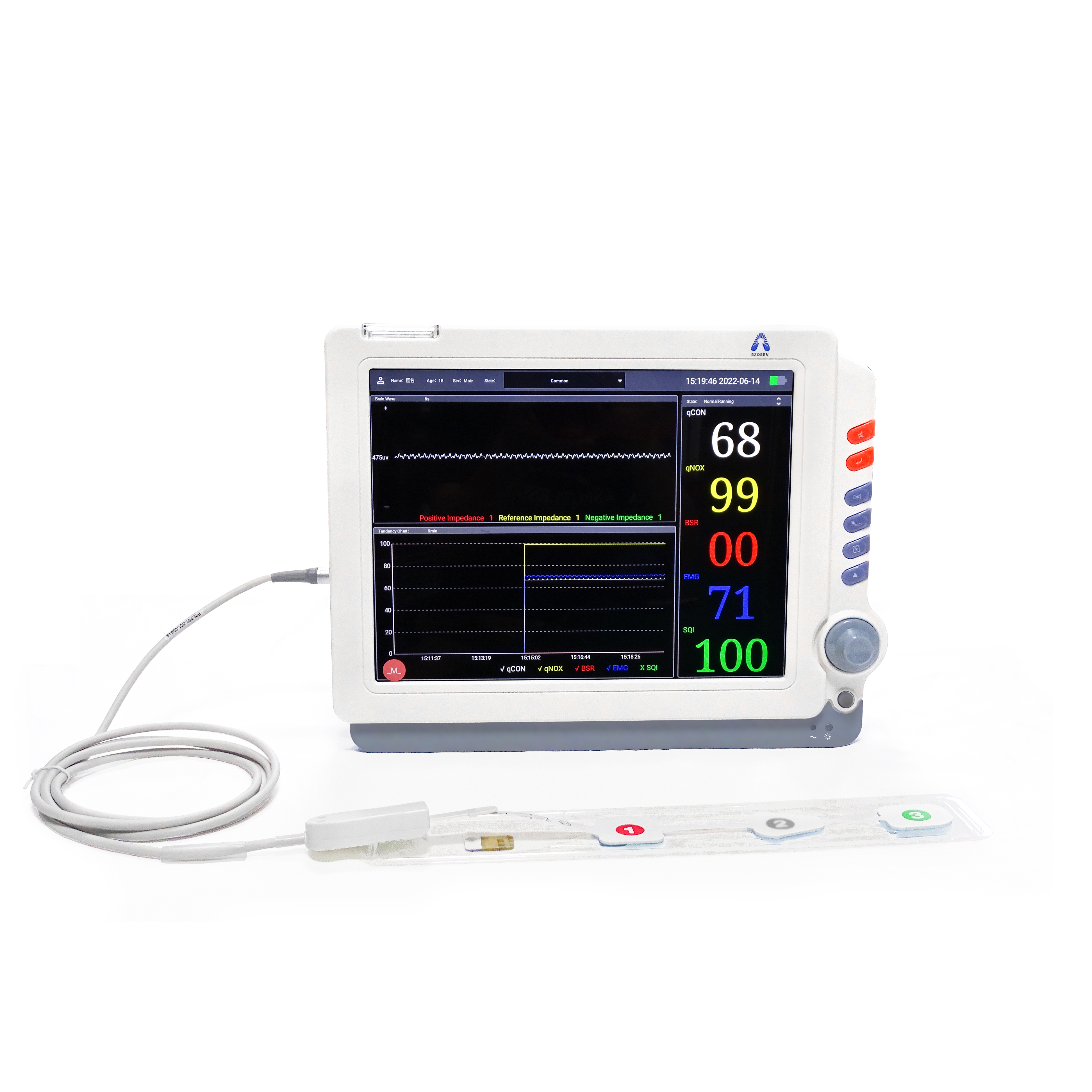
- Multiple stand mounting options for clinical installation; dedicated sensor electrodes for signal acquisition.
Clinical Value
This monitor simultaneously evaluates anesthesia sedation depth, analgesia level, muscle relaxation status, EEG burst‑suppression condition and signal quality. It helps anesthesiologists precisely adjust medication to prevent inadequate / excessive anesthesia and insufficient / excessive analgesia.
Note: This document excerpt does not include complete hardware specifications such as dimension, power consumption and full alarm list.
no comments