Anesthesia Equipment Procurement 2026: Complete OR Anesthesia System Setup
Anesthesia Equipment Procurement 2026: Complete OR Anesthesia System Setup
Table of Contents

- Why Anesthesia Procurement Demands Extra Attention
- Core Components of an OR Anesthesia SystemAnesthesia Machines
- Patient Monitoring Systems
- Ventilators and Gas Delivery
- Airway Management Equipment
- Supporting OR Infrastructure
- Key Specifications to Evaluate Before You Buy
- Anesthesia Machine Sourcing: Chinese Manufacturers vs. Western Brands
- Common Procurement Mistakes to Avoid
- How to Structure Your Anesthesia Equipment Inquiry
- FAQs
- Conclusion
Equipping an operating room with a complete anesthesia system is one of the highest-stakes procurement decisions a hospital can make. The equipment must perform reliably under pressure, integrate with your existing OR infrastructure, and meet the safety standards required by your country's health authority.
For procurement teams in Sub-Saharan Africa, Southeast Asia, the Middle East, and Latin America, the challenge is compounded by limited local supplier options, inconsistent after-sales support, and the need to source across multiple vendors just to complete a single OR setup.
This guide covers what you need to know about anesthesia equipment procurement in 2026 鈥?from the core components of a complete OR anesthesia system to the specifications that matter most and how to evaluate suppliers before committing to a purchase.
Why Anesthesia Procurement Demands Extra Attention
Anesthesia equipment sits at the intersection of life-critical performance and complex technical specification. A misconfigured gas delivery system or an incompatible monitoring setup can have serious consequences in the OR.
Unlike general ward equipment, anesthesia systems require:
- Precise calibration and pre-installation testing
- Compatibility between the anesthesia machine, ventilator, and monitoring modules
- Reliable gas supply integration (piped medical gas or cylinder-based)
- Trained biomedical staff for ongoing maintenance
- Clear after-sales support and spare parts availability
Getting the specification wrong at the inquiry stage means delays, additional costs, or equipment that doesn't perform as expected once installed. That's why procurement teams need a clear framework before they start comparing suppliers.
Core Components of an OR Anesthesia System
A complete OR anesthesia system is not a single device. It's a coordinated set of equipment that must work together. Here's what a standard setup includes.
Anesthesia Machines
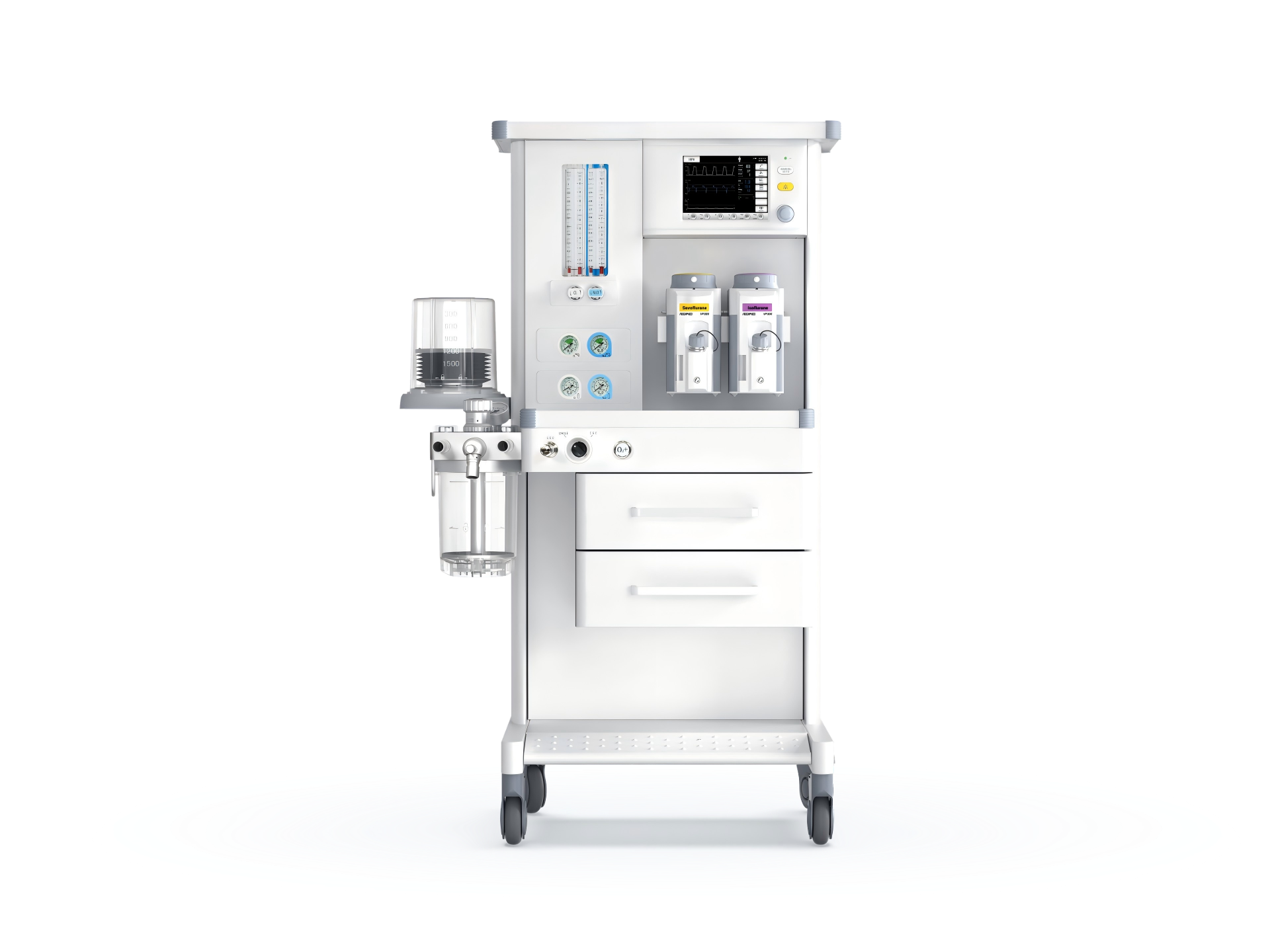
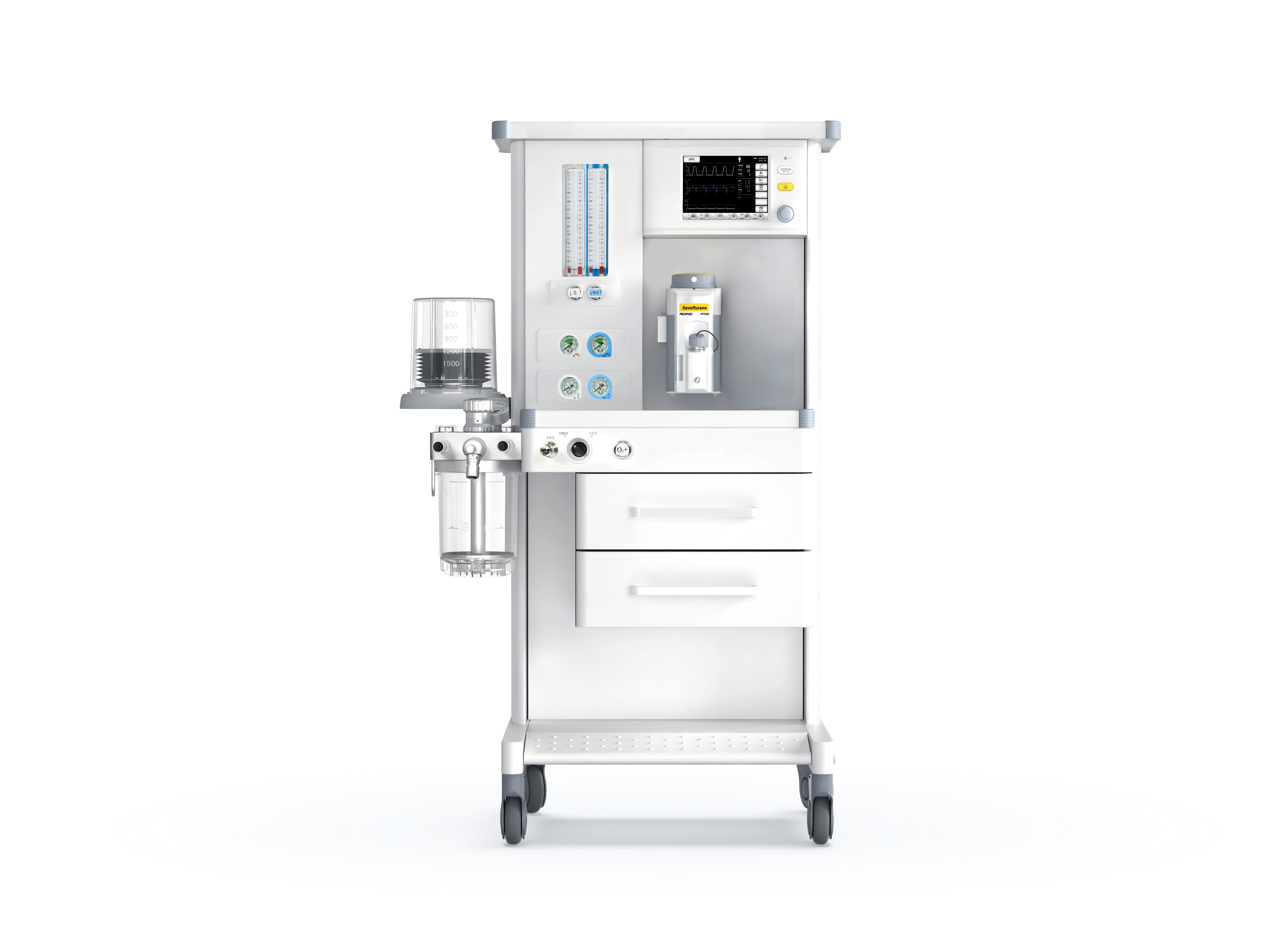
The anesthesia machine is the centerpiece of the OR anesthesia system. It delivers a controlled mixture of medical gases and anesthetic agents to the patient throughout surgery.
Key features to specify:
- Vaporizer type and compatibility (e.g., sevoflurane, isoflurane, desflurane)
- Ventilation modes (volume control, pressure control, SIMV, manual)
- Fresh gas flow system (continuous flow vs. low-flow capability)
- Built-in safety alarms (apnea, high pressure, low oxygen)
- Display and interface (touchscreen vs. analog, data recording)
- Number of vaporizer ports (single or dual)
For facilities with variable power supply, confirm whether the machine has an internal battery backup and how long it sustains operation during outages.
Patient Monitoring Systems
Anesthesia monitoring runs continuously from induction through recovery. A complete monitoring setup for the OR typically includes:
- SpO2 (pulse oximetry)
- NIBP (non-invasive blood pressure)
- ECG (multi-lead cardiac monitoring)
- EtCO2 (end-tidal carbon dioxide 鈥?essential for confirming correct intubation and monitoring ventilation)
- Temperature monitoring
- Invasive pressure monitoring (for high-acuity cases)
- BIS or depth-of-anesthesia monitoring (optional but increasingly standard)
Mindray is one of the most widely deployed brands for OR patient monitoring globally. Their monitors are well-documented, supported in multiple languages, and used in completed OR installations across more than 100 countries. Procurement teams sourcing Mindray monitoring equipment can browse available models at chinacaremedical.com.
Ventilators and Gas Delivery
Some anesthesia machines have integrated ventilators; others require a standalone unit. Know your case mix before specifying:
- Adult-only ORs can work with standard volume-cycled ventilators
- Pediatric or mixed ORs need pressure-limited modes and smaller tidal volume ranges
- High-acuity surgical centers benefit from machines with advanced lung-protective ventilation modes
For gas delivery, confirm whether your facility uses piped medical gas (oxygen, nitrous oxide, air) or cylinder-based supply. This affects the wall outlet configuration, pressure regulators, and flowmeter setup required.
Airway Management Equipment
Often overlooked in the main equipment budget, airway management tools are essential for safe anesthesia delivery:
- Video laryngoscopes (for difficult airway management)
- Fiber-optic bronchoscopes
- Laryngeal mask airways (LMAs) in multiple sizes
- Endotracheal tubes and introducers
- Suction units with appropriate catheters
These items are frequently sourced separately but should be included in your OR setup budget from the start.
Supporting OR Infrastructure
A functional anesthesia setup also depends on the broader OR environment:
- Medical gas outlets (correctly positioned and pressure-tested)
- Anesthesia workstation or cart (organized storage for drugs, airways, consumables)
- Waste anesthetic gas scavenging system (WAGSS) (required in most regulatory environments)
- Emergency drug storage (clearly labeled, temperature-controlled)
- Backup power supply for critical equipment
If you're building or refurbishing an OR from the ground up, a turnkey operating room setup addresses all of these elements together. China Care Medical has completed laminar flow operating room installations that integrate the full scope of OR infrastructure, including anesthesia system placement and gas line configuration.
Key Specifications to Evaluate Before You Buy

Related products
Before submitting an inquiry to any supplier, your procurement team should have answers to these questions:
Specification | Why It Matters |
Number of ORs to equip | Determines total quantity and potential for volume pricing |
Surgical specialties performed | Drives ventilation mode requirements and monitoring complexity |
Gas supply type (piped vs. cylinder) | Affects machine configuration and accessories needed |
Power supply reliability | Determines need for battery backup or UPS integration |
Local regulatory requirements | Determines required certifications (CE, ISO, FDA, local MOH) |
Biomedical maintenance capacity | Affects choice of brand based on local service availability |
Budget per OR | Helps suppliers recommend appropriate product tiers |
Having this information ready shortens your procurement cycle significantly and reduces back-and-forth with suppliers.
Anesthesia Machine Sourcing: Chinese Manufacturers vs. Western Brands
In 2026, Chinese-manufactured anesthesia equipment has moved well beyond entry-level. Brands like Mindray produce anesthesia workstations that are CE-marked, ISO-certified, and deployed in hospitals across Europe, Asia, and Africa.
The practical comparison for international procurement teams:
Factor | Chinese Brands (e.g., Mindray) | Western Brands (e.g., Draeger, GE) |
Price point | Competitively priced | Premium pricing |
Certification | CE, ISO, FDA (varies by model) | CE, FDA |
Feature parity | High for standard OR use | High, with more niche options |
Spare parts availability | Growing global network | Established but expensive |
After-sales support | Dependent on supplier | Manufacturer-direct in some markets |
Lead times | Often shorter from China | Varies by region |
The key risk with Chinese sourcing is not product quality 鈥?it's supplier reliability. Buying directly from unknown factories on generic marketplaces introduces real uncertainty around documentation, warranty terms, and post-installation support.
Working through a verified sourcing platform with established manufacturer relationships reduces that risk considerably. China Care Medical partners directly with brands like Mindray and Edan, which means procurement teams get verified product documentation and a clear support pathway rather than dealing with an anonymous reseller.
Common Procurement Mistakes to Avoid
These are the errors that create problems after equipment arrives:
- Buying the machine without the accessories 鈥?vaporizers, breathing circuits, and CO2 absorbers are often sold separately
- Ignoring gas supply compatibility 鈥?a machine configured for piped gas won't work correctly in a cylinder-only facility without modification
- Skipping the scavenging system 鈥?WAGSS is a regulatory requirement in most countries and a health risk for OR staff if omitted
- Underspecifying monitoring 鈥?EtCO2 is not optional in a functioning OR; it should be included in every anesthesia monitoring setup
- Not confirming spare parts availability 鈥?ask specifically which consumables and replacement parts are available in your country before committing
How to Structure Your Anesthesia Equipment Inquiry
When you submit an inquiry to a supplier, include the following to get an accurate, usable quotation:
- Number of ORs and intended surgical specialties
- Anesthesia machine model preference (or ask for a recommendation based on your budget)
- Monitoring parameters required (list each: SpO2, NIBP, ECG, EtCO2, etc.)
- Gas supply configuration (piped or cylinder, available pressures)
- Power supply details (voltage, frequency, reliability)
- Certification requirements (CE, ISO, local MOH approval)
- Delivery destination (country, city, port of entry)
- After-sales support expectations (on-site training, warranty period, spare parts)
A well-structured inquiry gets you a faster, more accurate response. It also signals to the supplier that your team is serious and ready to move forward.
Browse OR anesthesia equipment and submit a detailed inquiry at chinacaremedical.com.
FAQs
What is included in a complete OR anesthesia system? A complete OR anesthesia system includes the anesthesia machine (with vaporizer), a patient monitor covering SpO2, NIBP, ECG, and EtCO2 at minimum, a ventilator (integrated or standalone), airway management equipment, a waste anesthetic gas scavenging system, and the supporting gas delivery infrastructure.
Which Chinese brands make reliable anesthesia machines? Mindray is the most widely deployed Chinese brand in international hospital settings and produces CE-marked anesthesia workstations used across more than 100 countries. Edan is another verified manufacturer with a strong presence in developing markets. Both are available through China Care Medical.
How long does anesthesia equipment procurement typically take? From initial inquiry to delivery, the process typically runs 6 to 14 weeks depending on order complexity, customization requirements, shipping route, and customs clearance at the destination country. Turnkey OR projects take longer due to installation and commissioning.
What certifications should anesthesia equipment have? At minimum, look for CE marking and ISO 13485 certification for the manufacturer's quality management system. Some countries also require local Ministry of Health registration. Confirm the specific requirements with your national health authority before finalizing a purchase.
Can I source anesthesia equipment and OR infrastructure from one supplier? Yes. Turnkey OR suppliers can provide the anesthesia machine, monitoring systems, OR table, surgical lighting, laminar flow ceiling, and gas system in a single contract. China Care Medical has completed full laminar flow operating room installations that include the complete anesthesia setup.
What after-sales support should I expect from a Chinese medical equipment supplier? Reputable suppliers provide technical training at installation, a minimum 12-month warranty, access to spare parts, and remote or on-site support for troubleshooting. Confirm these terms in writing before signing any purchase agreement.
Is it safe to source anesthesia machines from China for use in a regulated hospital environment? Yes, provided the equipment carries the appropriate certifications (CE, ISO) and is sourced through a verified supplier with documented manufacturer relationships. The risk is not the country of origin but the supplier's ability to provide proper documentation, warranty support, and after-sales service.
Conclusion
Anesthesia equipment procurement in 2026 requires more than finding a competitive price on a machine. Your OR anesthesia system needs to be specified correctly, sourced from a verified supplier, delivered with proper documentation, and supported after installation.
Start with a clear specification covering your OR count, surgical specialties, gas supply configuration, and monitoring requirements. Then work with a supplier who can provide verified product documentation, confirmed certifications, and a defined support pathway.
If you're equipping one OR or planning a multi-room surgical facility, explore the full range of OR anesthesia equipment and request a formal quotation at chinacaremedical.com.Anesthesia Equipment Procurement 2026: Complete OR Anesthesia System Setup
Table of Contents
- Why Anesthesia Procurement Demands Extra Attention
- Core Components of an OR Anesthesia SystemAnesthesia Machines
- Patient Monitoring Systems
- Ventilators and Gas Delivery
- Airway Management Equipment
- Supporting OR Infrastructure
- Key Specifications to Evaluate Before You Buy
- Anesthesia Machine Sourcing: Chinese Manufacturers vs. Western Brands
- Common Procurement Mistakes to Avoid
- How to Structure Your Anesthesia Equipment Inquiry
- FAQs
- Conclusion
Equipping an operating room with a complete anesthesia system is one of the highest-stakes procurement decisions a hospital can make. The equipment must perform reliably under pressure, integrate with your existing OR infrastructure, and meet the safety standards required by your country's health authority.
For procurement teams in Sub-Saharan Africa, Southeast Asia, the Middle East, and Latin America, the challenge is compounded by limited local supplier options, inconsistent after-sales support, and the need to source across multiple vendors just to complete a single OR setup.
This guide covers what you need to know about anesthesia equipment procurement in 2026 鈥?from the core components of a complete OR anesthesia system to the specifications that matter most and how to evaluate suppliers before committing to a purchase.
Why Anesthesia Procurement Demands Extra Attention
Anesthesia equipment sits at the intersection of life-critical performance and complex technical specification. A misconfigured gas delivery system or an incompatible monitoring setup can have serious consequences in the OR.
Unlike general ward equipment, anesthesia systems require:
- Precise calibration and pre-installation testing
- Compatibility between the anesthesia machine, ventilator, and monitoring modules
- Reliable gas supply integration (piped medical gas or cylinder-based)
- Trained biomedical staff for ongoing maintenance
- Clear after-sales support and spare parts availability
Getting the specification wrong at the inquiry stage means delays, additional costs, or equipment that doesn't perform as expected once installed. That's why procurement teams need a clear framework before they start comparing suppliers.
Core Components of an OR Anesthesia System
A complete OR anesthesia system is not a single device. It's a coordinated set of equipment that must work together. Here's what a standard setup includes.
Anesthesia Machines
The anesthesia machine is the centerpiece of the OR anesthesia system. It delivers a controlled mixture of medical gases and anesthetic agents to the patient throughout surgery.
Key features to specify:
- Vaporizer type and compatibility (e.g., sevoflurane, isoflurane, desflurane)
- Ventilation modes (volume control, pressure control, SIMV, manual)
- Fresh gas flow system (continuous flow vs. low-flow capability)
- Built-in safety alarms (apnea, high pressure, low oxygen)
- Display and interface (touchscreen vs. analog, data recording)
- Number of vaporizer ports (single or dual)
For facilities with variable power supply, confirm whether the machine has an internal battery backup and how long it sustains operation during outages.
Patient Monitoring Systems
Anesthesia monitoring runs continuously from induction through recovery. A complete monitoring setup for the OR typically includes:
- SpO2 (pulse oximetry)
- NIBP (non-invasive blood pressure)
- ECG (multi-lead cardiac monitoring)
- EtCO2 (end-tidal carbon dioxide 鈥?essential for confirming correct intubation and monitoring ventilation)
- Temperature monitoring
- Invasive pressure monitoring (for high-acuity cases)
- BIS or depth-of-anesthesia monitoring (optional but increasingly standard)
Mindray is one of the most widely deployed brands for OR patient monitoring globally. Their monitors are well-documented, supported in multiple languages, and used in completed OR installations across more than 100 countries. Procurement teams sourcing Mindray monitoring equipment can browse available models at chinacaremedical.com.
Ventilators and Gas Delivery
Some anesthesia machines have integrated ventilators; others require a standalone unit. Know your case mix before specifying:
- Adult-only ORs can work with standard volume-cycled ventilators
- Pediatric or mixed ORs need pressure-limited modes and smaller tidal volume ranges
- High-acuity surgical centers benefit from machines with advanced lung-protective ventilation modes
For gas delivery, confirm whether your facility uses piped medical gas (oxygen, nitrous oxide, air) or cylinder-based supply. This affects the wall outlet configuration, pressure regulators, and flowmeter setup required.
Airway Management Equipment
Often overlooked in the main equipment budget, airway management tools are essential for safe anesthesia delivery:
- Video laryngoscopes (for difficult airway management)
- Fiber-optic bronchoscopes
- Laryngeal mask airways (LMAs) in multiple sizes
- Endotracheal tubes and introducers
- Suction units with appropriate catheters
These items are frequently sourced separately but should be included in your OR setup budget from the start.
Supporting OR Infrastructure
A functional anesthesia setup also depends on the broader OR environment:
- Medical gas outlets (correctly positioned and pressure-tested)
- Anesthesia workstation or cart (organized storage for drugs, airways, consumables)
- Waste anesthetic gas scavenging system (WAGSS) (required in most regulatory environments)
- Emergency drug storage (clearly labeled, temperature-controlled)
- Backup power supply for critical equipment
If you're building or refurbishing an OR from the ground up, a turnkey operating room setup addresses all of these elements together. China Care Medical has completed laminar flow operating room installations that integrate the full scope of OR infrastructure, including anesthesia system placement and gas line configuration.
Key Specifications to Evaluate Before You Buy
Before submitting an inquiry to any supplier, your procurement team should have answers to these questions:
Specification | Why It Matters |
Number of ORs to equip | Determines total quantity and potential for volume pricing |
Surgical specialties performed | Drives ventilation mode requirements and monitoring complexity |
Gas supply type (piped vs. cylinder) | Affects machine configuration and accessories needed |
Power supply reliability | Determines need for battery backup or UPS integration |
Local regulatory requirements | Determines required certifications (CE, ISO, FDA, local MOH) |
Biomedical maintenance capacity | Affects choice of brand based on local service availability |
Budget per OR | Helps suppliers recommend appropriate product tiers |
Having this information ready shortens your procurement cycle significantly and reduces back-and-forth with suppliers.
Anesthesia Machine Sourcing: Chinese Manufacturers vs. Western Brands
In 2026, Chinese-manufactured anesthesia equipment has moved well beyond entry-level. Brands like Mindray produce anesthesia workstations that are CE-marked, ISO-certified, and deployed in hospitals across Europe, Asia, and Africa.
The practical comparison for international procurement teams:
Factor | Chinese Brands (e.g., Mindray) | Western Brands (e.g., Draeger, GE) |
Price point | Competitively priced | Premium pricing |
Certification | CE, ISO, FDA (varies by model) | CE, FDA |
Feature parity | High for standard OR use | High, with more niche options |
Spare parts availability | Growing global network | Established but expensive |
After-sales support | Dependent on supplier | Manufacturer-direct in some markets |
Lead times | Often shorter from China | Varies by region |
The key risk with Chinese sourcing is not product quality 鈥?it's supplier reliability. Buying directly from unknown factories on generic marketplaces introduces real uncertainty around documentation, warranty terms, and post-installation support.
Working through a verified sourcing platform with established manufacturer relationships reduces that risk considerably. China Care Medical partners directly with brands like Mindray and Edan, which means procurement teams get verified product documentation and a clear support pathway rather than dealing with an anonymous reseller.
Common Procurement Mistakes to Avoid
These are the errors that create problems after equipment arrives:
- Buying the machine without the accessories 鈥?vaporizers, breathing circuits, and CO2 absorbers are often sold separately
- Ignoring gas supply compatibility 鈥?a machine configured for piped gas won't work correctly in a cylinder-only facility without modification
- Skipping the scavenging system 鈥?WAGSS is a regulatory requirement in most countries and a health risk for OR staff if omitted
- Underspecifying monitoring 鈥?EtCO2 is not optional in a functioning OR; it should be included in every anesthesia monitoring setup
- Not confirming spare parts availability 鈥?ask specifically which consumables and replacement parts are available in your country before committing
How to Structure Your Anesthesia Equipment Inquiry
When you submit an inquiry to a supplier, include the following to get an accurate, usable quotation:
- Number of ORs and intended surgical specialties
- Anesthesia machine model preference (or ask for a recommendation based on your budget)
- Monitoring parameters required (list each: SpO2, NIBP, ECG, EtCO2, etc.)
- Gas supply configuration (piped or cylinder, available pressures)
- Power supply details (voltage, frequency, reliability)
- Certification requirements (CE, ISO, local MOH approval)
- Delivery destination (country, city, port of entry)
- After-sales support expectations (on-site training, warranty period, spare parts)
A well-structured inquiry gets you a faster, more accurate response. It also signals to the supplier that your team is serious and ready to move forward.
Browse OR anesthesia equipment and submit a detailed inquiry at chinacaremedical.com.
FAQs
What is included in a complete OR anesthesia system? A complete OR anesthesia system includes the anesthesia machine (with vaporizer), a patient monitor covering SpO2, NIBP, ECG, and EtCO2 at minimum, a ventilator (integrated or standalone), airway management equipment, a waste anesthetic gas scavenging system, and the supporting gas delivery infrastructure.
Which Chinese brands make reliable anesthesia machines? Mindray is the most widely deployed Chinese brand in international hospital settings and produces CE-marked anesthesia workstations used across more than 100 countries. Edan is another verified manufacturer with a strong presence in developing markets. Both are available through China Care Medical.
How long does anesthesia equipment procurement typically take? From initial inquiry to delivery, the process typically runs 6 to 14 weeks depending on order complexity, customization requirements, shipping route, and customs clearance at the destination country. Turnkey OR projects take longer due to installation and commissioning.
What certifications should anesthesia equipment have? At minimum, look for CE marking and ISO 13485 certification for the manufacturer's quality management system. Some countries also require local Ministry of Health registration. Confirm the specific requirements with your national health authority before finalizing a purchase.
Can I source anesthesia equipment and OR infrastructure from one supplier? Yes. Turnkey OR suppliers can provide the anesthesia machine, monitoring systems, OR table, surgical lighting, laminar flow ceiling, and gas system in a single contract. China Care Medical has completed full laminar flow operating room installations that include the complete anesthesia setup.
What after-sales support should I expect from a Chinese medical equipment supplier? Reputable suppliers provide technical training at installation, a minimum 12-month warranty, access to spare parts, and remote or on-site support for troubleshooting. Confirm these terms in writing before signing any purchase agreement.
Is it safe to source anesthesia machines from China for use in a regulated hospital environment? Yes, provided the equipment carries the appropriate certifications (CE, ISO) and is sourced through a verified supplier with documented manufacturer relationships. The risk is not the country of origin but the supplier's ability to provide proper documentation, warranty support, and after-sales service.
Conclusion
Anesthesia equipment procurement in 2026 requires more than finding a competitive price on a machine. Your OR anesthesia system needs to be specified correctly, sourced from a verified supplier, delivered with proper documentation, and supported after installation.
Start with a clear specification covering your OR count, surgical specialties, gas supply configuration, and monitoring requirements. Then work with a supplier who can provide verified product documentation, confirmed certifications, and a defined support pathway.
If you're equipping one OR or planning a multi-room surgical facility, explore the full range of OR anesthesia equipment and request a formal quotation at chinacaremedical.com.
Related articles