Revolutionizing Healthcare: The Latest Advances in Medical Research Equipment and Medical Science Equipment
Introduction: The Role of Medical Research Equipment in Modern Healthcare
In the rapidly evolving landscape of healthcare, medical research equipment plays a pivotal role in driving discoveries and improving patient outcomes. From advanced imaging systems to precision analytical tools, these technologies enable researchers to explore new frontiers in medicine. Similarly, medical science equipment forms the backbone of clinical laboratories, ensuring accurate diagnostics and effective treatments. This article delves into the latest innovations in these fields, highlighting their impact on global health.
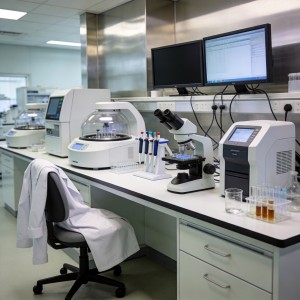
Key Innovations in Medical Research Equipment
Recent breakthroughs in medical research equipment have revolutionized how scientists study diseases. For instance, next-generation sequencing platforms allow for rapid genomic analysis, speeding up the identification of genetic markers for conditions like cancer. Similarly, high-resolution mass spectrometry enables detailed proteomic profiling, opening new avenues for personalized medicine. These tools are essential for understanding complex biological processes and developing targeted therapies.
Another notable advancement is the development of automated liquid handling systems, which increase throughput and reproducibility in experiments. Such medical science equipment reduces human error and accelerates drug discovery. Laboratories equipped with these tools can process thousands of samples daily, significantly cutting down research timelines. For more information on state-of-the-art laboratory solutions, visit Chinacare Medical.
Transformative Medical Science Equipment in Clinical Settings
In clinical environments, medical science equipment has become indispensable for accurate diagnosis and monitoring. Portable ultrasound devices, for example, bring imaging capabilities to remote areas, improving access to care. Meanwhile, advanced hematology analyzers provide rapid blood cell counts, aiding in the management of chronic diseases. These innovations not only enhance patient care but also streamline workflows for healthcare providers.
Furthermore, the integration of artificial intelligence with medical research equipment is a game-changer. AI algorithms can analyze medical images faster and more accurately than humans, detecting anomalies that might otherwise be missed. This synergy between technology and medicine is paving the way for earlier interventions and better outcomes. According to a recent study published in Nature, AI-assisted diagnostics have shown a 20% improvement in accuracy for certain conditions.
Conclusion: The Future of Medical Innovation
The continuous evolution of medical research equipment and medical science equipment promises a future where healthcare is more precise, accessible, and effective. As these technologies become more affordable and widespread, they will empower researchers and clinicians worldwide to tackle some of the most pressing health challenges. Staying informed about these advancements is crucial for anyone involved in the medical field.