How Automated Machines in Clinical Laboratories and Automatic Centrifuge Machines Are Revolutionizing Diagnostics
Introduction
The landscape of clinical diagnostics is rapidly evolving, driven by the integration of advanced technologies. At the heart of this transformation are automated machines in clinical laboratory settings, which streamline workflows and reduce human error. Among these, the automatic centrifuge machine plays a pivotal role in sample preparation, ensuring consistent and reliable results. This article explores how these innovations are revolutionizing diagnostics and why laboratories worldwide are adopting them.
The Role of Automated Machines in Clinical Laboratories
Automation in clinical laboratories encompasses a wide range of equipment, from analyzers to sample handling systems. Automated machines in clinical laboratory environments enhance productivity by processing large volumes of samples with minimal intervention. They integrate tasks such as sorting, labeling, and analysis, allowing technicians to focus on complex cases. For instance, automated hematology analyzers can run complete blood counts in minutes, while chemistry analyzers handle multiple tests simultaneously. This not only speeds up diagnosis but also improves accuracy by eliminating manual pipetting errors.
Moreover, these machines are equipped with advanced software that tracks samples and results in real-time, reducing the risk of misidentification. Laboratories that adopt automated machines in clinical laboratory workflows report significant reductions in turnaround times, often cutting hours off the process. This is particularly critical in emergency settings where timely results can save lives.
The Importance of the Automatic Centrifuge Machine
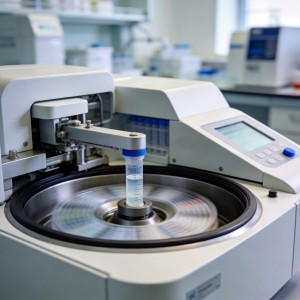
Sample preparation is a crucial step in many diagnostic tests, and the automatic centrifuge machine is indispensable for this purpose. Centrifugation separates blood components, such as plasma and serum, from cellular elements, enabling accurate analysis. Modern automatic centrifuges offer programmable cycles, temperature control, and safety features that minimize operator exposure to biohazards. They can handle multiple tubes simultaneously, making them ideal for high-throughput laboratories.
For example, in a busy clinical lab, an automatic centrifuge machine can process dozens of samples in a single run, ensuring consistent separation conditions. This reduces variability and enhances the reliability of downstream tests. Additionally, these machines are designed to be compact and energy-efficient, fitting seamlessly into automated workflows. When integrated with other automated machines in clinical laboratory systems, they form a cohesive pipeline from sample receipt to result reporting.
Benefits of Automation in Clinical Laboratories
The adoption of automated machines in clinical laboratory and automatic centrifuge machine technologies brings numerous benefits. First, it improves operational efficiency by reducing manual labor and allowing staff to handle more tests per day. Second, it enhances accuracy and reproducibility, as machines follow standardized protocols without fatigue. Third, it improves safety by minimizing direct contact with potentially infectious samples. Finally, automation supports data integration, making it easier to track trends and comply with regulatory requirements.
Laboratories that invest in these technologies often see a rapid return on investment through increased throughput and reduced error rates. For instance, a study found that implementing an automatic centrifuge machine reduced sample preparation time by 50%, while overall lab automation cut turnaround times by 30%. These improvements directly impact patient care, enabling faster diagnoses and treatment decisions.
Future Trends in Lab Automation
The future of clinical diagnostics lies in further integration of artificial intelligence and robotics. Automated machines in clinical laboratory will become smarter, using machine learning to predict maintenance needs and optimize workflows. The automatic centrifuge machine will evolve to handle even more specialized tasks, such as cell sorting and microfluidic separation. As technology advances, we can expect fully automated labs that require minimal human intervention, from sample intake to report generation.
For more information on how to upgrade your lab with cutting-edge automation solutions, visit China Care Medical for a wide range of clinical laboratory equipment. Also, check out this external resource on Lab Manager for the latest trends in lab automation.