Essential Retort Lab Apparatus and Rotary Evaporator Apparatus: A Complete Guide for Modern Laboratories
Introduction to Retort Lab Apparatus and Rotary Evaporator Apparatus
In modern laboratories, two types of equipment are fundamental for distillation and evaporation processes: retort lab apparatus and rotary evaporator apparatus. These tools are essential for separating solvents, concentrating samples, and purifying compounds. Understanding their features, applications, and differences is crucial for lab professionals. Whether you are in a research lab, a quality control department, or an educational institution, choosing the right equipment can significantly impact your workflow efficiency and experimental accuracy.
What Is Retort Lab Apparatus?
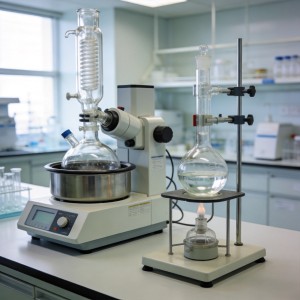
A retort lab apparatus is a traditional but highly reliable device used for distillation or dry distillation of substances. It consists of a spherical or cylindrical vessel where the material is heated, and a neck that directs vapors to a condenser. Retorts are commonly used in chemistry labs for tasks such as extracting essential oils, producing distilled water, or conducting pyrolysis experiments. The design is simple yet effective, making it a staple in many educational and industrial settings. For high-quality lab equipment, you can explore options at China Care Medical.
Rotary Evaporator Apparatus: A Modern Solution
The rotary evaporator apparatus, often called a rotavap, is a more advanced piece of equipment that uses rotation and vacuum to evaporate solvents efficiently. It is widely used in organic chemistry, pharmaceutical research, and biotechnology. The key advantage of a rotary evaporator is its ability to perform gentle evaporation at lower temperatures, preserving heat-sensitive compounds. The apparatus includes a rotating flask, a water bath, a condenser, and a vacuum system. This setup allows for rapid solvent removal with minimal sample loss.
Key Differences and Applications
While both retort lab apparatus and rotary evaporator apparatus serve the purpose of separation, they differ in complexity and application. Retorts are ideal for simple distillations and are often used in teaching labs due to their straightforward operation. Rotary evaporators, on the other hand, are preferred for more demanding tasks such as concentrating reaction mixtures or recovering solvents in research. The choice depends on factors like sample volume, required precision, and budget. For comprehensive lab setups, integrating both types can cover a wide range of needs.
Tips for Choosing the Right Equipment
When selecting a retort lab apparatus or rotary evaporator apparatus, consider the following: material compatibility, temperature control, vacuum capability, and ease of cleaning. Glassware should be borosilicate for thermal resistance. For rotary evaporators, look for models with digital controls and safety features. Always purchase from reputable suppliers to ensure durability and accuracy. For more information, visit our website for a range of laboratory solutions.
Maintenance and Best Practices
Proper maintenance extends the life of your lab equipment. For retort lab apparatus, regularly check seals and connections to prevent leaks. Clean glassware promptly after use. For rotary evaporator apparatus, lubricate the rotating mechanism and replace vacuum pump oil as needed. Following manufacturer guidelines ensures optimal performance. External resources like Lab Manager provide additional tips on lab equipment care.
Conclusion
Both retort lab apparatus and rotary evaporator apparatus are indispensable in modern laboratories. By understanding their strengths and limitations, you can make informed decisions that enhance your research and operational efficiency. Invest in quality equipment and maintain it well to achieve reliable results. For a wide selection of lab apparatus, check out China Care Medical.